


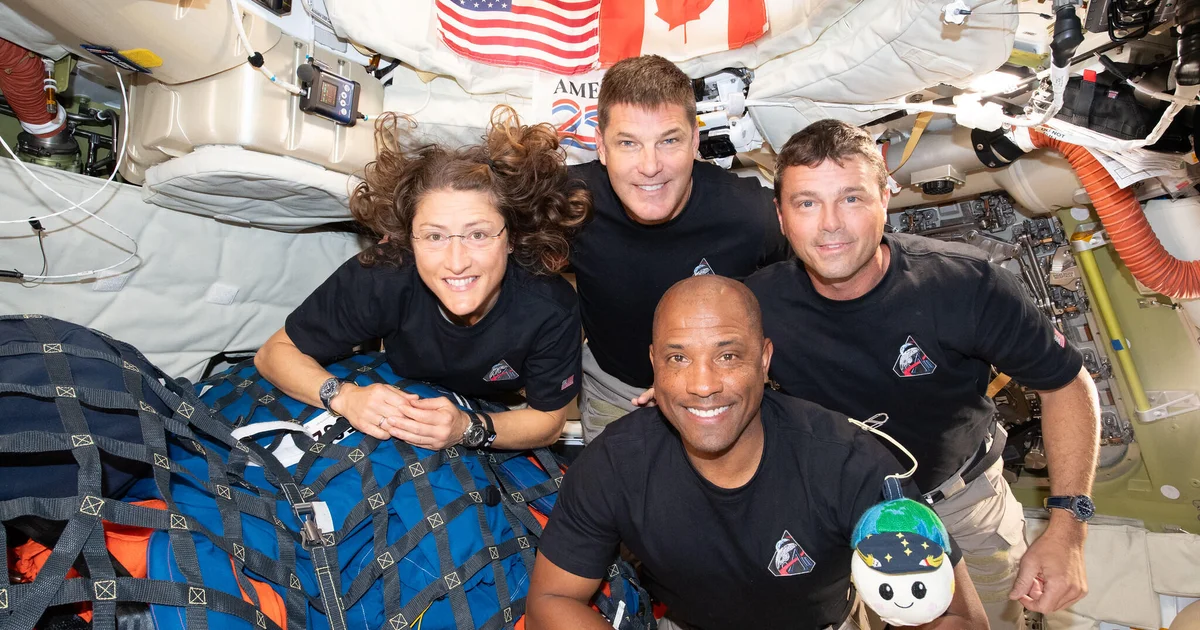
With a splashdown in the Pacific Ocean on Friday evening, the epic Artemis II moon mission came to an end.
Americans have been tracking the progress of the four astronauts — commander Reid Wiseman, pilot Victor Glover, and mission specialists Christina Koch and Jeremy Hansen — as they looped around the moonpushing deeper into space than anyone ever has before.
Here are nine highlights from that groundbreaking trip.
1. Artemis II mission blasts off from Florida
Aubrey Gemignani / NASA / Getty Images 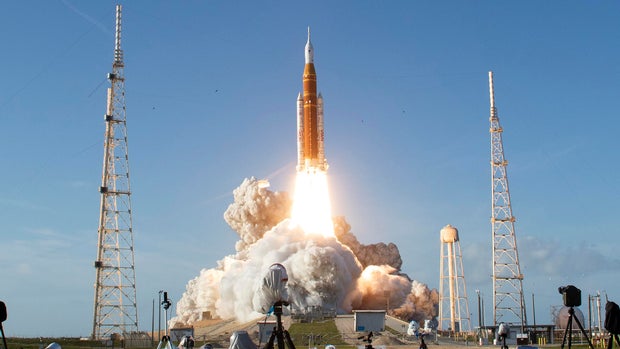

The rocket lifted off Wednesday, April 1, from the Kennedy Space Center in Florida at 6:35 p.m. ET. The spectacular launch marked the first piloted moonshot since the end of the Apollo program 53 years ago.
The Orion capsule and NASA’s Space Launch System rocket had never flown with people aboard, and had made just one unmanned test flight. But the launch was picture perfect.
2. Orion crew spends first day in space
NASA via Getty Images 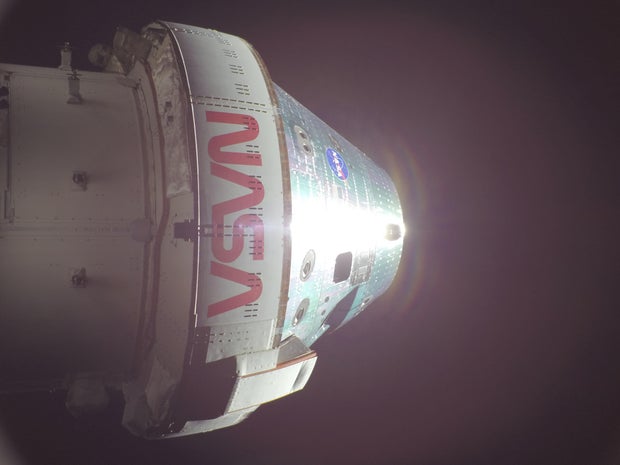

The crew woke up to a busy first dayspending about 24 hours orbiting the Earth while they put their Orion capsule through its paces before NASA could give them the go-ahead for their trip around the moon. Glover also got a chance to test out the manual controls on the capsule ahead of future missions.
About 90% of the Orion capsule’s life-support system had never been tested before in space.
“We are going really, really far away. And that one 24-hour orbit gives us time to check out all of our environmental control, life support systems. … Can it scrub our carbon dioxide? Can it keep us alive? Can we drink water?” Wiseman told CBS News before the launch. “We’ve got to go get those things tested before we press out to the moon.”
Of course, they were given the go.
3. Crew shares first images of Earth from capsule
NASA via AP 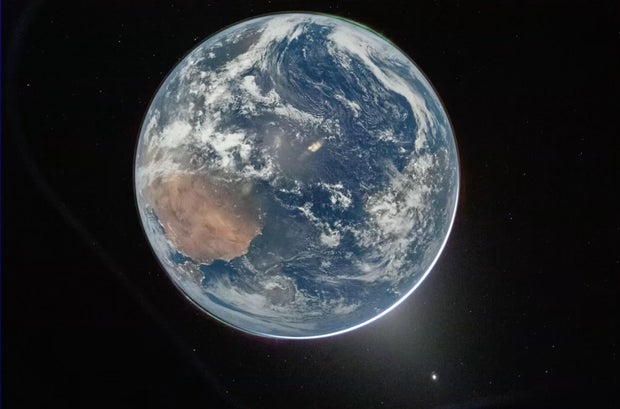

As the world was glued to Artemis II’s continued mission in space, those of us down on the surface got to see the first images of the full Earth from the capsule — a first for human eyes in over 50 years.
A photo taken by Wiseman became the first released picture of Earth taken from the Orion capsule, on April 3.
“Trust us. You look amazing. You look beautiful,” Glover said, reflecting on the view of Earth. “No matter where you’re from or, you know, what you look like. We’re all one people.”
With a firing of the thrusters, the capsule hurled on toward the moon.
4. Crew awaits trip around moon, celebrates Easter
NASA 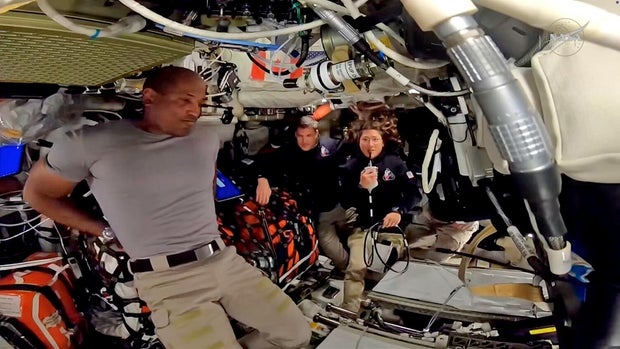
The moon is a long way from Earth — about a four-day trip — so the crew had plenty of time to anticipate its big mission.
“It was really great to wake up this morning and look out the window and see the full moon off the front of the vehicle,” Wiseman said from the capsule. “There’s no doubt where we are heading right now and really appreciate all the work done there.”
The crew had time to celebrate Easter on Sunday before slingshotting around the far side of the moon. They also celebrated Hansen earning his gold astronaut wings on his first trip into space.
CBS News spoke to the crew about 180,000 miles from Earth.
“We were catching glimpses of the far side, the side that you can never see from Earth,” Wiseman said. “It just looked different out the window, and that is wild. It just really put our place in the universe in perspective.”
5. Crew names moon crater after Wiseman’s late wife
NASA 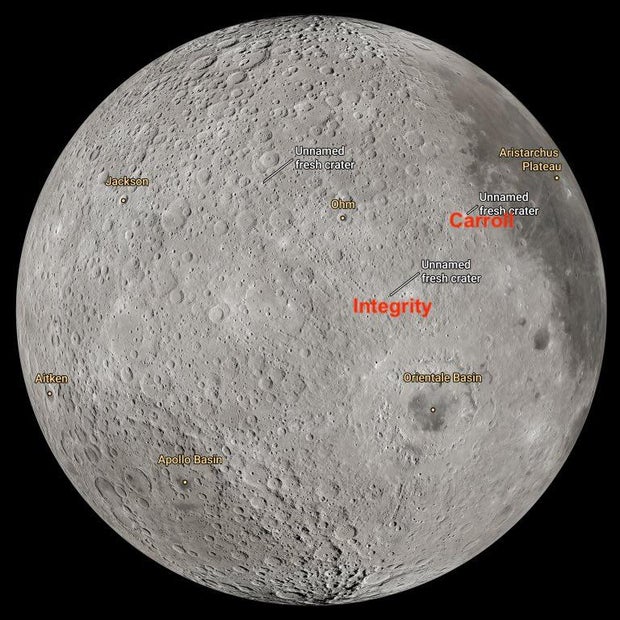

In an emotional tribute, Hansen said he and fellow crew members Koch and Glover chose to name a moon crater “Carroll” after commander Wiseman’s wife, who died of cancer in 2020. Hansen’s crewmates could be seen wiping away tears as he shared the dedication.
“It is a bright spot on the moon and we would like to call that Carroll,” Hansen said. Wiseman later said it was the most deeply profound moment of the mission.
He said his crewmates proposed the memorial when they were all in medical quarantine a few days before launch.
“That was an emotional moment for me, and I just thought that was just a total treasure,” Wiseman said during a space-to-ground news conference Wednesday.
6. Crew makes trip around the moon, sets new record for farthest flight
NASA 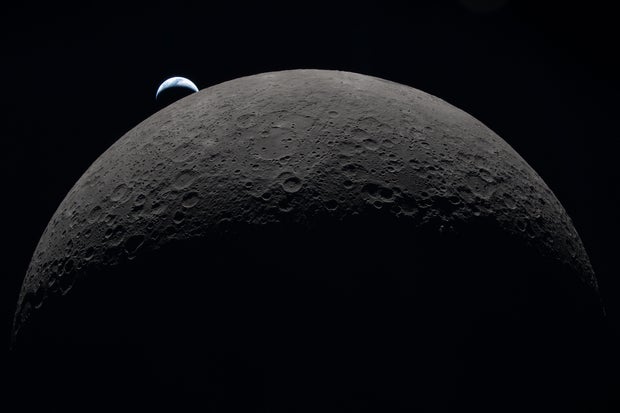

The mission reached its apex on Monday, April 6, when Orion went dark for 40 minutes on the far side of the moon.
The crew set the record for the farthest distance any human has traveled from Earth just after 7 p.m. ET that night.
The new record — 252,756 miles from Earth — surpassed Apollo 13’s record from 1970 by more than 4,000 miles, according to NASA.
Days earlier, CBS News asked Koch what she would be thinking as the crew moved out of communication range and became one of four people on the opposite side of the moon while the rest of humanity was looking at the bright side. “Gratitude,” she said.
“If you could just think about what it means to be together and what it means to be apart from your loved ones during that time, and reflect on that, maybe we’ll all come to some realization,” Koch said.
7. Photos show eclipse, rare look at far side of the moon
NASA 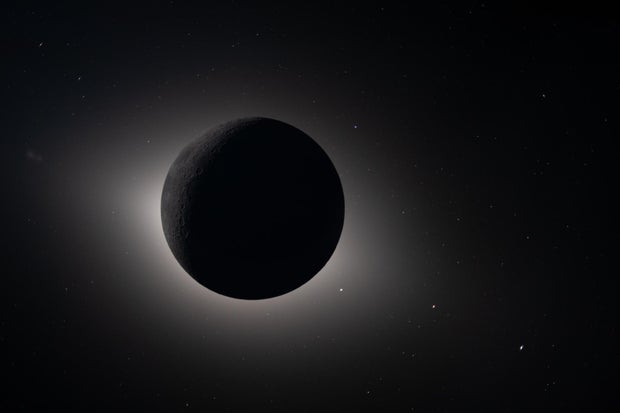
Stunning photos taken by the crew were released on Tuesday, April 7, one day after their loop around the moon, showing spectacular views and a solar eclipse in space.
“While they are inspirational, and I think a lot of us really feel a little bit of what [the crew] were feeling, there is a lot of science behind those images,” Kelsey Young, the Artemis science flight operations lead, told CBS News.
NASA via Getty Images 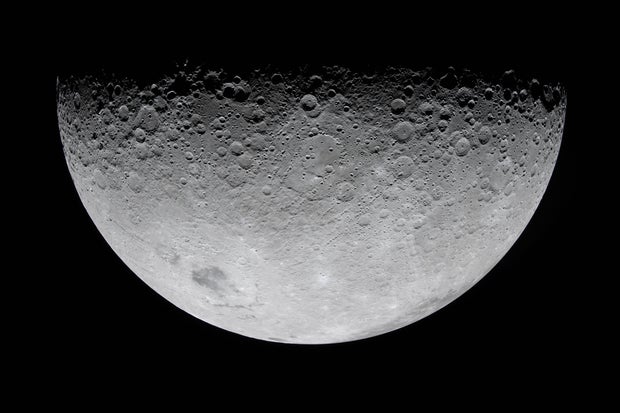
Among the shots was a stunning image of the moon eclipsing the sun. The eclipse was not visible on Earth, only to the crew on Orion. Glover said the images did not do the hourlong spectacle justice.
“Because humans probably have not evolved to see what we’re seeing,” he said. “It is truly hard to describe. It is amazing.”
See more of the breathtaking photos.
8. Crew heads back to Earth with plenty of memories
NASA via Getty Images 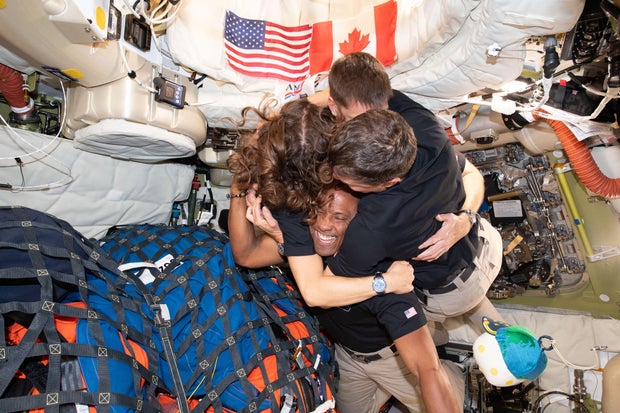
With the moon behind them and getting smaller — the Earth ahead of them, getting bigger — the crew was stunned by what they had just experienced.
“There were holes that, you know, craters that appeared to just be endless, bottomless pits,” Glover said.
Hansen recalled the 40 minutes of radio silence in deep space and what it was like to lose all contact with Earth while on the moon’s far side.
“Wow, I’m actually getting chills right now just thinking about it, my palms are sweating, but it is amazing to watch your home planet disappear behind the moon,” he said.
9. Orion splashes down after historic journey
Bill Ingalls/NASA via Getty Images 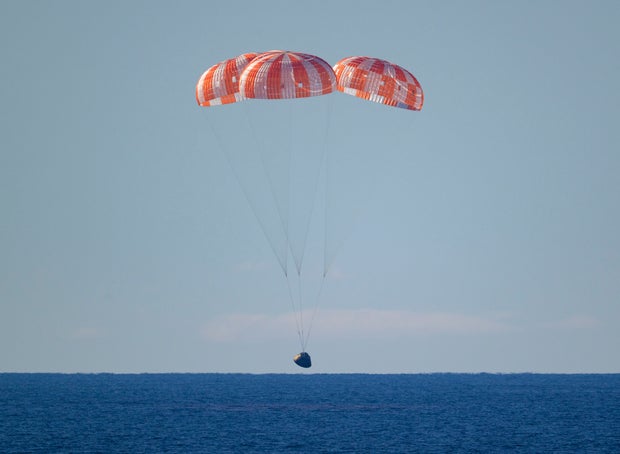

As the capsule returned to Earth, it hit the discernible atmosphere about 75 miles above the Pacific Ocean at a blistering speed of 24,000 mph — fast enough to fly from Los Angeles to New York in about 6 minutes.
Within seconds, temperatures across its 16.5-foot-wide heat shield reached about 5,000 degrees Fahrenheit — half as hot as the visible surface of the sun.
After a 6-minute communications blackout through the peak heating zone, Orion emerged for a parachute-assisted splashdown off the coast of San Diego, California.