By Minwoo Park, Kaori Kaneko and John Geddie
SEOUL/TOKYO, April 15 (Reuters) – An ‘eco-friendly’ range of paper tubes and pouches touted by Yonwoo, a South Korean maker of packaging for cosmetics, has reaped unexpected benefit from the Iran war, which has disrupted supplies of the plastic needed to turn out single-use wrapping.
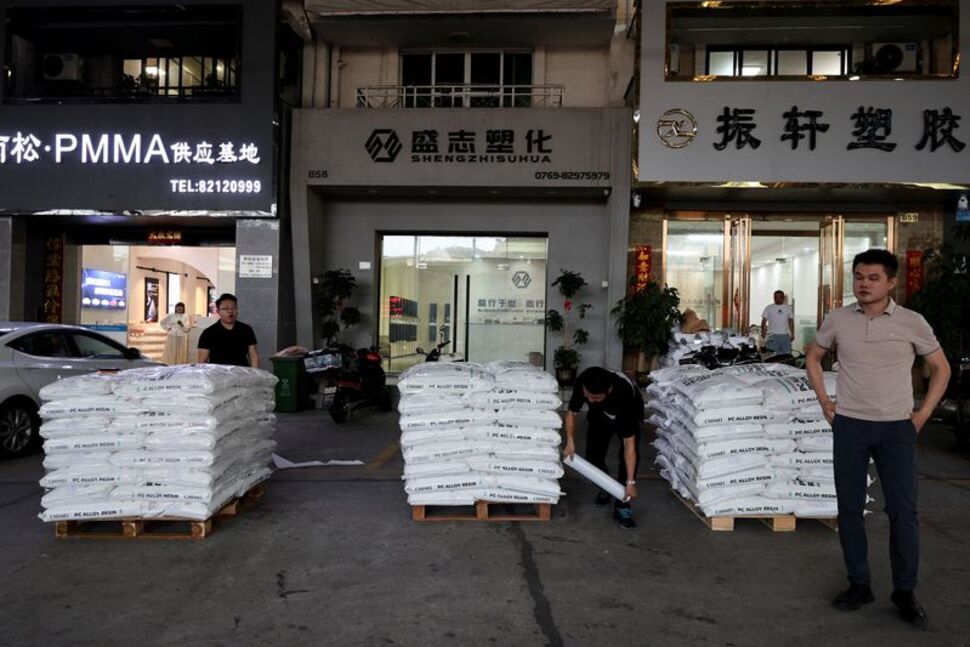
While the conflict has sent prices of plastic soaring to roughly four-year highs by choking off flows of the required raw materials of oil and petrochemicals, the company says it has fuelled inquiries three-fold for paper-based options.
“Interest initially came from companies focused on sustainability … but if the plastics issue gets prolonged we expect demand to further increase,” said Kim Min-sang, a senior manager at parent Kolmar Korea.
The supplier to major firms, such as France’s L’Oreal, has fielded inquiries mainly for paper tubes encasing items such as sunscreen and lotions that use just 20% of the plastic employed by conventional packaging, Kim told Reuters.
Across Asia, home to some of the world’s biggest plastic users and polluters, changes that environmental groups have sought for decades are quickly being adopted, even if they may prove a short-term flip.
Asia is not only heavily reliant on feedstock imported from the Middle East, but it is hooked on plastic, with China, Japan, South Korea and Southeast Asia together using almost a third of the world’s total by 2022, OECD data showed, up 900% since 1990.
The region also accounts for more than a third of all plastic waste leaking into the environment, thanks to poor waste collection methods in low-income Southeast Asian nations.
Japan ranks behind only the United States in terms of plastic production and consumption per head, according to a 2025 study by researchers from Beijing’s Tsinghua University published in the science journal Nature.
Wholesalers there have been warning about possible shortages of plastic trays and bags, said Kensuke Takahashi, product manager for Marutake supermarket in Saitama, adjacent to Tokyo.
“We now have to discuss how to sell our products if trays are no longer supplied at all,” said Takahashi. “I’m very worried. We really don’t know what will happen.”
Japanese makers of plastic bags and cling wrap, Mitsubishi Chemical and Sanipak, have said they will raise prices by about 30% in coming weeks for some products as the conflict drives up costs of raw materials.
Talks for a global treaty to tackle plastic pollution stalled last year after the United States and plastic-producing countries pushed back against a drive to cap plastic production led by the European Union.
It is one of several environmental initiatives to lose steam under U.S. President Donald Trump, who has called climate change a hoax.
Trump’s sweeping trade tariffs were also a blow for Taiwan’s Lastic, which makes bamboo-based biodegradable material, said senior development manager Luke Anderson.
American airlines eyeing the material to replace disposable plastic cups and cutlery lost interest after Trump imposed the levies on U.S. imports last year, he said.
Now, as prices of plastic rise, several of his U.S. buyers have sought fresh quotes. “It’s not that I like to look at the upside of war, but … if you can’t control it, you’ve got to find the silver lining,” he said.
Some companies are adapting to new alternatives.
In Malaysia, dairy producer Farm Fresh said it has temporarily switched to paper-based milk cartons because of the plastic supply disruptions.
But there is no quick fix for others, such as South Korea’s Gaone International, which makes packaging for face masks.
Testing new materials would take time, so it has slashed daily output to between 10% and 20% from the usual 1 million units as it hunts for new suppliers. The 20-year-old factory is now warning clients of a wait of up to eight weeks for orders to be filled, and expects revenue to suffer accordingly, said sales team manager Han Kyung-hun. “I hope things return to normal as soon as possible,” said Han, but cautioned recovery could take a couple of months, even if the war ended immediately.
(Reporting by Yunji Ha, Minwoo Park and Brenda Goh in Seoul, Kaori Kaneko, Hina Suzuki and John Geddie in Tokyo and Mandy Leong in Kuala Lumpur; Editing by Clarence Fernandez)
Copyright 2026 Thomson Reuters.