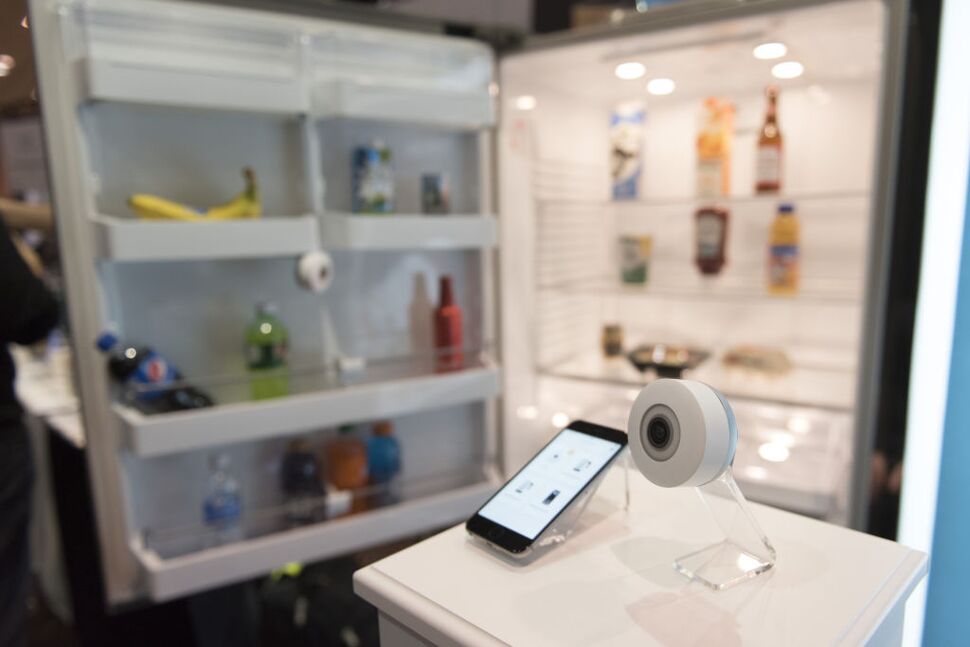
Your “smart” appliances are spying on you.
That’s the tradeoff. You get the high-tech convenience of Internet-connected devices you can control via your phone or voice commands. And the companies that make them get your personal data – sometimes including video or audio recordings.
Smart TVs, smart thermostats, smart doorbells, smart speakers, smart kitchen appliances, smart phones (of course) – the average Internet-connected household in America in 2025 had a bit more than 17 devices tied to the web, says research firm Parks Associates.

Sign Up for U.S. News Decision Points
Your trusted source for breaking down the latest news from Washington and beyond, delivered weekdays.
By clicking “Sign Up”, you will receive the latest updates, including emails, from U.S. News & World Report and our trusted partners and sponsors, and you agree to our Terms and Conditions & Privacy Policy.
We have all come to expect cell phones and laptops to include a camera and microphone. But what about other appliances that traditionally have not?
A bipartisan group of senators is pushing legislation – the Informing Consumers About Smart Devices Actdubbed the “Spy Fridge” bill – that would require the makers of those other devices to make it clear to consumers when those products have a camera or microphone.
“When Americans buy a new refrigerator, they shouldn’t have to worry about their refrigerator recording the conversations with their spouse while they are standing in the kitchen or taking a video recording of them in their own home,” Sen. Ted Cruz, the Republican chairman of the Senate Commerce Committee and lead sponsor of the bill, said on the Senate floor last week. “Americans deserve to know, at a minimum, if their appliances are doing this.”
Sen. Rand Paul of Kentucky, a libertarian voice in the Senate, has blocked the bill, calling it last week “a nationwide regulation with fines and fees” and saying that libertarians don’t object to smart appliance users voluntarily giving up their personal information.
I asked a Cruz aide what triggered the senator’s interest in this topic, secretly hoping for a story about realizing his fridge was spying on his late-night snack choices. But no. It was the realization that a lot of privacy bills focus more on Internet-related data than on “smart devices or hardware that’s collecting your voice or picture or visuals or things like that,” the aide said.
Your Smart Toaster Has National Security Implications
I first heard of the “spy fridge” phenomenon back in 2016, when Director of National Intelligence James Clapper put Internet-connected devices – the Internet of Things (IoT) – front and center in his annual report to Congress about “Worldwide Threats.”
“Security industry analysts have demonstrated that many of these new systems can threaten data privacy, data integrity or continuity of services,” Clapper said. “In the future, intelligence services might use the IoT for identification, surveillance, monitoring, location tracking and targeting for recruitment, or to gain access to networks or user credentials.”
“Security researchers continue to discover vulnerabilities in consumer products, including automobiles and medical devices,” Clapper said in the same report one year later. “If adversaries gain the ability to create significant physical effects in the United States via cyber means, they will have gained new avenues for coercion and deterrence.”
The Hollywood Angle
The entertainment industry got there in 2012, during the second season of the national security thriller “Homeland.” In one key episode, a terrorist hacks the U.S. vice president’s Internet-connected pacemaker using its serial number, directing it to administer a fatal heart attack.
Smart. While scientists have warned for years pacemakers could be vulnerable, there don’t seem to be examples of this happening in a real-world setting. But as a plot twist? Smart.