Businesses across the U.S. began receiving federal refunds on Tuesday for tariffs imposed by President Trump in 2025 and struck down by the Supreme Court earlier this year.
Sarah Wells, whose small business makes accessories and apparel for breastfeeding mothers, told CBS News that about half of the money she is owed by the U.S. government had been deposited into her bank account.
In April, Wells filed claims for refunds of two different tariffs her business imposed under the International Emergency Economic Powers Act (IEEPA) — one for a shipment from China and the other for goods she imported from Cambodia.
The Supreme Court ruled in February that Mr. Trump lacks the legal authority to impose tariffs under IEEPA.
“My refund claim had been accepted, and I’d been checking the status feverishly to see if anything was in my bank account,” she told CBS News. “Earlier this morning at around 7, I got the money from the first container that came from China.”
Courtesy of Sarah Wells 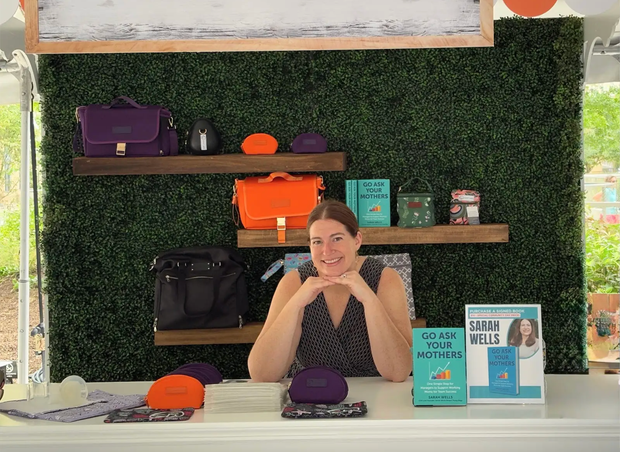
Wells said the refund was for $10,000, which covers the 20% tariff she paid on the goods, plus interest. She expects another $10,000 federal payment for other IEEPA tariffs her business absorbed.
As of 7 a.m. ET on Monday, the federal government said it had approved nearly 87,000 refund requests covering more than 15 million IEEPA duty payments. More than half of those entries have been finalized, amounting to refunds of $35.5 billion, including interest, CBP official Brandon Lord said in a filing with the U.S. Court of International Trade in New York.
Ryan Peterson, CEO of supply chain management company Flexport, told CBS News that as of Monday, the company’s clients had received a total of $137 million in IEEPA tariff refunds from the U.S. government.
“I’m kind of impressed the government built and launched this technology pretty quickly,” he said. “A lot of government timelines can be way longer than that.”
The Trump administration owes importers roughly $166 billion in refunds.
Imports remain subject to a 10% tariff that Mr. Trump imposed in February under Section 122 of the Trade Act of 1974. In March, the White House also announced investigations into foreign nations’ trade practices under Section 301 of the Trade Act of 1974, which allows U.S. trade officials to unilaterally retaliate against countries engaging in unfair trade practices.
“We have an order in production in Cambodia arriving in July or August that we’ll have to pay 10% on, and possible Section 301 tariffs could be put in place,” Wells said, adding that “we are in a cycle of having to plan for the unplanned.”