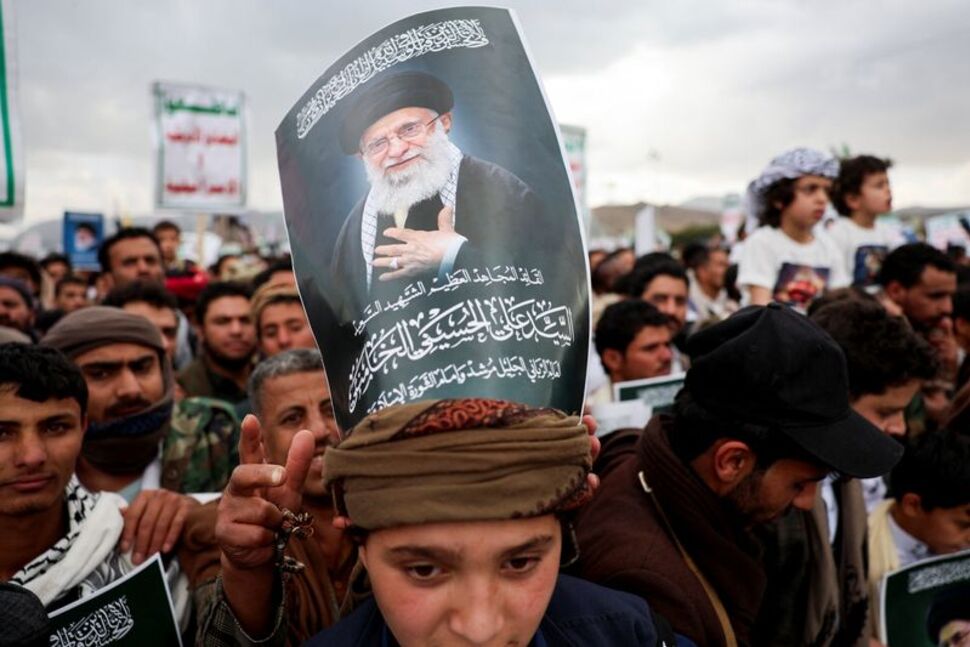
RIYADH, March 13 (Reuters) – Iran’s Shi’ite allies in Lebanon and Iraq have joined the war in the region unleashed by U.S. and Israeli strikes on Tehran. But Yemen’s Houthi rebels, heavily armed and capable of striking Gulf neighbours and causing major disruption to maritime navigation around the Arabian Peninsula, have not yet entered the fray.
Here is a look at why that might be:
The Houthis are a military, political and religious movement led by the Houthi family and based in northern Yemen. They adhere to the Zaydi sect of Shi’ite Islam.
The Houthis have a history of fighting guerrilla wars with the Yemeni army but expanded their power and built closer ties with Iran after the 2011 “Arab Spring” protests.
Seizing on instability in the country, the group captured the Yemeni capital Sanaa in 2014.
The following year, Saudi Arabia led a coalition of Arab states in a military intervention to attempt to dislodge the group.
The Houthis demonstrated significant missile and drone capabilities, attacking oil installations and vital infrastructure in Saudi Arabia and the United Arab Emirates.
After years of fighting that led to one of the world’s worst humanitarian crises, the U.N. brokered a 2022 truce between the warring sides in Yemen that has since held.
After the October 7, 2023, attack on Israel led by Palestinian militant group Hamas, which triggered a devastating Israeli military campaign in Gaza, the Houthis began firing on international shipping in the Red Sea, saying it was doing so in support of Palestinians.
They also fired drones and missiles at Israel, which responded with air strikes on Houthi targets. The U.S. also launched strikes against the Houthis.
The Houthis ceased their attacks following a U.S.-brokered ceasefire between Israel and Hamas in October 2025.
WHY HAVE THEY NOT ENTERED THE WAR?
On March 5, Houthi leader Abdul Malik Al-Houthi said his group was ready to strike at any moment.
“Regarding military escalation and action, our fingers are on the trigger at any moment should developments warrant it,” he said in a televised speech.
But unlike Lebanon’s Hezbollah and Iraqi armed groups, they have not made any formal announcement of joining the war.
Houthi religious doctrine does not adhere to Iran’s supreme leader in the same way Hezbollah and the Iraqi groups do.
While Iran champions the Houthis as part of its regional “Axis of Resistance”, Yemen experts say the movement is motivated primarily by a domestic agenda though they share a political affinity with Iran and Hezbollah.
The U.S. says Iran has armed, funded and trained the Houthis with help from Hezbollah.
The Houthis deny being an Iranian proxy and say they develop their own weapons.
Observers have been split on what course of action the Houthis, a notoriously mercurial group, may take.
Some diplomats and analysts believe they may have already undertaken individual attacks on targets in neighbouring states. Reuters could not substantiate those claims.
Others say the Houthis are keeping their powder dry for an opportune moment to enter the conflict, in coordination with Iran, in order to exert maximum pressure.
The effective closure of the Strait of Hormuz to Gulf Arab hydrocarbon exports and a shift to heavy reliance on the Red Sea might provide such an opportunity.
Lastly, given growing economic pressure at home and the likelihood of intense U.S., Israeli and even Saudi attacks should they join the war, some analysts say the Houthis may decide to sit out the conflict altogether.
(reporting by Timour Azhari in Riyadh; Editing by Aidan Lewis)
Copyright 2026 Thomson Reuters.