Key Takeaways
- State attorneys general filed a lawsuit against the Education Department over a new rule limiting federal loans for graduate students.
- The new rule makes a distinction between students seeking “professional” and “graduate” degrees.
- Healthcare industry officials believe the new rule will lead to more difficulty hiring workers in such industries as nursing and physical therapy.
A group of Democratic state attorneys general filed a lawsuit in federal court in Maryland on Tuesday against the Education Department, saying new federal limits on graduate student loans will have a detrimental effect on the nation’s shortage of health care workers.
The lawsuit addresses reduced loan limits that arose from the passage of President Donald Trump’s “big, beautiful bill” last summer. The law sets a limit on how much students can borrow from the federal government and, after much debate, the rules for the provision are set to go into effect on July 1.
What’s Changed With the New Rule
Students will be able to borrow from the government, but lawmakers established new guidelines depending on whether they are pursuing a degree designated as a professional or graduate program. Those designated as graduate students can borrow up to $20,500 annually and a maximum of $100,000, according to the legislation. But “professional” students will be permitted to borrow up to $50,000 annually to a maximum of $200,000.
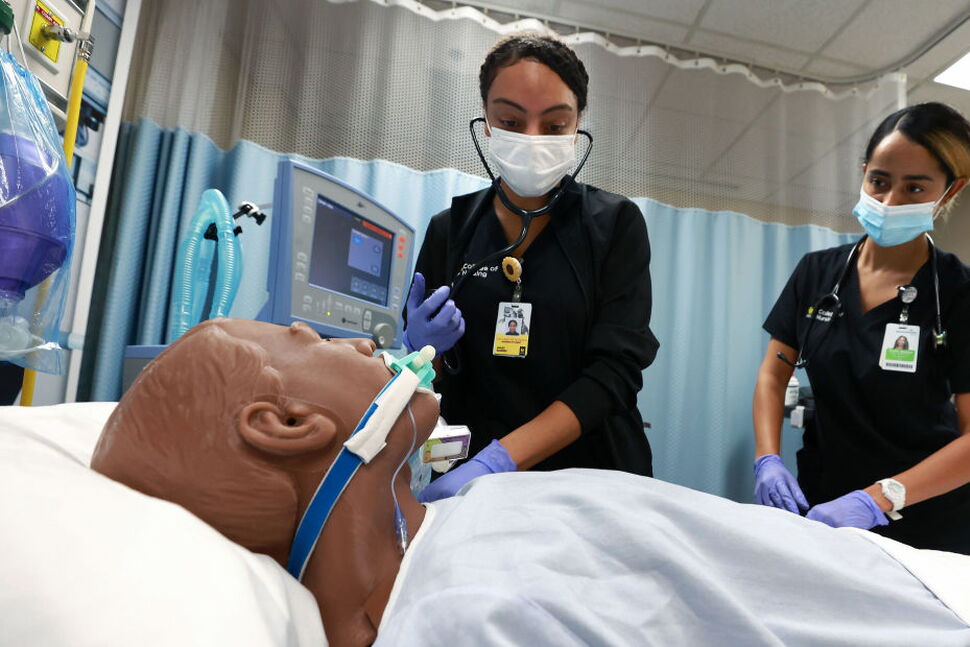
The Department of Education, through the rulemaking process, then came up with a list of professional programs – including pharmacy, dentistry, veterinary medicine, chiropractic, clinical psychology, law, medicine, optometry, osteopathic medicine, podiatry and theology – for which students would be eligible to borrow at the higher amounts. But advocates for the nursing and social work industries – which were not on the list – said they were concerned the new rules could adversely affect people studying to enter those professions.
The high cost of education has long been a target of Republicans in Congress, and the move was seen as a way to curb those spiraling costs and prevent students from borrowing more than they will be able to pay back. But the states claim in the lawsuit that the burden will fall on them in reduced support for higher education programs and more difficulty in finding employees to fill open healthcare positions.
“The final rule’s unlawful definition of ‘professional degree’ will harm plaintiff states by reducing funding for many state institutions of higher education and impeding the states’ abilities to meet critical workforce needs and provide services to their residents,” the states said.

Get Higher Ground in your inbox each week!
The must-read newsletter for leaders shaping higher education’s future.
By clicking “Sign Up”, you will receive the latest updates, including emails, from U.S. News & World Report and our trusted partners and sponsors, and you agree to our Terms and Conditions & Privacy Policy.
What the Lawsuit Alleges
The lawsuit filed Tuesday says the rules are arbitrary and, despite the department saying the examples are not exclusive, the state attorneys general say it also violates the will of Congress.
“The Final Rule narrows the definition incorporated into H.R. 1 and effectively makes the illustrative list of degrees exclusive, thereby excluding many healthcare and other professional degrees that would otherwise be eligible for the higher limits,” the lawsuit says. “Congress never intended anything of the sort.”
“The rule’s definition of ‘professional degree’ directly contravenes H.R. 1 and is thus contrary to law in violation of the Administrative Procedure Act (‘APA’),” it added. “Congress spoke clearly,” the lawsuit said, maintaining that a professional degree must meet three criteria: It must signify completion of academic requirements for beginning practice in a given profession, convey a level of professional skill beyond what is normally required for a bachelor’s degree and “generally” enable the acquisition of a professional license. ”Congress did not require anything more.”
Jennifer Mensik Kennedy, president of the American Nurses Association, told Men’s Health in an interview earlier this month that the new loan limits are “a big barrier because we know that these loans are not just for tuition; it’s also for living expenses.”
“These individuals who are going to school have these clinical rotations, they have these clinical hours they need to get, and they can’t work full-time,” she said. “A recent study found that 29% of nurses in Michigan who are advanced practice nurses had loans over $100,000. This is going to limit people’s ability to go to school.”
What Happens Next
The states are asking for an injunction against the new rules taking place, as well as the striking of key portions of the proposed rules. It is possible a judge would impose a temporary injunction, but that remains to be seen.
Private loans for graduate study are available but may require stricter credit requirements and may not cover the professions in question.