Washington — The Supreme Court on Tuesday turned away an appeal by the NFL stemming from coach Brian Flores’ landmark racial discrimination lawsuit, allowing his case to proceed in federal court instead of closed-door arbitration overseen by the league.
The high court declined to review a lower court decision that allowed Flores’ case to move forward in open court instead of arbitration, in which Commissioner Roger Goodell would serve as the decisionmaker. Justice Brett Kavanaugh said he would have heard the case.
The yearslong legal battle began in early 2022, when Flores filed a lawsuit against the NFL and three teams, the Miami Dolphins, New York Giants and Denver Broncos, alleging systemic racial discrimination. He was joined in the suit by two other coaches, Steve Wilks, who was head coach of the Arizona Cardinals for a single season, and Ray Horton, former defensive coordinator for the Tennessee Titans.
Flores alleged that the league had discriminated against him and other Black coaches based on their race and denied them coaching and general manager positions.
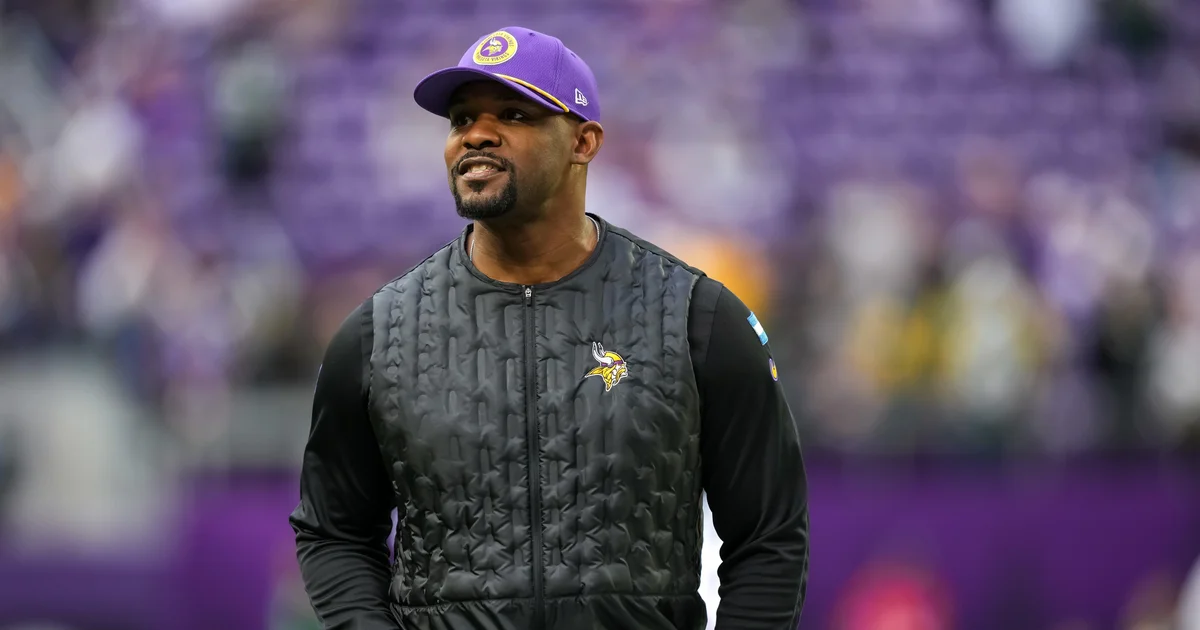
Flores sued the NFL after he was fired from his job as head coach of the Dolphins after leading the team to a 24-25 record over three years. He had interviewed for coaching jobs with the Giants and Broncos, but the two teams declined to hire him. Flores is now defensive coordinator for the Minnesota Vikings.
In response to the lawsuit, the NFL and teams sought to compel arbitration based on the coaches’ employment contracts and a provision of the NFL Constitution that gives the NFL commissioner, Goodell, authority to arbitrate disputes between coaches and member clubs.
Flores opposed the move, arguing that Goodell, as the league’s leader, was inherently biased toward the NFL and its teams because he reports to the clubs and has financial incentives and a professional obligation to act in the league’s best interest.
A federal judge allowed some of Flores’ claims to move forward in open court instead of in arbitration. The U.S. Court of Appeals for the Second Circuit affirmed that decision, but on different grounds. The 2nd Circuit held, in part, that the arbitration provision in the NFL Constitution was not enforceable under a federal law called the Arbitration Act. The panel said the provision “provides for arbitration in name only.”
In their appeal to the Supreme Court, lawyers for the NFL called the Second Circuit’s decision “unprecedented” and said lower courts have long upheld the authority of sports league commissioners to serve as the default decisionmaker in disputes.
But Flores’ lawyers told the Supreme Court in a filing that the Second Circuit’s ruling is consistent with other circuit court decisions, in that it found an employer cannot force employees to arbitrate workplace discrimination claims before the employer’s chief executive.
The forum provided by the NFL Constitution for resolving disputes involving the league and its teams lacks neutrality, they argued.