By Kyu-seok Shim and Joyce Lee
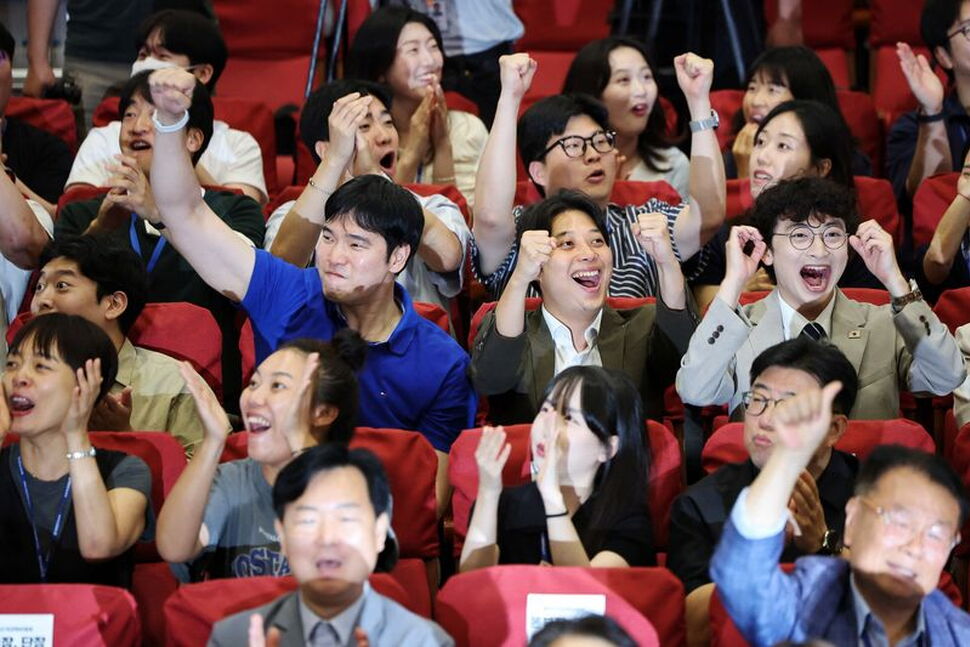
SEOUL, June 4 (Reuters) – South Korean President Lee Jae Myung’s ruling Democratic Party swept most major local races in elections held on Wednesday, but suffered a symbolic setback as the opposition conservative incumbent Oh Se-hoon won another term as Seoul mayor.
The Democratic Party won 12 of the 16 mayoral and provincial contests nationwide, while the conservative People Power Party won four, a result that gives Lee’s party broad control of local governments a year into his presidency.
The loss of Seoul, South Korea’s largest city and its most politically prized mayoralty, however, tempered the ruling party’s victory and gives conservatives a key foothold as they seek to rebuild after the scandal over former President Yoon Suk Yeol’s failed 2024 martial law bid and subsequent impeachment.
Democratic Party leader Jung Chung-rae thanked voters for what he called a “great victory” nationwide, but acknowledged the sting of losing the capital.
“I deeply thank the people for giving the Democratic Party a great victory across the country. But it hurts that we failed to retake Seoul,” Jung said in a statement.
In his victory speech, Oh said Seoul voters had upheld “the great democratic principle of checks and balances” to prevent the country from tilting entirely to one side.
“The key question was who would win symbolic battlegrounds such as Seoul and Busan, where swing voters are important,” said Shin Yul, a political science professor at Myongji University.
He said Seoul voters appeared to have been influenced in part by dissatisfaction with the Lee government’s housing policy, with authorities seeking to cool a hot market in the capital.
Still, the Democratic Party’s overall performance, including winning Busan – South Korea’s second-largest city and a conservative stronghold – suggests Lee retains strong nationwide support, buoyed by robust exports due to an AI chip boom and an accompanying stock rally.
Before the election, the opposition People Power Party had controlled 12 of the 16 local governments.
Fourteen parliamentary by-elections were held alongside the local contests.
In Busan’s Buk-A district, independent and former People Power Party leader Han Dong-hoon won, marking a comeback for a leading conservative figure who had distanced himself from the party’s pro-Yoon faction and sought to remain a potential standard-bearer for the broader conservative camp.
The election was also marred by controversy over ballot paper shortages at some polling stations in Seoul, drawing criticism from both major parties.
The shortages, reported at more than a dozen polling stations, forced some voters to wait hours or leave without casting ballots, with voting extended at affected sites.
The incident triggered protests by some voters and conservative groups, including by blocking ballots from leaving a Seoul polling station and preventing the National Election Commission (NEC) from officially confirming the Seoul mayor election results as of 11 a.m. (0200 GMT).
The NEC apologised and said it would conduct a full investigation, adding the incidents did not constitute grounds for delaying the election or holding a rerun.
“We will certainly hold the Election Commission accountable for its shoddy election management,” Democratic Party Secretary-General Jo Seoung-lae said.
People Power Party co-campaign chief Song Eon-seog also called the shortages a serious breach of voting rights, citing incidents in Seoul, Incheon and Hwaseong in Gyeonggi Province.
(Reporting by Joyce Lee and Kyu-seok Shim; Additional reporting by Heejin Kim; Editing by Jamie Freed and Ed Davies)
Copyright 2026 Thomson Reuters.