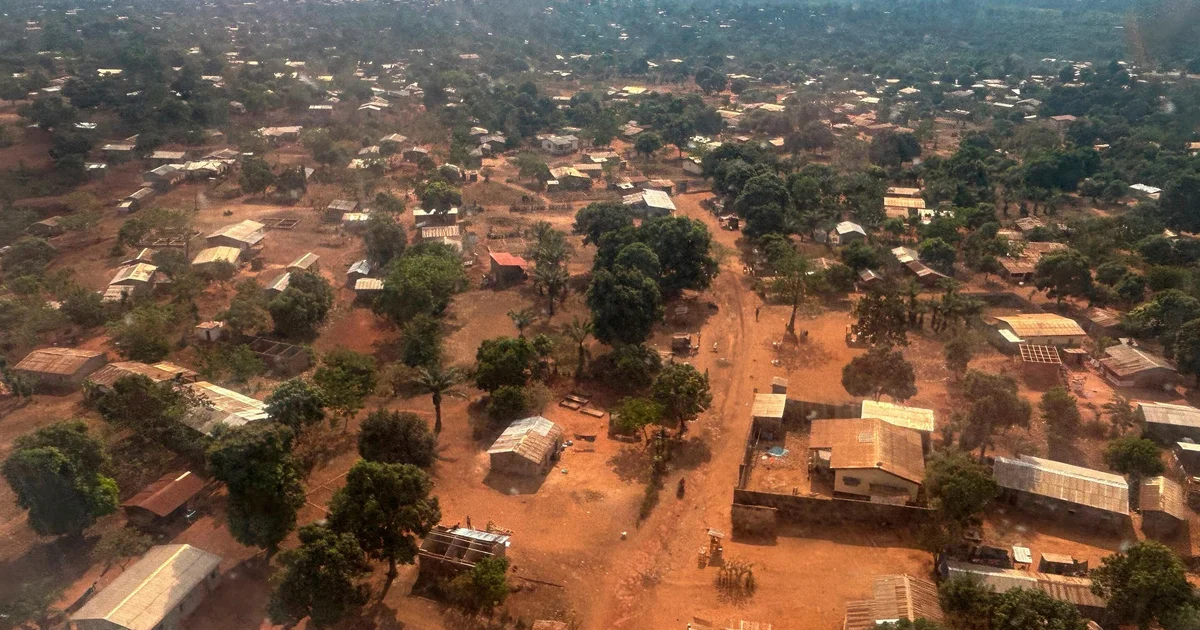
The Trump administration on Friday deported a group of roughly 20 migrants from Afghanistan, Iran and other nations to the Central African Republic, which the U.S. government warns Americans not to visit “for any reason” due to violence and unrest, a U.S. official told CBS News.
The deportees included an Iranian pro-democracy activist who had fled to the U.S. and received legal protection from an American immigration court, according to her immigration lawyer.
One of the poorest countries in the world, the Central African Republic has been plagued by decades of armed conflict, human rights abuses and political instability. The country is one of several with a “Level 4” travel advisory from the State Department, which urges U.S. citizens not to travel there.
“Do not travel to Central African Republic for any reason. U.S. citizens are at risk due to unrest, crime, kidnapping, health, terrorism, and other” threats, the State Department says in its advisory.
The State Department even instructs Americans in the Central African Republic to draft a will, make “proof of life” protocols with loved ones and leave DNA samples with medical providers in case their families need them for identification purposes.
The U.S. official, who requested anonymity to discuss deportations that have not been officially announced, said migrants from Armenia and Iraq were also among those deported to the Central African Republic on Friday.
AP Photo/Sam Mednick, File 
CBS News reached out to representatives for the Departments of Homeland Security and State requesting comment on the deportation flight to the Central African Republic. CBS News also contacted the Central African Republic’s embassy in Washington, D.C.
Emily Trostle, a lawyer representing the Iranian pro-democracy activist, told CBS News an immigration judge granted her client a “withholding of removal” order — meaning the U.S. cannot send her back to Iran because it is “more likely than not” she would be persecuted there. Trostle declined to name her client.
Trostle confirmed her client had no connection to the Central African Republic and that she was not told where her client would be sent until the day before the deportation flight. She claims DHS ignored requests for her client to talk to a U.S. asylum officer about her fears of being deported.
“Despite being granted withholding of removal, these individuals are being removed from the United States and abandoned in a country where they have no status, no connection and no support network,” Trostle said. “We fear they will ultimately be forced to return to the countries they originally fled.”
Two more Iranian women were transported to Louisiana for deportation to the Central African Republic, but ultimately not put on the plane, according to Ali Rahnama, the interim legal director at the Iranian American Legal Defense Fund. Rahnama says the women were Christian converts and fled Iran due to religious persecution. One of the women claims she was targeted for her political beliefs as well.
While withholding of removal protections shield immigrants from being deported to the places they fled, usually their native countries, they technically still allow the U.S. government to deport them to any other country.
Historically, many of those granted withholding of removal were allowed to stay in the U.S. with work permits. But as part of his aggressive deportation crackdown, President Trump’s administration has targeted those who have received such protections, seeking to deport them to so-called “third countries” where they have no ties.
The deportations to the Central African Republic are the latest front in the Trump administration’s unprecedented efforts to deport thousands of migrants to third countries.
The administration has persuaded several dozen countries to take in deportees who are not their own citizens, including African countries plagued by armed conflict, civil unrest and political turmoil, like South Sudan and the Democratic Republic of the Congo. Eswatini, Equatorial Guinea, Ghana, Rwanda and Uganda have also agreed to accept third-country deportees from the U.S.
Outside of Africa, the Trump administration has convinced some Latin American countries, including Costa Rica, El Salvador, Guatemala and Honduras, to receive deportees from other nations.
The U.S. has not formally announced the deportations to the Central African Republic, and it’s unclear how that country will process and treat the deportees. Some third countries that have brokered agreements with the U.S. have returned deportees to their homelands, even though some of them said they fled violence or persecution there.