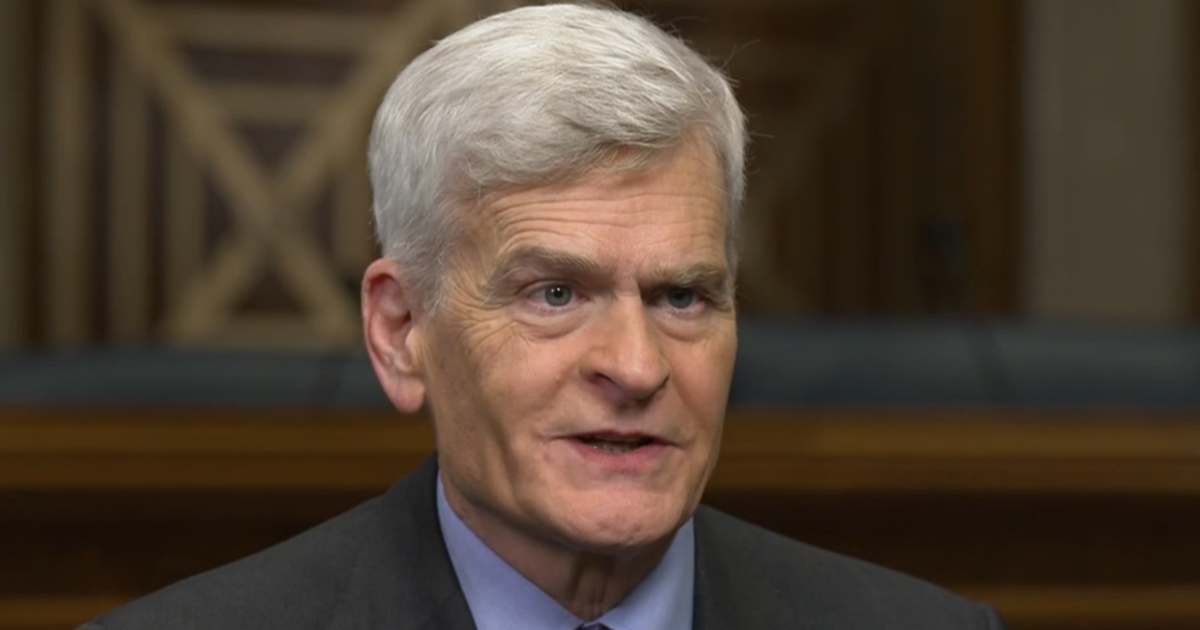
The following is the full transcript of an interview with Sen. Bill Cassidy that aired on “Face the Nation with Margaret Brennan” on June 28, 2026. This interview was conducted on June 25, 2026.
MARGARET BRENNAN: So, Senator, as I understand it, the Vice President and Special Envoy Witkoff gave you a special briefing in the Situation Room late Wednesday on Iran. What you heard made you change your vote? Why are you no longer trying to stop the president from resuming strikes in Iran?
SEN. CASSIDY: That actually was not my original rationale for voting for the War Powers Act. My original rationale was because we were not being briefed. We could be the Senate, the Congress, or the United States, and I felt important that we be briefed. I agreed with the president’s original goals, those were not being achieved by my perception, and so before I could say, okay, everything’s hunky dory, I said I need to be briefed. After the exchange I had with the president yesterday, I passed a note to Steve Witkoff. Steve, I would consider changing my vote, but I’ve been voting yes because I’ve not been briefed. He said, ‘Call me back in the hour and let’s have a briefing’ We had it last night.
MARGARET BRENNAN: What did you hear that changed your mind?
SEN. CASSIDY: So, if the original objections were to destroy, degrade, if you will, Iran’s nuclear capability, their ability to do a ballistic missile, and their conventional warfare capability, and we were supposed to be out of there in four to five weeks with maybe a little bit of a sprinkling of regime change, that’s how it came across. The regime change is off the table, that doesn’t seem as if that’s going to happen, but it does seem as if the way they laid it out, the other three objectives can be reached, and with those other three objectives- now we have to trust but verify, but as they laid it out, they have a plausible plan by which to achieve those, and that’s what I was interested in.
MARGARET BRENNAN: You wanted to get the details on the diplomacy?
SEN. CASSIDY: Correct.
MARGARET BRENNAN: Okay, because on Wednesday, you and President Trump had that angry exchange, raised voices, you said, along with other Senate Republicans in this closed-door meeting. He berated you for that vote you had taken previously to try to stop the war. You said you won’t be bullied. Did you feel that he backed down by giving you that briefing? I mean, isn’t sharing information just a basic expectation that lawmakers like yourself should have fulfilled? Like, why does it take a shouting match?
SEN. CASSIDY: Let’s back up a little bit, if I may. I’m a doctor. I am going to try and get as much information as possible to come to the truth of someone’s diagnosis and the truth of how to treat that problem, as much information as possible. You deny me that information, and I’m going to be frustrated, because my job is to serve with the information I have before me. By the way, I take that same ethic to public service. Our society has problems. What is the truth behind the cause of that problem? What is the truth about how to solve it? If you’re not telling me answers, I’m going to push for those answers. So, when the president was berating the four people that voted for the War Powers Act, frankly, I’m not there to be berated. And the president wasn’t invited to dish out verbal abuse. I raised–
MARGARET BRENNAN: — But that’s what he did.
SEN. CASSIDY: I raised my hand. I said, Mr. President, do you just want- is that a rhetorical question that you’re asking, why do we vote for it, or are you really interested? He goes, I’m really interested. I stood up and I said, this is why, and I listed those objectives that I did not see being achieved, and how the kind of endpoint of the war kept stretching out longer and longer. He began to speak over me. Unfortunately, I raised my volume to match his, and we spoke to each other like that, or shall we say, spoke at each other, not to each other. Now, I shouldn’t have lost my temper, nor should he, but you know, my wife will tell you every now and then, my Irish temper gets the best of me. But point being, I needed to know. I need to know to serve my people and my state and my country. As it turns out, I got a briefing afterwards. In one sense, I actually accomplished the mission of what I needed to do.
MARGARET BRENNAN: But you had also said the American people need that information–
SEN. CASSIDY: –So–
MARGARET BRENNAN: –the American people aren’t getting those public hearings and briefings that you got.
SEN. CASSIDY: So last night, when I asked about that in my briefing, they said right now the negotiations are delicate and they could collapse if they’re not nursed along in the appropriate way. I can accept that. Sometimes you have to have some space for people to come to an accommodation. And that’s how they said- that’s the reason they said for their kind of lack of being forthcoming. I can accept that, but my goal was to be briefed, to have the truth in order to make a decision for the benefit of my country, and that was satisfied.
MARGARET BRENNAN: Because you had said something pretty significant. I mean, not only did you say this is the worst foreign policy blunder on record, Reagan would be rolling in his grave, you said America lost the credible use- credible threat of force, which is another way of saying that President Trump’s threats to return to bombing are empty threats.
SEN. CASSIDY: I don’t know if they’re empty threats, because you can certainly return to bombing, but the fact is that a medium-sized power at this point is perceived to have fought a superpower to a draw, requir- requiring some measure of accommodation of we, the superpower, and we spent $29 billion and we have 13 Americans dead. We hope to get back to status quo ante. I will say, in the briefing last night, they would make the argument that we’ve actually made progress. If that’s the case, we should all be thankful.
MARGARET BRENNAN: Would you call for a vote for some kind of congressional oversight if an actual agreement is reached?
SEN. CASSIDY: I think this would amount to a treaty. Congress does–
MARGARET BRENNAN: –it does not?–
SEN. CASSIDY: I’m saying it would.
MARGARET BRENNAN: It would.
SEN. CASSIDY: And so I mean, if it- I don’t know the technical definition of a treaty, seems like a treaty to me. And so, if it is, then Congress should be able to weigh in.
MARGARET BRENNAN: Do you have that kind of commitment that when things aren’t so delicate, Congress actually will be read in and perhaps put to a vote under INARA?
SEN. CASSIDY: I think I’ve shown, at least on my level, that I’m willing to make tough votes in order to get that briefing that I feel I need to have the truth to make a decision that’s good for my country. So, so we didn’t talk about that last night, but I think that’s a fair statement.
MARGARET BRENNAN: Okay, so you’re going to keep pressing on this, is what I understand. I mean, there are a few Republicans like yourself who will be leaving Washington in January, and they’re starting to speak, perhaps with more candidness and frustration about the President and the way things are going here on the Hill. Will anyone else hold the president accountable once Cornyn is gone and Tillis is gone and you’re gone?
SEN. CASSIDY: The simple answer will be yes. The men and women who serve in Congress, by and large, love our country. I mean, they all love our country deeply, and by and large they will do what is required. Now, when you’re running for office, you have to be aware of what your voters are interested in. You have to talk about what your voters are interested in if you want to get reelected, but in the Senate, at least, there’s that space of four years prior to that, and I think you see every, every, every period, those senators that step up and say we need something different, we need more. The Senate is a separate body, separate from the presidency. I think we’re seeing that.
MARGARET BRENNAN: Do you think the president understands that?
SEN. CASSIDY: I don’t know if the president does. Sometimes he acts as if Congress is merely an appendage, and frankly, sometimes Congress acts like it’s an appendage. But that said, I think he got the message yesterday. Congress wants to be read in, and Congress has our rules and procedures that our Founding Fathers set up, and they set it up precisely so that there would not be too powerful of an institution of a presidency designed to reflect all of the American people, not just the will of one person.
MARGARET BRENNAN: That’s being tested right now.
SEN. CASSIDY: I suppose it’s being tested, but hopefully we passed the test.
MARGARET BRENNAN: Well, the President seems to have some changing priorities himself when it comes to what he’s asking you all to deliver on. He canceled that event on the bipartisan housing bill, which had strong support from both sides of the aisle. It was aimed at least at affordability. He seemed to sabotage his own nominee to run the intelligence community, Jay Clayton. He told him, don’t show up for the hearing that Senate Republicans had scheduled, and he’s been talking about the ballroom legislation, like the Save Act, which Leader Thune has said there are not the votes for it. What do you think his priorities are right now?
SEN. CASSIDY: Margaret, you’re asking me to get inside the president’s brain. I cannot get inside the president’s brain.
MARGARET BRENNAN: You had lunch with him yesterday.
SEN. CASSIDY: I did, but it wasn’t really, you know, sipping tea with a pinky finger out and saying, “hey, how do you feel about life? But clearly he wants the SAVE Act passed, so you can say that was a priority. What I think should be the priority is, how do you make life more affordable for the American people? And so that’s why I’m asking the president regularly, let’s work on affordability of health care. The president has made a strong push to make health care more affordable. I want to make health care more affordable, so I can’t tell you what his priorities are beyond the SAVE Act. I can tell you what I think they should be, and how do we make life more affordable for the average American.
MARGARET BRENNAN: The SAVE Act, he wants to put in place more restrictions around federal elections, but it’s already federal law that non-citizens can’t vote.
SEN. CASSIDY: Yeah, but–
MARGARET BRENNAN: –in federal races.
SEN. CASSIDY: –but what- but he’s asking is that people have to show an ID.
MARGARET BRENNAN: Yeah.
SEN. CASSIDY: –and showing an ID, I think, is a reasonable thing. We’ve done it in Louisiana. There’s been no disenfranchisement at all, but we had a reputation for corrupt elections, and now everybody acknowledges our elections are pretty straightforward. We’ve shed that reputation from, you know, three decades or four decades ago. So, I don’t think it’s- I think it’s reasonable to require an ID.
MARGARET BRENNAN: But you agree with Leader Thune, there just aren’t the votes.
SEN. CASSIDY: There are not the votes.
MARGARET BRENNAN: Okay. You have also made clear you think that the Director of National Intelligence, Bill Pulte, he’s in the position in an acting role presently, that he’s not qualified, he has no national security experience, but he’s in the job, and he can stay there for 210 days without Congress having a say here. Is Congress powerless to put a check?
SEN. CASSIDY: What’s under the rules, and we live by the rules, the president can make an interim appointment, and indeed he can stay there. Now, there may be other things we could do that the parliamentarian or someone can tell us. I’m not familiar with those. Let me tell you why I do object to Bill. Our Declaration of Independence says that we are entitled, inalienable rights, I should say, to life, liberty, and the pursuit of happiness, and the pursuit of happiness is using my kind of- as I approach it, as I try and live my life, using the gifts I’ve been given for the purpose of serving other people. As a physician, I’ve been able to do that. As a senator, I’ve been able to do that. My objection to Bill is that he used personal information to target a political enemy of the president–
MARGARET BRENNAN: –at the Federal Housing Administration.
SEN. CASSIDY: — Federal Housing Administration.
MARGARET BRENNAN: Mortgage information–
SEN. CASSIDY: Using personal data. Now, if we have an inalienable right, I have, you have, the woman targeted has an inalienable right to life, liberty, and the pursuit of happiness. I’m a conservative. You should not be using the force of government to crash upon somebody just because the person in charge does not like them or finds them inconvenient. The fact that Bill did that is disqualifying for someone to be the Director of National Intelligence. We should be- we should be about all people having access to that life, liberty, and pursuit of happiness, not saying we’re going to bring boom DOJ down on you because you have the nerve to disagree. And so that’s the standard I hold him to, and as best I can tell, he does not meet that standard.
MARGARET BRENNAN: But as you said, there’s not much Congress can do to get him out of that job, unless the president allows for a new nominee to sit for a confirmation hearing. Are there any checks on the abuses that you say Pulte has carried out in his current position at Federal Housing?
SEN. CASSIDY: So, you can see one, you can go to court, so we have three branches, and one is the court. Secondly, Democrats have said they will not approve FISA–
MARGARET BRENNAN: Right. The surveillance authority.
SEN. CASSIDY: –until we do something about that DNI director, and the president, of course, should be concerned about FISA.
MARGARET BRENNAN: Is he?
SEN. CASSIDY: Again, you’re asking me to get inside the president’s head, but my point being that the president, as a responsible agent, as the responsible servant of the American people, should be concerned about making sure that we don’t have a cyber attack or that we don’t have a terrorist cell coming into our nation, and so the Democrats are, if you will, holding that hostage. I’m not saying I agree with it, because I think we need FISA reauthorized, the point being they’re all points of leverage.
MARGARET BRENNAN: But in the meantime, there’s a standoff.
SEN. CASSIDY: There’s a little bit of a standoff, and that’s–
MARGARET BRENNAN: –FISA’s authority has expired.
SEN. CASSIDY: Yes, my understanding is that it’s continuing to be implemented, but nonetheless, there is a- there is a standoff.
MARGARET BRENNAN: It sounds like you have a lot of things you think the president should be focused on.
SEN. CASSIDY: Well, if I were president, I’d be focused on things differently. If I were president, I’d be focused on what that family around the kitchen table is looking at as they go through their bills, as their child has an earache and they have a $3,000 deductible, and they don’t have the money in their checking account, as they come home from the grocery, and they just, the tension is there because they can’t afford the groceries, and everybody is frustrated, and when that couple is tense over money, the children feel it. The marriage is more likely to break up, and when a marriage breaks up, that child’s marriage statistically is more likely to break up when they marry. There are consequences to the stress that our people are under. If I were president, I would be focused on those people that they have, my people, our people, us at the kitchen table. How do you make their life better? And that’s what I think the president should be focused on.
MARGARET BRENNAN: Do you think your party is going to hold on to control of the Senate in the midterms, because you’re saying a message that you think needs to be said but is not being really elevated at the moment.
SEN. CASSIDY: I would argue that the housing bill begins to address that. The president–
MARGARET BRENNAN: –The one the president says he doesn’t want to–
SEN. CASSIDY: –and the president has talked about making the price of prescription drugs more affordable. That’s a very positive thing, but there’s so much more to do. Gasoline prices, by the way, will be coming down with the successful resolution of the tie up at the Strait of Hormuz, so there are positive things that are happening. There is more that needs to be done. I’ve been looking at credit card debt. Credit card debt- is hard to believe, but I read that the average credit card debt for a family is $10,000. That’s almost too much to believe, and that the percent of their income going to interest payments on that credit card debt is now up to like 3%. So they’re not paying off the balance, they’re carrying the load on 18 to 22% credit. That’s something that we can do something about I hope. That’s why I’ll go back to what I’ve been pushing for health care. My experience is that when a family has a $3,000 deductible, they don’t have the money, they put it on the credit card, that debt goes up. Is there something we can do to make health- the cost of being insured more affordable? And there is, and that’s what I’m working on.
07:43:13
MARGARET BRENNAN: I want to talk to you about some of your priorities and what you want to work on, but let me just tie up what you’re being asked to do, or what is being expected of you. You were one of seven Republicans who voted to convict President Trump for his actions on January 6 of 2021. After January, there will be only one or two senators who remain here who took the stand you did. You’ve been fighting his attempts to create this $1.8 billion fund. Compensation for those who were- who felt they were wrongly prosecuted under the Biden administration, perhaps including some of these people who attacked the building we are sitting in right now. Do you trust that the acting Attorney General Todd Blanche, that he won’t move forward with the fund?
SEN. CASSIDY: First, I prefer to say I voted to uphold the Constitution and my oath of office, which is to protect the Constitution against all enemies, domestic and foreign. So, let me just first frame what my vote was that day.
MARGARET BRENNAN: Understood.
SEN. CASSIDY: Secondly, you’re asking about Attorney General Blanche. Right now I am actively considering my vote for him, so I will reserve judgment. He has assured Congress that he will not use the weaponization fund. I will note that he’s not given the same guarantee to the 7th District Court, if I have that right, down in Virginia, which has asked for a guarantee. He says well, we don’t think they have jurisdiction, but it doesn’t seem hard to just write a letter saying we’re not going to do it. But nonetheless- nonetheless, he has said that he is not going to. The president has sent conflicting signals, that’s something that has to be sorted out before the vote.
MARGARET BRENNAN: Before you decide your vote. But you actually wrote a memo because the DOJ had said this fund was going to be created. They also said the U.S. is forever barred from prosecuting any claims against President Trump, his family, his businesses and all related or affiliated individuals. Do you still object to that? Do you need Blanche to say something more clearly on that point?
SEN. CASSIDY: I absolutely object to that. I don’t think that agreement should hold the force of law. If you think back to the second part of our- at the end of the Declaration of Independence, it is when our Founding Fathers say they pledged their life, their fortune, their sacred honor to fight for the inalienable rights that we all have. Again, I take that attitude, and I judge other people in the government by that attitude. Absolving somebody of any crime, which they or their family may have objected to- may have committed, not just in terms of IRS audits, but like anything, seems a little bit far field from the self-sacrifice that our Founding Fathers embraced. It seems more, I am above everybody else, and I should be held to a different standard. Leaders should be held to a higher standard, not a different standard. They should be more accountable, they should be pledging their life, their liberty, their sacred honor. I should, as a senator, frankly. I think all Americans should, whatever their role. The point being, I would object to anything that goes against the kind of spirit of that, and making one person above the law is wrong.
MARGARET BRENNAN: We’re four months until midterms, you got six months left. Is healthcare your top priority?
SEN. CASSIDY: So, I’ve got- I’ve got so many things, because I’m going to run through the tape. But right now we’re working on Social Security. Social Security is insolvent- going to go on insolvent, and when that happens, there’ll be a cut of 22% to 25% in someone’s benefits if we follow the current law. I’ve been working on a plan for about six years. I am still working on that plan, and I want to bring it to completion. How do you make healthcare more affordable? Second thing, in our HELP committee, of which I’m the chairman, we’re working on price transparency. Wouldn’t it be great if a mom, daughter has an ear ache, could say, ‘Hey, Siri, where is the most affordable urgent care center near me?’ Oh, this one is $50 and that one’s $500 and so she goes to the one that’s $50. Let’s give her the tool of price transparency, so that she can make the best decision for her family’s health, but also for her pocketbook.
MARGARET BRENNAN: From- from the vendor, not the insurance company?
SEN. CASSIDY: Well, both the vendor and the insurance company would have to publish what they are either charging or being paid, and it actually works where you need both, but in this case, there’s people out there in the private sector creating these apps that take this information and would make it available for that mom who’s looking for the best price for her daughter’s ear ache. And so how do we bring healthcare- make it more affordable. One way is to give people the power of price transparency. By the way, I just got my renewal from Optum RX for a prescription, 50 bucks. I’m thinking, 50 bucks, it has never cost me that much. I go on to, I think, Good Rx or Mark Cuban’s site, it’s seven bucks. The power of price transparency can make a meaningful difference. Lastly, or last thing I’ll say, I’m working on something regarding dyslexia. 20% of us, of we, have dyslexia. Where normally you know kind of how you read kind of tracks, how smart you are, now your IQ. Here, you can be a really bright child, but you can’t read, and that destroys someone’s self-esteem. Statistically, if they don’t overcome, they’re more likely to end up in jail, because illiteracy is such a major reason. So, we’ve been working- and my daughter has dyslexia, we have been working on a solution for this, I’d like to bring that solution to completion before I finish. How do we make it so that these children are identified, and hopefully set it up where they’ll have the resources to accommodate their dyslexia?
MARGARET BRENNAN: Let me ask you about that. You said your daughter’s dyslexic. Your wife, who’s a breast surgeon, actually set up a school, as I understand it, to help those with learning differences, and you’re working on this legislation, you just said it would make funds from the federal government available for literacy and early screening for dyslexia. Why does that need to happen at the federal level, not the state?
SEN. CASSIDY: Well, one, it’s not happening at the states. There are some states that have actually put in screening programs in the first and second grade, but- but- but if the state, if the federal government kind of puts a little bit of oomph behind it, it’s going to happen. And if you look at our reading scores, they’ve not really moved. Reading scores across the nation are kind of anchored. It makes sense if 20% of the children learn to read differently and we are not accommodating the difference in how they learn to read, then they’re going to be stuck, and we lose that social capital. We are about life, liberty, and pursuit of happiness. If someone cannot- if someone cannot read, if they cannot be accommodated and learn to read, we just snuff that out, and we need to enhance it.
MARGARET BRENNAN: Well, you- the Trump administration is trying to dismantle the Education Department, though?
SEN. CASSIDY: They would say it differently. They would say that they are transferring portions of the Department of Education, maybe dismantling, but still preserving the function–
MARGARET BRENNAN: –And pushing it over to HHS–
SEN. CASSIDY: — and by putting in other agencies, and so we can argue about that, and some I agree with, and some I don’t. But in terms of dyslexia, we should be able to accomplish this, and we should. 20% of us are dyslexic, some overcome, but some do not. And, of course, I have a vested interest. My wife, as you mentioned, CEO of three public charter schools for children with dyslexia, starting the fourth in the outskirts of New Orleans. And you speak to the children- no, to the moms of the children. My child couldn’t read, hated to go to school, cried every day, and now they’re going to Purdue on an engineering scholarship.
MARGARET BRENNAN: Wow.
SEN. CASSIDY: Yeah, whoa. And so that’s the difference you can make if you identify and you accommodate. You take someone who’s crying and perhaps destined for a poor self-esteem and a sense of failure into great careers.
MARGARET BRENNAN: President Trump said a president of the United States should not have learning disabilities, and he actually criticized Governor Newsom of California for his disclosure that he was dyslexic. He referred to him as dumb, and he said it was a mental disorder. What does language like that do to younger generations?
SEN. CASSIDY: Well, one, it’s just- of course it’s harmful. You should not insult people. We should- we should really seek to encourage other people. Scripture speaks of a gift of encouragement. We should have a gift of encouragement, number one. Number two, if you look at some of the people who are dyslexic, who are really bright, they just learn to think differently. Charles Schwab self-describes- describes himself as dyslexic. Charles Schwab is a pretty smart guy, and he thought differently. And so the idea is, most of us learn to read, we learn in a very linear fashion. That dyslexic learns to read differently, and learning to read differently opens their minds up to a different way of approaching things. Richard Branson self-describes as a dyslexic. Richard Branson’s a pretty–
MARGARET BRENNAN: Yeah.
SEN. CASSIDY: Toby Cosgrove, former CEO- cardiovascular surgeon, former CEO of Cleveland Clinic. David Boies, the famous lawyer. So- so, if you learn to read differently, it is a- it is a strength sometimes- oftentimes. By the way, they also learn resilience. Because they’ve got to work harder, they actually end up doing better at the task that life comes before them. It may even be a qualification to be dyslexic.
MARGARET BRENNAN: I want to come back to some of these things with learning differences and health challenges, but let’s come back to the price people pay these days for health care. When you were on the Senate floor recently, you were banging your hands down, you were yelling that the President needs to get engaged. Your party controls the White House, your party controls the Capitol. Why haven’t they done anything to deal with what you are describing as really a health care crisis in terms of affordability?
SEN. CASSIDY: If you fully elaborate on what I said, Margaret, is that we as Republicans and Democrats have to come together.
MARGARET BRENNAN: Yes.
SEN. CASSIDY: You need 60 votes to get something done, but practically you’ve got to be unified as a country.
MARGARET BRENNAN: Well, first you got to try.
SEN. CASSIDY: You’ve got to try.
MARGARET BRENNAN: The party hasn’t put forward plans.
SEN. CASSIDY: Well, I’m not going to blame that on the president. Congress has a role, and the president needs to collaborate, but Congress has a role. And by the way, that’s what I’m attempting to do, and so- so everything is not Donald Trump’s fault, but I do say that if the president gets engaged, it gives a real push, and I would argue that our number one priority should be that family sitting around the kitchen table looking at their bills and wondering how they’re going to pay them. And one of those big items is health care, and if we can do something positive for that, we absolutely should. And by the way, the plan I propose takes principles that the president has embraced and makes them and kind of puts them into practice, if you will–
MARGARET BRENNAN: Giving cash–
SEN. CASSIDY: What’s that?
MARGARET BRENNAN: Giving cash to individuals rather than directly to insurance companies. Is that what you’re talking about?
SEN. CASSIDY: Yes, if you take somebody, a family on- getting insurance from their employer, and if you give them, for a family of four, up to $2,000, money in their pocket, to pay that out of pocket, to pay that out of pocket actually benefits the family immediately. You can do that, and we can have that set up in a relatively short period of time, that would help that family.
MARGARET BRENNAN: You have any pledge from leadership to move that forward?
SEN. CASSIDY: No, but partly you just got to make people aware of it, and partly the American people have to speak to our leadership.
MARGARET BRENNAN: And that’s what November is about?
SEN. CASSIDY: That’s what November is about.
MARGARET BRENNAN: Okay. Let me ask you about your role on this powerful committee overseeing health policy. You were recently raising concern that the World Cup and some of these other mass gatherings happening in the United States run the risk of transmission at mass scale of some of- some of these diseases right now. America may soon lose its measles elimination status because of the outbreaks happening on our soil. Of course, everyone’s watching what’s happening in the Congo with Ebola. Given the cuts to personnel, given the concern you have about what’s happening inside these institutions, is American public health up to dealing with this level of risk?
SEN. CASSIDY: Well, we would- one, we don’t know the complete effort that’s being taken. Okay? On the- on the–
MARGARET BRENNAN: You don’t?
SEN. CASSIDY: The Center for Disease Control, for example, has many things going on at any one moment that no one person knows, unless you’re directly involved in the agency, and so let me just say that. And I have no doubt that there’s a commitment to making sure that there is not a widespread dissemination of disease at one of these mass events. I’ll say that as well. We do see the consequences though, of ignoring the benefits that things like vaccines brings for public health. And if you will, I think what you’re going after is that this administration, parts of it, have tried to downplay the importance of immunization. The Secretary of War, Hegseth, recently did away with the flu mandate, and then there was a big outbreak of flu in one of their military outfits.
MARGARET BRENNAN: Yes.
SEN. CASSIDY: If you ignore history, history doesn’t necessarily repeat, but it has a rhythm, and we can look back in World War I, where the Spanish flu went through decimating armies, but one of the reasons the Germans collapsed is because so many people died from Spanish flu that they had- and didn’t have manpower to fulfill, that their lines began to collapse. Combat readiness means preventing disease, and if you want to be combat ready, you don’t want everybody out with the flu.
MARGARET BRENNAN: But he was following the Secretary of Health and Human Services’ push for medical freedom.
SEN. CASSIDY: So if you see that, you can see- we have a mutual obligation. When our Founding Fathers pledge their life, their fortune, and their sacred honor, there is a sense that we all have to one, achieve, to achieve those inalienable rights of life, liberty, and the pursuit of happiness. There has to be also a spirit of sacrifice among everyone else, and so if we’re speaking about how to protect others–
MARGARET BRENNAN: Yeah.
SEN. CASSIDY: –obviously more people being immunized makes it less likely that someone else gets ill. There was a woman in Canada who spontaneously aborted her child because she was exposed to someone who had not been immunized. And she got the disease that the person was not vaccinated for, and her child died. Now, there is a consequence to not obeying the science of immunization, and one is children dying from measles, as has occurred, and thousands getting sick, with many in the hospital. So, I would argue unfortunately, facts can be a tough, tough teacher. Protect yourself, talk to your doctor, but society has a vested interest, as we all do, in we all being protected.
MARGARET BRENNAN: Well, we now have a long time vaccine skeptic who is running HHS, who in private practice sued vaccine makers. How much harm has he done? Or do you believe that he has restored trust in public health, as you thought he might do?
SEN. CASSIDY: Well, he has not restored trust in public health, and you can see the administration, if you believe the press accounts, are trying to limit his range of activity. Polling shows that the American people understand that vaccines are important, and for someone to be out there saying that they’re not goes against their experience. And again, if you look at the measles outbreak, in which thousands of kids got measles, with the consequences of that, clearly the American people understand immunization is important. So I think you can see the administration responding to the American people’s awareness that folks should be vaccinated.
MARGARET BRENNAN: But we looked at the vaccination rates, which have plummeted. There is not a single county or parish in Louisiana where kindergarten rates meet herd immunity protection levels for measles, meaning it could still be transmitted. Why do you think that is happening, particularly in red states like yours?
SEN. CASSIDY: Well–
MARGARET BRENNAN: Because Kennedy says, it’s not his fault. This predated him, even though he had been working on the issue.
SEN. CASSIDY: Yeah, so, so leaving that aside, we can look back- two things. One, people have not seen that illness, they’ve not seen illnesses, so if you’ve not been exposed to something, sometimes it’s a little bit harder to imagine that it can occur to you. When I, when I went to LSU, there was a gentleman, Tom Keister, he had polio, quadriplegic. I drove him to work every day for three years. I sat next to a man who had—was a quadriplegic because of a disease that could now be prevented by vaccines. When you have that experience, when, as a physician, I had patients dying from diseases that, had they been immunized, they would be alive, healthy, and whole. Then you have a life experience which is different. But let’s be fair to our fellow Americans. If you’ve never seen a case of, if you’ve never had somebody who’s had a child who’s deeply mentally retarded because they- the mama was exposed to a disease while the child was in utero, you may not be able to relate to it. What we’re going to find, though, is that people see these terrible events when they see children die, a woman abort, perhaps a child unfortunately born mentally retarded. Then they will have greater understanding. Facts can be a tough teacher, but they do teach.
MARGARET BRENNAN: Well, we now have a long time vaccine skeptic who is running HHS, who in private practice sued vaccine makers. How much harm has he done? Or do you believe that he has restored trust in public health, as you thought he might do?
SEN. CASSIDY: Well, he has not restored trust in public health, and you can see the administration, if you believe the press accounts, are trying to limit his range of activity. Polling shows that the American people understand that vaccines are important, and for someone to be out there saying that they’re not goes against their experience. And again, if you look at the measles outbreak, in which thousands of kids got measles, with the consequences of that, clearly the American people understand immunization is important. So I think you can see the administration responding to the American people’s awareness that folks should be vaccinated.
MARGARET BRENNAN: Do you think he’s going to still be here after you leave in January?
SEN. CASSIDY: He serves at the President’s pleasure, and so I can’t answer that.
MARGARET BRENNAN: Well I know that you have this oversight role, you’ve taken it seriously, you’ve called forward some of these former CDC officials to share with you what’s happening inside public health. Secretary Kennedy went on television and made false claims about the MMR vaccine, even claiming there were fetal parts in it. I mean, you had CDC officials saying the Secretary is out there in the middle of a measles epidemic, telling people false information. Why isn’t that disqualifying for the job?
SEN. CASSIDY: Well, first, he’s already in the job.
MARGARET BRENNAN: Yeah.
SEN. CASSIDY: [coughs] Excuse me. And so again he serves at the president’s pleasure, but—
MARGARET BRENNAN: And you think the president is now aware that this is a problem?
SEN. CASSIDY: The polling, just what I read in the paper—
MARGARET BRENNAN: Yeah.
SEN. CASSIDY: The White House has seen polling that shows the American people rightly understand that immunization is important, and they see these measles outbreaks, and they understand that folks under that—the American people, whoa, we’re not getting immunized, and now we have children dying from measles, we have people in the hospital because of measles, we have schools that can’t open because of measles. And so, so the administration clearly has gotten off the anti-vaccine message into something more positive. By the way, let’s give the Secretary credit, he is very much into ultra-processed foods. If that’s where he stayed, our country would be really much better off. But the concept that immunizations somehow are bad has been clearly disproven by life experience, because what’s happening is people getting sick, in some cases dying, and the administration clearly has moved away from that.
MARGARET BRENNAN: Well, there’s no Senate-confirmed Surgeon General. No Senate-confirmed CDC director, there hasn’t been for nine months now. No Senate-confirmed FDA chief. 13 of the 27 NIH centers are currently run by acting directors. Is this a problem? Is this something you want to move through by the time you leave?
SEN. CASSIDY: Clearly, it is a problem, if you will, that would reflect a wider problem at HHS. That just goes without saying. Lack of stability is a problem, but there are people nominated for some of these positions. We will process them in this committee, the committee I’m chair of, the HELP committee, we’re in the HELP committee room, as soon as we get their paperwork. That’s something we just have to have. There’s a process you go through. But I’ve met with the nominee for the Surgeon General, and I’ve met with the nominee for CDC Director, and very favorably impressed. And so I imagine they will, I can’t speak for everybody, but I imagine they will be approved, and so progress is being made. But you’re right, to be this far into an administration with that much turnover is not a good thing. And going back, our goal to be—my goal, our goal to be, should be to serve the American people, and you better serve them in terms of public health with stability and with an acknowledgement of that which is actually true, and in this case immunizations work.
MARGARET BRENNAN: Well, I mean, the current CDC autism and vaccines page has a heading that says vaccines do not cause autism. Very clearly, but there’s an asterisk next to it, and it says it’s up there due to an agreement with you, the chair of the committee, you go to lower down on the page, and there are some confusing things said there, including that there’s no scientific foundation to rule out a linkage, a linkage. Do you think there will be strong oversight after January? Do statements like that disappear?
SEN. CASSIDY: I cannot tell you that it’s going to disappear. [coughs] Excuse me. I can tell you that that broken agreement that I had with the secretary, that that was not supposed to happen. So, once you lose trust in somebody, you’re not quite sure what to trust going forward. In fact, you don’t trust anything. It should go away, because the evidence is that that is not the case. That is a prejudice being brought. And by the way, if you build public health upon a foundation of lies, then you’re going to have the absence of adequate public health. You need to build everything in life on truth. I go back to being a doctor. You got to search for the truth and use the truth for your solutions. That sounds kind of, oh my gosh. No. That’s the only way you make the correct diagnosis and the correct this is not truth, and there’ll be a consequence of it, and that consequence, unfortunately, will be borne by those who actually are influenced by it. I will say, except for news anchors, very few people read the CDC website. And so I’m not sure how much influence that has, how much negative influence that has.
MARGARET BRENNAN: But the message is heard—I mean, from the President of the United States own social media account.
SEN. CASSIDY: Well I get that. I totally get that. (CROSSTALK)
MARGARET BRENNAN: He linked the MMR vaccine— (CROSSTALK)
SEN. CASSIDY: —I totally get that— (CROSSTALK)
MARGARET BRENNAN: —and Tylenol to autism.
SEN. CASSIDY: I totally get that, and that’s wrong.
MARGARET BRENNAN: Isn’t there damage that’s done?
SEN. CASSIDY: Well, I don’t—again, people have sensory overload, so I’m not sure how much that does, but that’s false. It is wrong. And if you build a position based upon lies, upon falsehoods, that position cannot stand. I am a doctor searching for truth, both for the diagnosis of the problem, and how do you cure it. In this case, autism is—oh my gosh, doesn’t our heart go out for those parents who have autism? But putting them on a guilt trip because they gave their child a Tylenol, or they took Tylenol when they were pregnant, is not the answer. You don’t make that mom guilty. What you do is you invest those resources into finding the true answer. Help the— actually help the child—
MARGARET BRENNAN: Can they—
SEN. CASSIDY: Don’t just fear monger.
MARGARET BRENNAN: Can they trust anything that comes out from the administration on autism?
SEN. CASSIDY: At this point—well, anything. Anything’s a pretty broad term. There’s a lot of people at the NIH. If you include that as part of the, of the administration, then you are actually kind of encompassing more in terms—and there’s a lot of—lot of people in the administration who are scientists, who are doctors, who have studied this, who understand, kind of, how complex the issue is, and how ridiculous that is. So, I wouldn’t—anything’s a pretty broad term.
MARGARET BRENNAN: You said that Secretary Kennedy broke promises to you.
SEN. CASSIDY: That’s pretty clear.
MARGARET BRENNAN: Do you think he just made those promises to win your vote? That it was just polit—political expediency?
SEN. CASSIDY: Easy to surmise.
MARGARET BRENNAN: You hate the question of whether you regret your vote. Can you explain why you said yes?
SEN. CASSIDY: Of course, and I have before. Bobby Kennedy was going to have the ear of the President. The President seems to be fascinated with the Kennedys. So, either he was going to be in a position where there were guardrails, and I did have commitments made as to kind of guardrails. Or he was going to be appointed White House health Czar, in which case he would have the President’s ear without the guardrails. Now, now, I had to make a decision. He’s going to have the President’s ear. Is it going to be with some sort of guardrails, whether it be a commitment to meet on a quarterly basis, in which there could be regular communication, in which there would be, kind of, an agreement that I would have, you know, obviously as a chair excuse me, I have some role in terms of the people who assist him. Or would he be an unappointed, , un- non-Senate-confirmed health care czar. That’s kind of my choice. And I chose, you can criticize it, but I chose to have the one with the guardrails.
MARGARET BRENNAN: You think you reined him in?
SEN. CASSIDY: The commit—
MARGARET BRENNAN: It would have been worse?
SEN. CASSIDY: I don’t—well, that is something that you cannot know. We can’t go back in time and say [AUDIO SIC] White House czar. But we do know the President is very influenced by Bobby Kennedy. And so if that’s the case, if that’s the case, is it better, at least at the outset, when these decisions are being made that there’s an open line of communication, a commitment to appear on a quarterly basis, with a commitment to say that to preserve this and to preserve that, what was better? At the time, I made the decision it was better to have the guardrails. You can criticize that, but I think again, as I’m searching for kind of the right diagnosis and the right cure, you can criticize me, but I’m not sure it’s quite as, kind of black and white as people like to say.
MARGARET BRENNAN: But there have been changes, as you said, that—that violate many of the promises made to you, including the advisory role that that panel, federal advisory panel on vaccines. I mean you said there are people on there don’t know anything about epidemiology. Does the damage that you think may have been done here outlast all of us?
SEN. CASSIDY: No.
MARGARET BRENNAN: I mean, is the damage to the institution such?
SEN. CASSIDY: No. I mean, our government has a wonderful ability. Our people—the United States is an incredible country. And, and our institutions have the ability to be rejuvenated in a way that’s just really positive. Again, I am so bullish on the United States of America, and the scientists that are underpinning our efforts to help our American people, to have life, liberty, and the ability to pursue happiness. They’re going to bring their knowledge in a better form of communication with the American people, in order they can achieve that, and I am so confident of that.
MARGARET BRENNAN: So, if Dems flip the house, if Democrats win the house, do you think RFK will be impeached?
SEN. CASSIDY: I—you’re asking, I don’t know that. I mean, I don’t know what’s in the mind of a Democrat.
MARGARET BRENNAN: You think there’s evidence enough to move on that, though?
SEN. CASSIDY: I don’t know what the impeachable offense would be. I just don’t know what it is.
MARGARET BRENNAN: You don’t?
SEN. CASSIDY: I mean, I just don’t know what it is.
MARGARET BRENNAN: But you don’t think he should be in that job?
SEN. CASSIDY: At this point, the commitments that were made to me have been violated. When commitments are made, trust is destroyed. It’s difficult to have effectiveness. By the way, I once read, “Trust is the coin of the realm.” If you lose trust, you lose everything here. And by the way, the ability to work with others is essential for our government to function. Essential. And I go back to pledging your life, your fortune, your sacred honor. There was a commitment of trust there by our Founding Fathers in order to make sure that folks had access to life, liberty, and the pursuit of happiness. Now, now, when I asked the president to work with me, and Democrats and Republicans to work together in order to come up with something which is beneficial to that family sitting around the kitchen table—
MARGARET BRENNAN: Yeah.
SEN. CASSIDY: —there’s mutual trust required. It’s required, and we have to capitalize, have to hope for that to achieve that purpose. If someone breaks that trust, then you, kind of, excuse yourself from the ability to work with others.
MARGARET BRENNAN: The head of the political action group Make America Healthy Again, or MAHA, says they poured hundreds of thousands of dollars into your primary race. This is a reliably red state, and they’re spending serious money, not to flip to a Democrat, but just a different Republican. They took a real focus here on you. Do you think it made a discernible difference?
SEN. CASSIDY: The chief issue- let me talk about my race for a second. Let me first quote- let me first quote a famous philosopher. James Bond in Quantum Solace. And he says you can be judged by the strength of your enemies. To beat me, I had a governor, a state legislature, a president, cabinet officials, and members of congress all coming at me, and they obviously succeeded. But we used to have an open primary in which 1.2 million people could vote for or against me, and they closed it to 400,000, trying to distill it down to those who are- who are least likely to vote for me. And among those people, the critical issue is, who did the president endorse? He endorsed somebody different, and so–
MARGARET BRENNAN: He openly encouraged a primary challenger.
SEN. CASSIDY: Absolutely. And so, so- and we know why. I voted to uphold the Constitution, the president was offended by that, but that said, it took all that effort in order to beat me. So, in one way, I’m complimented. MAHA, they just supported my state’s economy, because the real issue is what- who did the president endorse? We can say that in retrospect. I was hoping that my record could convince even those folks who are kind of distilled down to those least likely to vote for me, that they could. I was wrong, but I will note they had to close that primary, because if it had been open, which anyone could vote, then they thought I would win. But we’ll never know.
MARGARET BRENNAN: The advocacy group MAHA Action touted the win as the MAHA movement’s taking its first scalp by defeating you.
SEN. CASSIDY: Yeah, that’s- that’s a press release they’re going to put out to try and raise money. It was the president’s endorsement, period, end of story.
MARGARET BRENNAN: You don’t think all that money and the accusation of you defending big pharma that they made matters? This isn’t a formidable political force in the future?
SEN. CASSIDY: I don’t see that. I see them as- I just don’t. The issue there was, who did the president endorse, and- and he solicited- and I’m not even sure his endorsed candidate is going to win. It looks like the person he didn’t endorse may beat her, Dr. John Fleming. So–
MARGARET BRENNAN: You think so? You think–
SEN. CASSIDY: The polls I read–
MARGARET BRENNAN: –Congresswoman Letlow is going to lose?
SEN. CASSIDY: I can’t say that, but the polls are neck and neck. I’ll just say that. So, point being- but really came down to the President being offended that I voted to support the Constitution in this trial, and so that was it. Let’s just acknowledge it. And then you combine that with re- with the closed partisan primary. So- but I don’t complain about it. I don’t go around saying the election was stolen. That’s not the thing to do. The thing to do is, these are the rules, I play by them, let’s move on.
MARGARET BRENNAN: So, even though in your state, these- the vaccine hesitancy is measurably there. Even though some of these health issues have come up during the campaign, you do not think that was a factor. Or it just wasn’t the deciding one?
SEN. CASSIDY: Not at all. By the way, one thing that I have going for me is that I am a physician, and people know that physicians are trying to find the truth of a situation, and when that tru- And by the way, I demonstrate that, and I will explain my reasoning to get to a decision. There are Democrats who are changing to become Republicans or no party in order to vote for me. I’m incredibly honored by that, incredibly honored. Because they saw, I may disagree with him on this or that, but I absolutely agree with him on the fact that he is trying to find out what the problems are in our society and trying to find the true way to address it, and so I’m honored that people did that. Obviously, it wasn’t enough, but I’ll go back, they had to close the primary in order to beat me.
MARGARET BRENNAN: So, do you think that you have a career in public health after this?
SEN. CASSIDY: I don’t know quite what I’m going to do, but it’s a big world out there. Remember the last episode of Calvin and Hobbes.
MARGARET BRENNAN: I don’t
SEN. CASSIDY: Yeah you don- Oh my gosh, you got to look it up. But anyway, in Calvin and Hobbes, I think Calvin and Hobbes are talking to each other, and what are you going to do next? And he goes, as in the middle frame says, I’m not quite sure, but I do know this, and the last frame was just a blank whiteboard. The fact is that you can write that out, so my future and my wife, we will figure that out. I’ll support her as she works for dyslexia. I’ll continue to try, if you will, to do my version of pledging life, liberty, and the pursuit of happiness, my life, my fortune, and my sacred honor for others and myself to achieve life, liberty, and the pursuit of happiness, because that gives me joy. That actually gives me joy. So I will figure out how that is, but it’s going to be an exciting next chapter.
MARGARET BRENNAN: So, what do you think your single biggest accomplishment in Congress has been?
SEN. CASSIDY: My biggest single accomplishment is to show that if you take on a difficult problem and you’re willing to really stick to it, you can find an answer. And we say our problems are so big, but there’s things- my social security proposal we’ve been working on for six or eight years, and so, but–
MARGARET BRENNAN: But those serious things aren’t getting done here.
SEN. CASSIDY: Well, it takes a while both to prepare the American people for how you’re going to solve it, but also to bring people along with you. And so folks want to snap their finger like three-minute rice, and three minutes later have their rice. It takes time to come up with the solutions, to listen to the stakeholders, to go out and talk to people, and to find out the answer. Now, my strength, if you will, is to show you can solve big issues, you just got to work at it, and one thing I do is I work. I work really hard. And so the No Surprises Act, which prevents surprise medical billings for the American family, began to bring in price transparency. I’m told it prevents a million, a million surprise medical bills per month. That’s my bill, and we started working on it two years in advance, and I said to my team, this isn’t quite the issue, but it’s going to be the issue. I got Democrats and Republicans, the Maggie Hassan was my chief Democrat. We worked together on a bipartisan basis, talking to stakeholders, and then at the end we’re able to bring it together. It was hard, but it was big, and that is something that’s going to help that family sitting at the kitchen table, helping them now. You can solve big problems, you just got to look for the truth in terms of the diagnosis and the cure, and you got to work hard.
MARGARET BRENNAN: And you need leaders–
SEN. CASSIDY: You need leaders, and you need a leader who’s willing to pledge life, liberty, and life, the fortune, and sacred honor, and that’s what I think we should all be like, be about. If you’re going to be an elected leader.
MARGARET BRENNAN: Who is the best Republican to lead the country right now in 2028? You’ve been reflecting a lot. I’ve seen you say we need leaders who are steady, not erratic, thoughtful, not impulsive, lower the temperature rather than inflame division. It’s clear who you’re talking about.
SEN. CASSIDY: So, I can’t tell you who’s going to be the best person in 2028 because part of that choice will be the refining process of the electoral process. We cannot get ahead of the American voter. You can trust that voter, and that voter sooner or later is going to- they’ll make a mistake every now and then. I think they made a mistake in my race, but that said, over the long haul, the American voter, you can trust their wisdom, and I think that process of who’s going to lead us in 2028 will be decided by voters, and that’s the right thing.
MARGARET BRENNAN: But do you see anyone emerging as embodying the things that you say, leadership?
SEN. CASSIDY: There’s- there’s the people we speak of, but it should be something which is able to be demonstrated to the American people. You can, you can be the perfect person in the world, but unless you can communicate it to the American people and get the reassurance and reassure them- that, my gosh, you stand up there. You’re the guy looking for truth. You’re the guy who is trying to bring solutions. You’re the guy who’s going to work hard. You’re the guy pledging your life, your fortune, your sacred honor. That’s the person who should be our next president. And that, and whoever can communicate that to the American people, should be our next president.
MARGARET BRENNAN: You spent a lot of time with the Vice President last night.
SEN. CASSIDY: I did spend a lot of time with the Vice President, and obviously he’s one of the names being touted, and he will have the chance to present his case to the American people.
MARGARET BRENNAN: I know we’re out of time. I wanted to quickly ask you, though, Secretary Rubio recently said that the State Department needs to take back control of some of the vaccines that are distributed overseas, where Secretary Kennedy had been exerting some influence. Do you think some of this is factored in to the Ebola outbreak, or the lack of preparedness overseas? The fact that this vaccine skepticism has even touched programs within the State Department.
SEN. CASSIDY: Well, there’s not really a- well, first- You got a lot in there. First, I think I applaud the- I strongly objected to what Bobby did with immunizations overseas. That is a form of soft power. We are in a global geopolitical competition with China. One thing that’s helped us tremendously in Sub-Saharan Africa is the PEPFAR program and immunization programs, in which people there thank the United States and are predisposed to work with us. That is soft power. It is better than sending troops, it’s cheaper than sending troops, it’s a humane thing to do. And by the way, it’s in the U.S. interest. Bobby was opposed to it because he had some foolish notion about the dangers of vaccines, but instead we see, more, people are dying of disease. Next, there’s not a vaccine for Ebola, but it’s, but it’s fair to say that the infrastructure we had helped create in Africa had been damaged by the changes in USAID, for example, and that probably made us less capable of responding. Now, now, United States is the indispensable nation, and we can argue that it is in our self-interest to take care of our people. There are missionaries in Africa, physicians, for example, with their families who are exposed to Ebola at risk of getting sick, and, and so I’m a guy who says, “let’s prevent disease. It’s in our self-interest to project our power in a positive way, as opposed to sending troops. It’s cheaper, it’s also humane. It’s consistent with our values. That’s who I am. I’m a physician. Bobby felt like, I don’t know, vaccines were dangerous, and so he wasn’t going to do it. Rubio, taking it back, I think, shows that there’s a recognition that soft power is important. In this competition with China, the ability to go to a head of state in Africa and say, listen, we have helped you so much, we have a strong relationship, let’s work together, and this is how we can, can be effective, and I’m glad that they recognize that.
MARGARET BRENNAN: Dr. Cassidy, Senator, thank you for your time.
SEN. CASSIDY: Thank you.