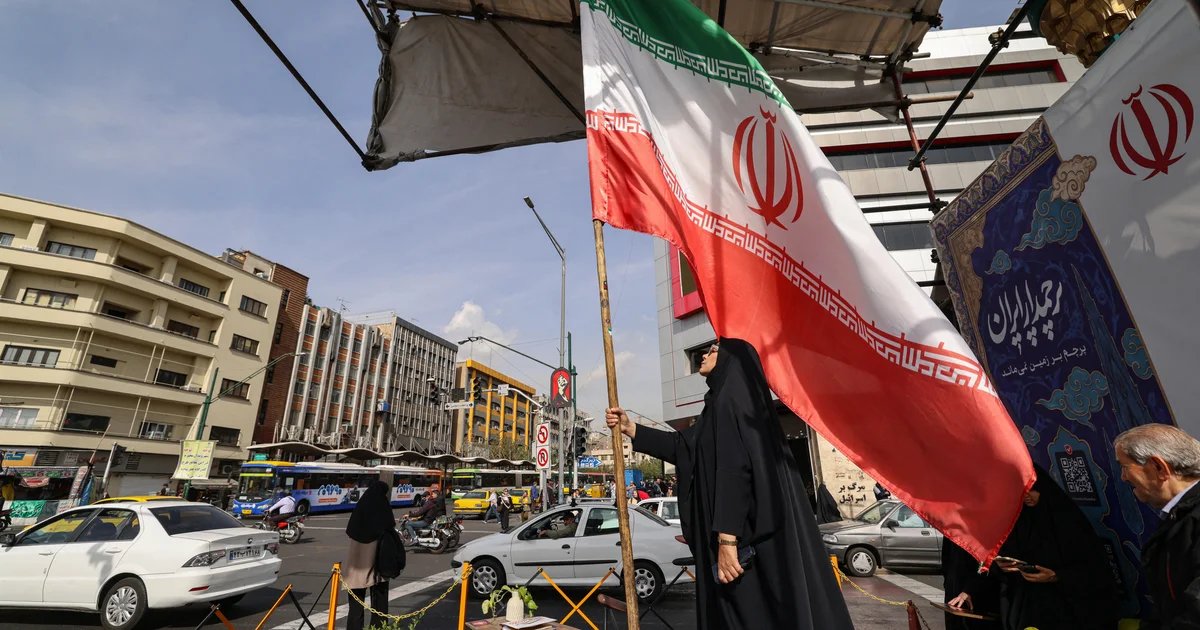
Iran VP says indirect exchanges with U.S. point to recognition of Tehran’s “victory”
Iran’s vice president said on Monday that exchanges with the U.S. via mediators indicated Washington’s recognition of Tehran’s “victory” in the Middle East war, Iranian state media reported.
“Our enemy failed to achieve any of its objectives in the last two wars. Even today, although the United States, driven by its own goals and concerns regarding domestic public opinion, is engaging in various maneuvers, the messages conveyed to Iran through intermediaries point to an acknowledgment of our victory,” said Iran’s First Vice President Mohammad Reza Aref, according to IRNA state news agency.
Oil prices drop roughly 7% ahead of U.S. midterm elections
Oil prices sank around seven percent on Monday, the eve of crucial midterm elections in the U.S., as signals that Tehran and Washington were renewing dialogue boosted hopes of ending the Middle East war.
Earlier, Axios outlet reported that Vice President JD Vance had sent a letter to Iranian national security chief Mohsen Rezaei about possible new talks, in the highest-level move from the Trump administration in months.
Arne Lohmann Rasmussen, chief analyst at Global Risk Management, told AFP that her organization believes such signals from the administration “may be tactical” ahead of the midterms.
“Meanwhile, attacks on shipping in the Strait of Hormuz continue [and] we maintain our higher-for-longer outlook for energy prices,” Rasmussen said.
But share prices of energy majors have dropped, while many other sectors were boosted by the cooling fuel costs. Stocks got a lift from sharp drops in oil prices, which headed back down in their latest yo-yo move on uncertainty about when the war with Iran will allow the global industry to return to normal. The price for a barrel of Brent crude, the international standard, fell 7.4% to $105.03.
The price for the most actively traded contract in the Brent market has been veering between roughly $70 and $120 per barrel since just before the war began, and it’s been quick to reverse direction.
AP/AFP
Houthi spokesperson says Saudi coalition launched more than 100 strikes since Sunday
Brig. Gen. Yahya Saree, a military spokesperson for the Iran-backed Houthis, said Monday that the Saudi coalition fighting the rebel group in Yemen had launched more than 100 airstrikes over the course of the last day.
“Saudi warplanes launched 109 airstrikes over the past 24 hours,” the spokesperson said in a statement shared on X. The strikes targeted the Yemeni provinces of Saada, Taiz, Lahj, Al-Jawf, and Hodeidah, according to the statement. Some of those provinces are in Houthi-controlled or contested territories.
The spokesperson said airstrikes between Sunday and Monday brought the total number of Saudi strikes and missile attacks to 3,939 since the fighting in Yemen escalated earlier this fall.
Saree’s latest comments came after he claimed in another statement Monday that the Houthis had carried out new attacks against Saudi Arabian infrastructure, including a civilian airport, over the last 48 hours.
Houthis claim new attacks on Saudi airport, military assets
A spokesman for the Iran-backed Houthi rebels in Yemen claimed Monday that the group had carried out new attacks over the preceding 48 hours on Saudi Arabian infrastructure, including a civilian airport.
Brig. Gen. Yahya Saree, the Houthis’ military spokesman, said in a statement shared on social media that the group had struck Saudi Arabia’s eastern Dammam Airport “using two drones, and the operation achieved its objective successfully, resulting in the disruption of air traffic at the airport.”
He said another drone hit an “early warning radar in Jizan,” a city on Saudi Arabia’s western Red Sea coast, while unspecified Houthi weapons hit “a military transport aircraft at Jizan Airport.”
The Houthis have peppered Saudi Arabia’s airports and energy infrastructure for weeks in retaliation for the kingdom’s backing of Yemen’s government in the impoverished Middle Eastern nation’s grueling decade-long civil war. Iran has long backed the Houthis as a powerful proxy force, particularly as a counter to Iran’s arch-foe Saudi Arabia, which shares a long border with Yemen.
Houthi drone and missile strikes last month killed at least 20 people at Saudi airports, and despite the kingdom’s vast military and financial advantage over the rebels, it has been unable to stop the attacks.
There was no immediate information from Saudi officials to confirm or deny Saree’s claims on Monday.
Senior Iranian official thanks Putin, talks “strategic cooperation” in phone call with Russian leader
The Secretary of Iran’s Supreme National Security Council, Mohsen Rezaei, had a phone call with Russian President Vladimir Putin on Monday, Iranian state media reported, in a continuation of recent talks between the two countries about the situation in the Middle East.
During their call, Rezaei and Putin discussed regional and global affairs, focusing on West Asia and ongoing “strategic cooperation” between Iran and Russia, according to Iran’s semi-official Tasnim news agency.
Iran and Russia have long been allies, and their relationship has been cemented during both the ongoing Russian assault on Ukraine, and the U.S. war with Iran. Iranian Foreign Minister Abbas Araghchi said in October that Tehran’s ties with Russia were closer than ever, contradicting Mr. Trump’s assertion at the time that Moscow was “doing very little, if anything, to help” Tehran amid the war.
According to Tasnim, Rezaei thanked Putin Monday for Russia’s support.
Iran’s top diplomat says negotiations “proceeding very intensively,” but “everything depends on” U.S. side
Iran’s top diplomat said Monday that negotiations with the U.S., via mediators, aimed at reaching an agreement to end the war have been “proceeding very intensively,” but he added that “everything depends on Washington’s political rationality,” according to Iran’s state news agency IRNA.
IRNA quoted Foreign Minister Abbas Araghchi as reiterating that Tehran will not back down from its conditions for a deal to end the war and to reopen the Strait of Hormuz.
Closed-door negotiations have taken place via mediators, primarily Qatar and Pakistan, and Iranian officials said earlier Monday that it would be up to the U.S. side to make a move and end the monthslong standoff sparked by the joint U.S. and Israeli strikes on Feb. 28.
“If they choose honest diplomacy, we are ready to engage,” IRNA quoted Araghchi as saying. “If they intend to deceive us and launch military operations, they will face a response more bitter and forceful than before.”
Another tanker on fire near Strait of Hormuz after hitting sea mine, Iranian news agency claims
The Iranian Navy claimed Monday that another oil tanker had caught on fire after striking a sea mine near the eastern entrance to the Strait of Hormuz, according to the Fars News Agency, which is closely linked with Iran’s powerful Islamic Revolutionary Guard Corps.
The report cited the Navy as saying the unnamed vessel had struck a mine while attempting to use shipping lanes through the strait that Iran considers unauthorized and unsafe, but which the Trump administration and U.S. military have repeatedly claimed are free and open.
The tanker had switched off its navigation systems, Fars said, referring to a common practice by commercial vessels trying to obscure their movements in the region.
Tanker owners should take a lesson from the fate of vessels that violate Iran’s rules by trying to transit the strait without authorization from Tehran, the report cited the navy as saying.
On Friday, despite repeated assurances from the U.S. that the southern shipping lanes through the strait are open and safe to navigate, the U.K. navy’s Maritime Trade Operations center said there had been 30 attacks on commercial vessels in the region in the month of October alone, a record high.
The Iranian regime said earlier Monday that 11 ships had “caught fire” in or near the Strait of Hormuz in the last nine days alone.
Iran says it proposed shorter 2-day implementation period for proposed peace deal with U.S.
Iranian Foreign Minister Abbas Araghchi said Saturday that Tehran had presented Qatari mediators with a proposal to shorten the implementation period of a potential deal with the U.S. to just two days from seven.
In an interview with Al Jazeera, Araghchi said: “The Qatari side proposed shortening the implementation period of the Iranian proposal to five days. We have reached a proposal at this stage that reduces the implementation period to two days.”
The Iranian minister added, however, that Tehran’s conditions for a deal to end the war remain the same.
The Islamic Republic regime has demanded that the U.S. release frozen Iranian financial assets, lift the naval blockade of Iranian ports, as well as sanctions, and cease hostilities on all fronts, including Israel’s battle with Hezbollah in Lebanon and Hamas in Gaza. In exchange, Iran would reopen the Strait of Hormuz to commercial shipping traffic and commit to further talks on its nuclear program.
Under the original seven-day implementation proposed by Tehran, the Strait of Hormuz would have been reopened on the sixth day.
With the shortened implementation period, according to a statement on the Iranian government website, “a series of measures will be taken by the United States on the first day, and on the second day, the Strait of Hormuz will reopen and maritime traffic will return to its previous conditions.”
Iran claims 11 tankers “caught fire” in 9 days as U.S. commander declared Strait of Hormuz “free and clear”
Iran’s government-run broadcaster IRIB said Monday that 11 oil tankers had “caught fire” in the Strait of Hormuz in the previous nine days, disputing U.S. Central Command chief Adm. Brad Cooper’s assertion last week that “all primary transit routes in the Strait of Hormuz remain free and clear.”
In a post on X, IRIB said the 11 tankers had caught on fire since Oct. 25, the day on which it claimed Cooper made his recent fly-over of the strait.
The Iranian network offered no evidence, but claimed some of the vessels sank “to the depths of the sea.”
Since the start of the war in February, Iran has targeted vessels transiting the Strait of Hormuz in an effort to assert control over the narrow waterway, through which about a fifth of the world’s crude oil supply typically passed prior to the conflict.
Cooper said last week in a Friday video statement that he saw no Iranian navy vessels in the strait during his flyover earlier in the week.
Later Friday, however, the U.K. navy’s Maritime Trade Operations center said there had been 30 attacks on commercial vessels in the month of October alone, a record high.
The U.S. military and President Trump have repeatedly declared Iran’s navy destroyed and insisted that southern shipping lanes through the strait are available to merchant vessels, but ongoing Iranian threats and attacks have kept the risks and costs for shippers high, which has helped Tehran keep maintain pressure on global energy prices.
Iran again warns of natural gas shortages ahead of winter
Iranian officials repeated warnings Monday of possible gas shortages for residents ahead of the winter, and they called on people to conserve the resource.
First Vice President Mohammad Reza Aref said he had to be honest about the stability of Iran’s gas network in the colder months, as he asked the public to help conserve it.
Aref cited “imbalances accumulated over previous years and war-related damages,” and warned that prices would increase for consumers who fail to conserve.
It is not the first time an Iranian official has warned about shortages. On October 25, Iran’s parliament speaker said natural gas consumption across Iran had to be reduced by 10%.
Iran’s economy has been devastated by years of international sanctions, and the U.S. turn to economic warfare after the initial bombing campaigns of the ongoing conflict have strained finances for Tehran even further. The regime has not shown any willingness to bend on its demands to end the war, however, despite the economic pain for most Iranians.
Iran says the “ball is in the U.S. court” on any prospective peace deal
Iran’s foreign ministry spokesperson said Monday that the next move in the standoff with the United States is for President Trump to make.
“The ball is in the U.S. court, because our demands have been stated very clearly and transparently, and Iran’s demands are reasonable and logical,” Esmaeil Baqaei told journalists in Tehran.
Baqaei said ongoing negotiations, which have been brokered by Qatar, Pakistan and other mediators, were centered around the a seven-day proposal that Iran originally presented to the U.S. side in September, which calls for frozen Iranian assets to be released, the U.S. naval blockade to be lifted and an end to fighting on all fronts, in exchange for the phased reopening of the Strait of Hormuz and further negotiations on other topics.
President Trump rejected the initial proposal, but both sides have since exchanged revisions, and Mr. Trump has said repeatedly in recent weeks that he just needs to make a decision on whether to launch new attacks on Iran, or to make a deal to end the war.
Speaking Sunday to a radio network ahead of a campaign rally in Iowa, Mr. Trump said he would finish with the war soon, “one way or the other.”
“Either they’ll make a deal, or we’ll just end it,” he said, without offering any further context.
Netanyahu reportedly pushes for new U.S. strikes on Iran
President Trump told reporters Sunday that he’d spoken with Israeli Prime Minister Benjamin Netanyahu on Saturday and had a “very good talk with him.”
Mr. Trump gave no details but said the two had discussed the war in Iran.
According to sources cited by Axios, Netanyahu pushed for Mr. Trump to strike Iran but the president wants to let the negotiations play out.
The U.S. and Iran both engaged in indirect talks via mediators led by Qatar who are pushing to strike a deal between both sides before the conflict escalated.
Mr. Trump has repeatedly hinted he is considering resuming attacks on Iran after the midterm elections.
Push for U.S.-Iran deal shadowed by threats to resume fighting
Qatari mediators are leading indirect talks aimed at reaching a deal between the U.S. and Iran, but the closed door negotiations have been punctuated by exchanges of threats between the leaders of both countries.
Iranian negotiators are in Qatar for talks on a proposal that could reopen the Strait of Hormuz soon, according to Iranian Foreign Minister Abbas Araghchi, who added the outcome depends on answers provided by the United States.
On Saturday, President Trump said the U.S. still had to “take care of” one or two more potential targets in Iran, citing a suspected nuclear complex at Pickaxe Mountain. On Sunday he reiterated the threat, saying he may have to give Tehran “the hammer” at some unspecified time.
Meanwhile, Iran’s Supreme Leader Ayatollah Mojtaba Khamenei warned on Saturday there would be no “geographical limitations” should the fighting with the U.S. resume, adding that there is a “vast theatre” to inflict damage.
Both sides have previously acknowledged that indirect talks are underway but consistently exchange threats.
CBS/AFP
UAE hopes for diplomacy but braces for “the worst”
The United Arab Emirates’ presidential adviser said Sunday that his country hopes a diplomatic breakthrough in Qatar-led mediations is possible, but that they are also preparing for the possibility of escalation.
Speaking at a security forum in Bahrain, Anwar Gargash said Iran’s attacks on Gulf countries such as the UAE made this a “watershed year” for the region.
“We don’t really want to see another round of confrontation in the region,” Gargash told the audience. But he added that his country and the region are braced for the “the worst,” referring to the resumption of active hostilities.
The UAE was consistently targeted by Tehran in the opening weeks of the war in retribution for U.S. strikes on Iran, disrupting tourism and daily life, and effectively throwing the security landscape of the region into question.
CBS/AP
Vessel struck in Strait of Hormuz, U.K. maritime agency says
A vessel was struck on Sunday by “an unknown projectile” in the Strait of Hormuz, a British maritime security agency said, after Qatari media reported an earlier attack on a gas tanker.
Britain’s UKMTO maritime agency said “the master of a merchant vessel has relayed a mayday call… stating that another vessel has been struck by an unknown projectile” in the strait.
Earlier, Qatar’s state news agency said a Qatari gas tanker had been attacked on Friday with “unidentified objects” while transiting Gulf waters. None of the crew members onboard the vessel were injured, and there was no environmental impact from the attack, the report said.
The attack struck a liquefied natural gas carrier, Al Mayeda, which belongs to the Qatar Gas Transport Company, Qatar News Agency said.
Since the Middle East war began in February, Iran has been targeting vessels in the Strait of Hormuz and the wider Gulf in an effort to assert control over shipping.
Trump says war in Iran will be put away “very soon, one way or the other”
President Trump said he believes the U.S. will soon put the war with Iran away, “one way or the other.”
The president was speaking to Right Side Broadcasting Network before a campaign rally in Iowa on Sunday.
“We’ve had such a victory, and we’ll put it away very soon, one way or the other,” Mr. Trump said. “Either they’ll make a deal, or we’ll just end it… The job we’ve done is amazing.”
Earlier Sunday, Iran’s top diplomat said he hopes there is “rationality” on the U.S. side as diplomatic efforts seek to avert a return to all-out war.