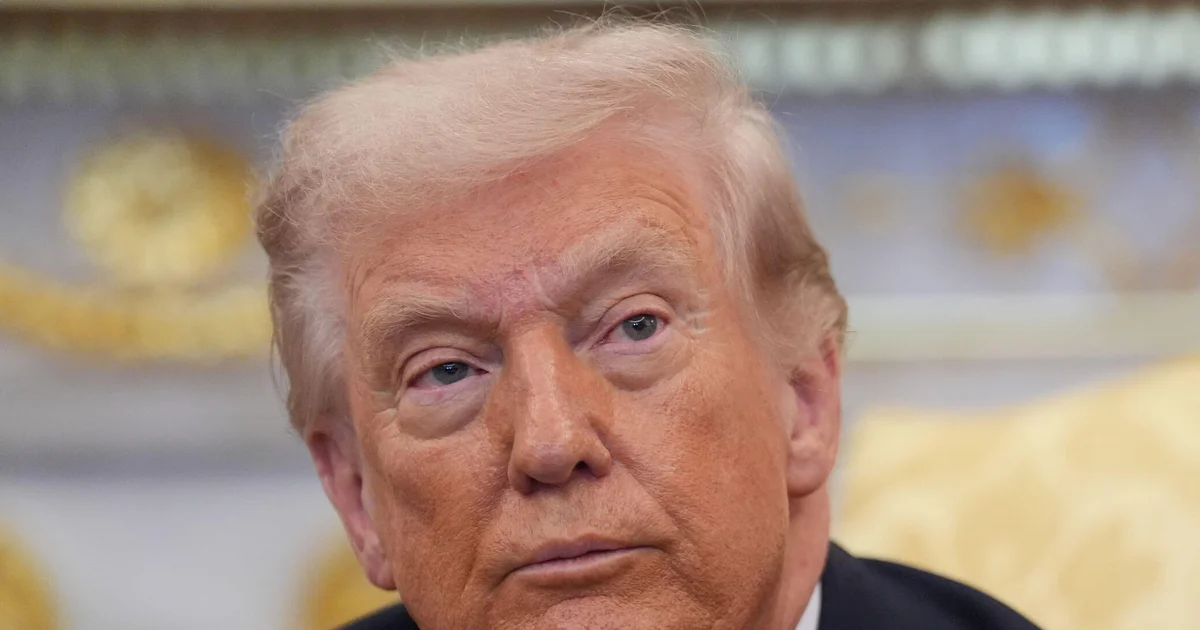
President Trump hasn’t made up his mind yet on whether he wants to send American forces into Iran and seize the country’s nuclear material, which would be a very dangerous operation, sources familiar with the matter told CBS News.
In private conversations, he has told people close to him: “I have a lot of decisions to make.”
The Pentagon has prepared multiple options for the president as potential next steps in the Iran war.
After the U.S. military strikes on three nuclear sites last summer, the International Atomic Energy Agency, a nuclear watchdog, said it could not account for an estimated 400 kilograms of highly enriched uranium Iran had before the strikes.
Mr. Trump believes Iran’s military assets are dramatically degraded — with their navy and air force essentially gone — but he is concerned about Iran’s capability to plant mines, two of the sources told CBS News. He thinks Iranians can gum up oil shipping in the Strait of Hormuz because the mine-laying operations take only three or so people.
On Tuesday, Mr. Trump said it was unclear if Iran had begun laying mines or not. He told reporters, “We don’t even know if there are any mines there, but if there are, you know, we’d like to have a little help in finding them.”
Another problem: The White House doesn’t know who is currently in primary Iranian leadership roles. Mr. Trump has said it’s essentially a “rogue” situation, the sources said.
Asked if the White House can declare the war effort a success if the U.S. doesn’t retrieve Iran’s nuclear materials, press secretary Karoline Leavitt told reporters Wednesday: “Look, that’s something the president has refused to comment on. It’s an option on the table for him, but I’m not going to comment on it or take it off the table.”
IAEA Director General Rafael Mariano Grossi said Wednesday he doubts the nuclear program can be destroyed militarily – because it’s a vast program built over the decades and scattered across a number of facilities. “Iran is a very big country with sophisticated industrial base,” Grossi told reporters.
Grossi also emphasized that after combat ends it would be in all parties’ interest to resume diplomatic negotiations to address concerns about the nuclear program.
Satellite imagery appears to show Iran has covered the tunnel entrances to one of the nuclear sites with large amounts of dirt, according to David Albright, a nuclear expert and head of the Institute for Science and International Security. That means any military operation to get to the highly enriched uranium could require more time on the ground.
The weight of the thick cylinders holding the highly enriched uranium could vary depending on how much each one holds, Albright said during a presentation he gave last week on the institute’s work. If it holds 25 kilograms, the cylinder could weigh about 100 pounds with the solid casing to prevent any leaks.
In the meantime, Iran continues to threaten attacks in the Strait of Hormuz. A British Maritime Security agency has received reports of 15 attacks since the start of the mission, primarily from “unknown projectiles.” Tankers passing through the strait have to weigh the risk of missiles, drones, and potentially explosive naval sea mines.
The U.S. Navy began to decommission some of its ships specifically designed to counter mines a few years ago in favor of repackaging its littoral combat ships with mine countermeasure systems.
Recently, four of the decommissioned ships were transported out of the Middle East. In response to a question about whether the service is considering recommissioning those ships, a Navy official told CBS News that there are no plans to bring them back.
“The Navy’s current surface platform for executing counter-mine warfare operations is the Littoral Combat Ship equipped with the mine countermeasures mission package,” the official said. The package has “manned and unmanned systems designed to locate, identify, and neutralize sea mines, at a safer distance from minefields” than the older minesweeping ships.
Other countries, including in Europe, have designated minesweepers, which Mr. Trump pointed out this week when he criticized them for not joining a coalition to open the strait.
“You would have thought they would have said, we’d love to send a couple of minesweepers,” Mr. Trump said on Tuesday. “It’s not a big deal. Doesn’t cost very much money, but they didn’t do that.”