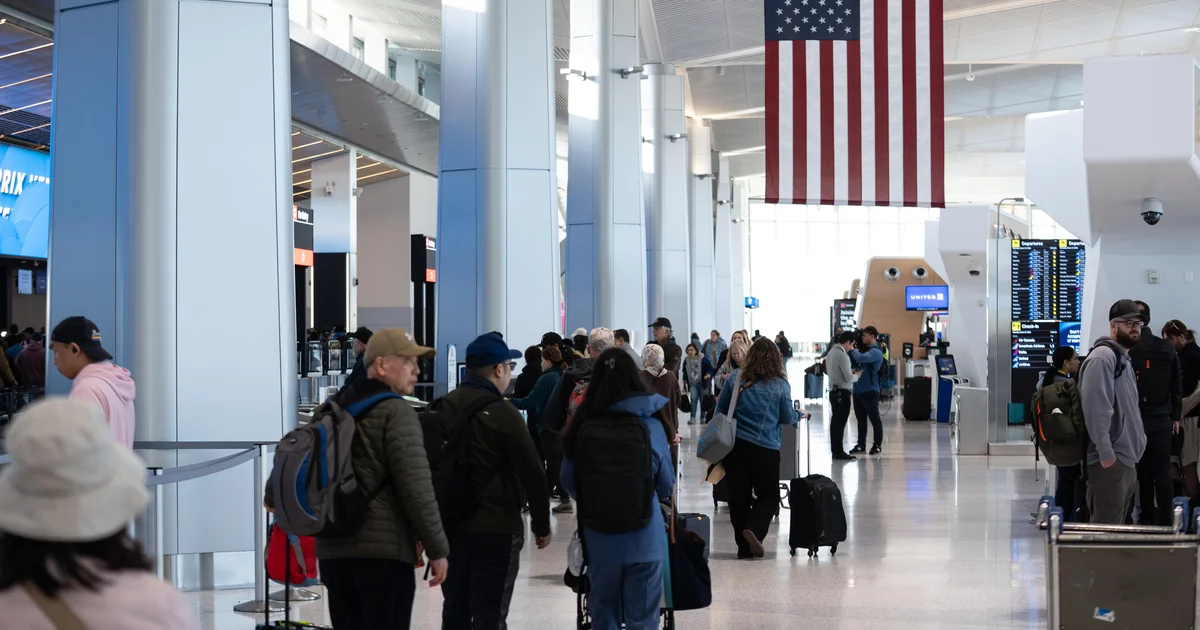
As many travelers continue to face long security lines at major airports across the country, enrolling in TSA PreCheck remains one option for getting to their departure gate more quickly.
The U.S. government-run program allows travelers to bypass standard security lines and instead undergo an expedited screening process that normally takes 10 minutes, according to TSA.
Julian Kheel, CEO and founder of Points Path, a flight awards search engine, said TSA PreCheck is helpful for travelers looking to get through airport security faster, both for flights in the coming weeks and beyond.
“TSA PreCheck will likely help you, even now with the long lines we’re seeing at checkpoints,” he told CBS News. “But once this is over, TSA PreCheck is an absolute asset to any traveler.”
Hundreds of TSA officers have quit during the ongoing and latest partial government shutdown, while thousands have called out. Faced with staff shortages, the Trump administration on Monday deployed Immigration and Customs Enforcement agents to more than a dozen airports to assist with security.
How quickly can I get approved for TSA PreCheck?
Enrolling in TSA PreCheck is relatively simple, involving filling out an online application and attending an in-person appointment. Still, travelers should be prepared to wait at least a week before getting approved, according to Kheel.
One potential hiccup, he noted — some airports may not be operating TSA PreCheck lines due to reduced staff.
“If you are traveling tomorrow, you’re probably not going to be able to get TSA PreCheck for that trip,” he said. “But if you’re traveling seven to 10 days from now, there’s a good chance you’ll be able to get approved in time.”
TSA and the Department of Homeland Security did not immediately respond to requests for comment.
How do I apply for TSA PreCheck?
All three authorized TSA PreCheck providers — Clear, Idemia and Telos — offer the same online application for TSA PreCheck, which takes around five minutes to complete.
The next step is to arrange an in-person appointment at an authorized enrollment center. These are located at airports across the U.S., as well as at stores including CVS, Office Depot and Staples (See TSA’s website.) You can either schedule an appointment online or walk in.
“The TSA PreCheck interview does not have to happen at an airport,” Kheel explained. “There are enrollment centers in your neighborhood, so it should actually be fairly easy to get an appointment because there are so many options.”
During the appointment, which takes approximately 10 minutes, the enrollment provider will confirm your identity by collecting biometric data, such as fingerprints, and verifying your documentation. It will also collect the enrollment fee, which varies based on the provider. Enrolling through Clear costs $79.95, while Idemia and Telos charge $76.75 $85, respectively.
After the appointment is complete, the final stage is waiting for a so-called Known Traveler Number, or KTN. Most travelers get their KTN in three to five days, although it can take up to 60, according to TSA. In order to move through the TSA PreCheck line, travelers must enter the number when they make their reservation so it appears on their boarding pass.
“If you have a frequent flyer account with your airline, you can store that number, and then it will be added to your ticket automatically,” Kheel said.
TSA PreCheck lasts five years, after which travelers have to pay a renewal fee.
The travel analyst suggested that people check the benefits of their travel credit cards, as many offer a TSA PreCheck fee waiver.
What else can I do to save time at the airport?
Once enrolled in TSA PreCheck, travelers can further speed up their trips by enrolling in the agency’s Touchless ID programwhich uses facial identification technology at security checkpoints across 65 airports. Flyers can opt into the program through one of the five participating airlines: Alaska, American, Delta, Southwest or United.
Another option is to sign up for Clear, a program run by a private company that contracts with TSA and operates its own lines at the airport. The service costs $209 annually and can be used in conjunction with TSA PreCheck.
For those who travel internationally, the Global Entry program, which includes TSA PreCheck, can also cut down on security wait times, Kheel said.
“Global Entry is a more expensive process and takes longer to get. It is also something where you can only generally do your interview at airports,” he told CBS News. “But once you have Global Entry, you then have access to expedited re-entry into the United States through immigration and customs.”