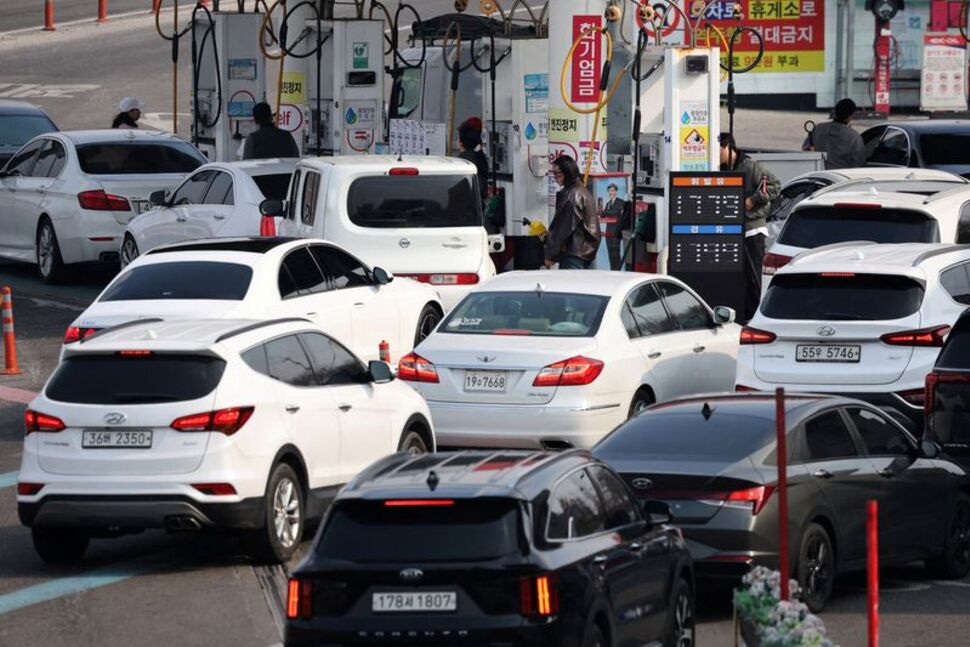
SEOUL, March 30 (Reuters) – South Korea is considering extending driving curbs to the general public if global oil prices climb further, senior officials said, as authorities seek to rein in energy demand amid supply strains due to the U.S.-Israeli war with Iran.
Finance Minister Koo Yun-cheol said on Sunday the government could expand restrictions on passenger car use beyond public institutions if crude prices rise to around $120–$130 a barrel, up from the current $100–$110 range.
If expanded to the entire public, the policy would mark the country’s first nationwide driving curbs since the 1991 Gulf War, when the government imposed a 10-day vehicle rotation system to conserve energy.
“If the Middle East situation worsens, the crisis alert would have to move up to the ‘warning’ stage, and around that point we would need to curb consumption,” Koo said on a local broadcast, referring to a move up to the third-highest level in the country’s four-stage resource security crisis alert system.
He added the government may also consider further fuel tax cuts to ease the burden on households.
The finance ministry said in a separate media release on Monday that mandatory driving curbs for the private sector remain undecided, adding that authorities would weigh energy supply conditions and broader economic factors before taking any action.
South Korea imports about 70% of its crude oil from the Middle East, leaving the country highly exposed to supply disruptions and sharp price swings stemming from tensions in the region.
The government last week enforced a mandatory five-day vehicle rotation system for the public sector, restricting vehicle use based on licence plate numbers.
Energy Minister Kim Sung-whan said last Thursday authorities were reviewing tighter demand-management measures should the alert level rise further, including widening enforcement of driving curbs, while encouraging voluntary participation by companies and the financial sector.
Major conglomerates such as Samsung Electronics and SK Group have joined the effort, urging employees to cut back on private car use and adopt fuel-saving measures.
Lawmakers and senior politicians have also taken to social media, posting about using public transport and bicycles to set an example and calling on the public to join energy-saving efforts.
(Reporting by Kyu-seok Shim; Editing by Sonali Paul)
Copyright 2026 Thomson Reuters.