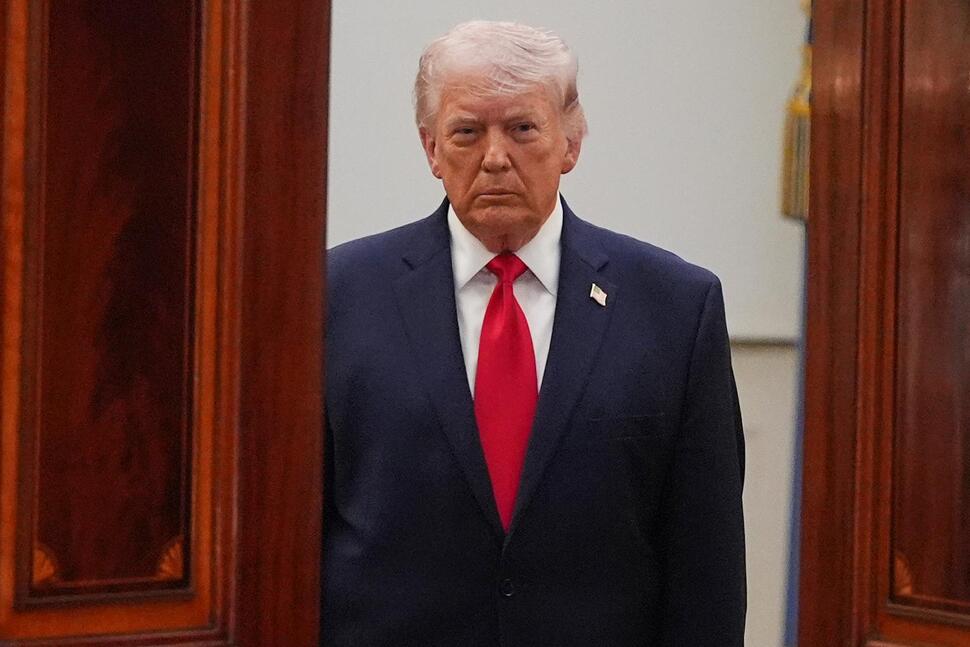
WASHINGTON (AP) — The White House is set to release President Donald Trump’s 2027 budget Friday, a sweeping blueprint that could boost Pentagon spending to $1.5 trillion, the largest of its kind in decades, as the U.S. focuses on military investments rather than other domestic programs.
Trump, speaking ahead of an address to the nation this week about the Iran war, signaled the military is his priority, setting up a clash ahead in Congress.
“We’re fighting wars. We can’t take care of day care,” Trump said at a private White House event Wednesday.
“It’s not possible for us to take care of day care, Medicaid, Medicare — all these individual things,” he said. “They can do it on a state basis. You can’t do it on a federal.”
The president’s annual budget more broadly is considered a reflection of the administration’s values and does not carry the force of law. The massive document typically highlights an administration’s priorities, but Congress, which handles federal spending issues, is free to reject it and often does.
About two-thirds of the nation’s estimated $7 trillion in annual spending covers the Medicare and Medicaid health care programs, as well as Social Security income, which are essentially growing — along with an aging population — on autopilot.
The rest of the annual budget has typically been more evenly split between defense and domestic accounts, nearly $1 trillion each, which is where much of the debate in Congress takes place.
This year’s White House document, prepared by Budget Director Russ Vought, is intended to provide a road map from the president to Congress as lawmakers build their own budgets and annual appropriations bills to keep the government funded. Vought spoke to House GOP lawmakers on a private call Thursday.
Congress still fighting over 2026 spending
The president’s budget arrives as the House and Senate remain tangled over current-year spending and stalemated over DHS funding, with Democrats demanding changes to Trump’s immigration enforcement regime that Republicans are unwilling to accept.
Trump announced Thursday he would sign an executive order to pay all DHS workers who have gone without paychecks during the record-long partial government shutdown that has reached 49 days. The Republican leadership in Congress reached an agreement this week on a path forward to fund the department, but lawmakers are away on spring break and have not yet voted on any new legislation.
As DOGE slashed through federal offices and Vought sought to claw back funds, Congress did not always agree.
For example, Trump sought a roughly one-fifth decrease in non-defense spending for the current budget year ending Sept. 30, but Congress kept such spending relatively flat.
Some of the programs that Trump tried to eliminate entirely, such as assisting families with their energy costs, got a slight uptick in funding. Others got flat funding, such as the Community Development Block Grants that states and local communities use to fund an array of projects intended mostly to help low-income communities through new parks, sewer systems and affordable housing.
Lawmakers have also focused on ensuring the administration spends federal dollars as directed by Congress. This year’s spending bills contained what Sen. Patty Murray, the ranking Democratic member of the Senate Appropriations Committee, described as “hundreds upon hundreds of specific funding levels and directives” that the administration is required to follow.
Copyright 2026 The Associated Press. All rights reserved. This material may not be published, broadcast, rewritten or redistributed.
Photos You Should See – April 2026
