


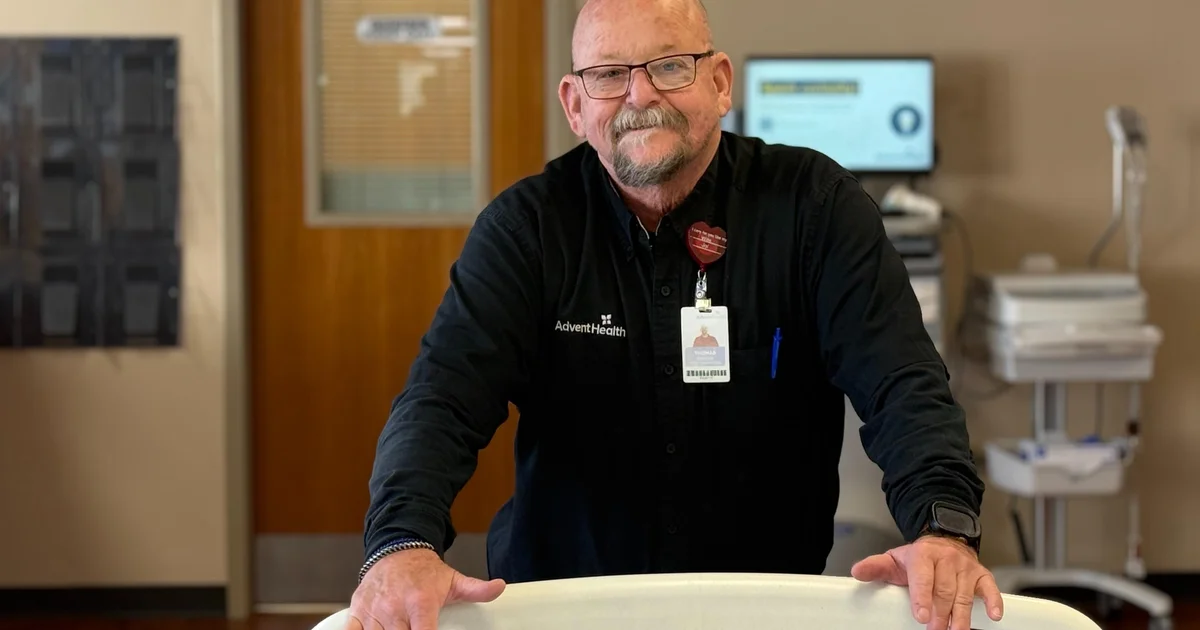
Tommy Bell knew he hadn’t always had the best diet, but when he started working at a Florida hospital over 10 years ago, he learned a lot about how nutrition contributes to health and started eating better.
At 62 years old, he felt like he was in good shape: He didn’t smoke or drink, he ate well and walked over 10,000 steps a day in his job transporting patients around AdventHealth DeLand Hospital.
When Bell started to feel some mild pain in his chest while driving home from work the day before Thanksgiving last year, he decided to go back and get checked out in the emergency room. Tests showed he had a blockage in his “widowmaker” artery and calcification around his heart, putting him at risk for a cardiac event. Doctors scheduled a procedure to place a stent in the artery.
Bell spent Thanksgiving in the hospital and received the stent the next day. But shortly after the procedure was completed, he was struck with severe pain.
“I went into a fetal position, and I could not straighten back up,” Bell said. “I could remember people saying ‘Tommy, you need to straighten back up so we can fix this.'”
Tommy Bell 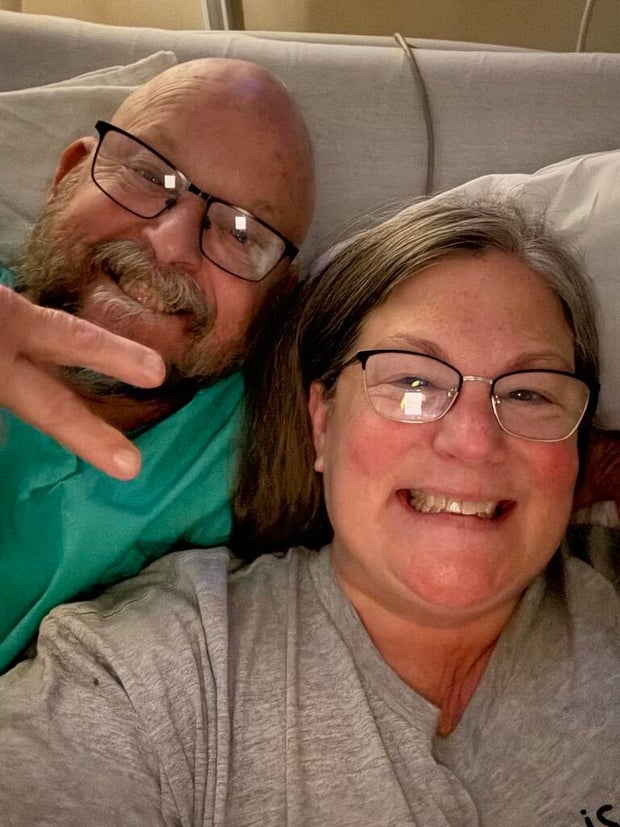

Tests showed Bell had had a heart attack. Doctors quickly placed another stent, and Bell’s condition stabilized. He was discharged on the Sunday after Thanksgiving. The next morning, he started to feel something like heartburn. His wife rushed him back to the hospital. From there, he only remembers flashes.
“I got in the car, and then I don’t remember the trip there. Then I remember pulling into the valet area. They came out with a wheelchair,” Bell said. “I remember somebody saying ‘I want to see the EKG,’ and then I heard someone say ‘Send him straight to the cath lab.'”
“When I finally came around, I was in the ICU again, and I was told I had two more heart attacks,” Bell continued. “That’s three heart attacks in four days. … I was thinking, ‘What have I done to myself?'”
Treating a rare complication
Dr. Janak Bhavsar, an interventional cardiologist at AdventHealth DeLand, said that a blood clot that formed after Bell’s first surgery led to the heart attacks. It’s a complication that affects between 0.5 and 1% of people who have stents placed, he said. Bell also had a large blockage, which can increase the risk of complications.
“When there’s a lot of calcium around the artery, it limits how much the stents can expand to improve blood flow,” Bhavsar said. “That can cause some slowing of the blood flow and make it more prone to a blood clot forming in the stent.”
Bhavsar and his team performed an intracoronary lithotripsy, when a specialized balloon is inserted into the blocked artery. The balloon emits electrical shocks that help break up the calcium and allow the stent to open wider. Bell also received a second stent and was put on blood thinners to reduce the risk of another clot forming.
Christoph Burgstedt / Getty Images 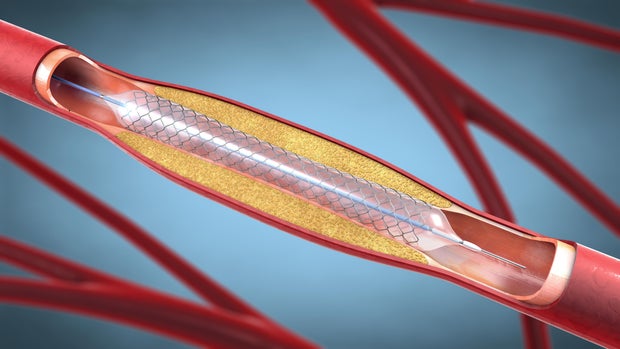

Bell was still in pain for a few hours after waking up, Bhavsar said. Luckily, he wasn’t having another heart attack — it was a side effect of everything he had been through. For the next four days, he was closely monitored in the hospital. Friends, coworkers and other familiar faces were constantly present, Bell said. He said he was stunned by the outpouring of support from those who he usually only saw in passing.
“The amount of love that was poured out and that was expressed on my behalf was so overwhelming,” Bell said. “I couldn’t believe that people cared about me like that. I had everybody from administration come to my room and just pray over me. Our chaplains, our staff, the heart doctors, the nurses, everybody, all the way down to housekeeping and transport. Everybody stopped in to see me. They actually had to slow it down a bit, so I could recover.”
“I could not believe this had happened to me”
Bell spent two weeks recovering at home before returning to work. Being back in the same hospital where he’d fought for his life was jarring, he said, but friendly faces in the hallway helped soothe him. He also sat down with the rehabilitation team at AdventHealth DeLand to see what changes he could make to avoid future heart problems.
“They said my cardio is fantastic,” because of his work responsibilities, Bell said. “Now, it was time to get on with the dietary team and figure out how to change my diet.”
AdventHealth DeLand 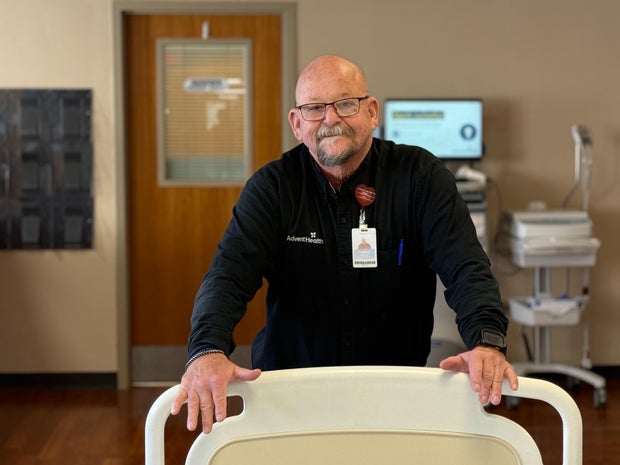

Bell had eaten a lot of fast food in his 20s and 30s. While he started eating more homemade meals after that, he didn’t think about things like salt and cholesterol. He made changes after starting working at DeLand, but those earlier choices “added up over time,” Bell said. Most arterial buildup can’t be removed with lifestyle changes, according to Harvard Medical School.
Now, Bell’s diet focuses on leaner meats and tasty salads. He swaps recipes with other heart attack survivors, and always packs healthy snacks to tide him over between meals. Bell will also continue having regular follow-up appointments with Bhavsar.
“I could not believe that this had happened to me. I thought I ate right, I took care of myself fairly decent, and I never thought it would happen to me … I didn’t really think I had to change anything, but we did change it,” Bell said. “I can change my future in the way I eat.”