


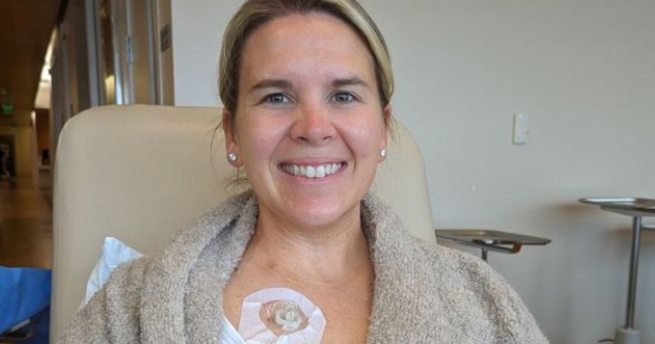
When Amy Piccoli’s son brought home a stomach bug in May 2024, she thought she knew what she was in for. The Los Angeles mom of three was used to seasonal illnesses and 24-hour viruses.
Piccoli got sick, as she expected. But she soon became “really dehydrated” and ended up in the emergency room. As part of their workup, doctors ran a CT scan. The test showed spots on her liver and a mass in her colon. A follow-up MRI led to a biopsy. Piccoli said she “kind of blacked out” when she received the results.
“My doctor called me and said ‘We think that the liver spots are cancer that has spread from the colon,'” Piccoli, 39, recalled. “I was in complete shock. I had no symptoms … I have no family history of any type of cancer.”
Piccoli’s diagnosis of Stage IV colon cancer was confirmed the Friday before Memorial Day. She spent the long weekend doomscrolling on Google. The statistics she saw left her and her husband “crying and terrified.”
“I was just in total shock, and panicked and scared,” Piccoli said. “My entire life, I’ve been a very diligent person with regards to going to the doctor and noticing changes in my body … I did everything. So to not have caught this at some earlier stage was just unfathomable to me.”
An “extremely rare” diagnosis
In most cases, colon cancer has symptoms like gastrointestinal distress, blood in the stool and unexplained weight loss, said Dr. Robin Mendelsohn, a gastroenterologist at Memorial Sloan Kettering Cancer Center and the co-director of the hospital’s Center for Young Onset Colorectal and GI Cancers.
Mendelsohn said a diagnosis of late-stage colorectal cancer after no symptoms is “extremely rare,” and noted that more subtle warning signs, like fatigue, might not be recognized as cancer symptoms.
Amy Piccoli 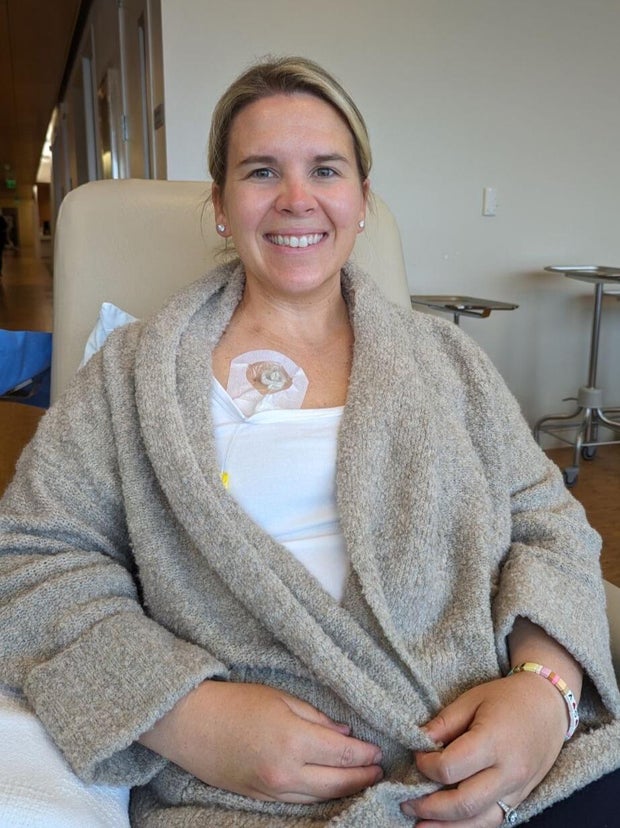

Piccoli began treatment in June 2024, after her diagnosis. Genetic testing showed that immunotherapy might help treat her tumors, so it was added the following month. The combination of two medications “worked incredibly well” and led to “significant shrinkage” in the tumors, Piccoli said. That allowed surgeons to remove the tumor in her colon.
Still, it wasn’t enough. Her liver tumors couldn’t be removed surgically. So Piccoli asked her oncologist about something she’d seen online: Liver transplants for patients like her.
A treatment that “turns hospice into hope”
Continuing to treat the tumors on her liver with chemotherapy alone would leave Piccoli with only about a 10% chance of surviving more than five years, according to Dr. Zachary Dietch, a transplant surgeon at Northwestern Medicine. But recent data out of Europe showed that some patients who have the cancerous part of their colon removed and receive a liver transplant can see five-year survival rates jump to as high as 80%, according to Dr. Satish Nadig, director of Northwestern’s Comprehensive Transplant Center in Chicago.
There are strict requirements for the procedure, including ensuring patients have a low risk of recurrence and confirming that there is no disease except for the cancer on the liver. Only a minority of patients will fit those descriptors, Mendelsohn said, and doctors must also consider the specifics of each tumor. But for patients who qualify, the procedure “turns hospice into hope,” Nadig said.
Because the treatment is so new, just a few centers in the U.S. perform it. Piccoli’s oncologist referred her to the program at Northwestern, which Nadig oversees. In September 2025, she went to Chicago for an evaluation that found she was a suitable candidate for a transplant from a living donor. Over a dozen friends and family filled out an intake form to see if they were a match for Piccoli. A family friend, Lauren Prior, was selected as her donor. In December 2025, Piccoli traveled to Chicago again for the operation.
Amy Piccoli 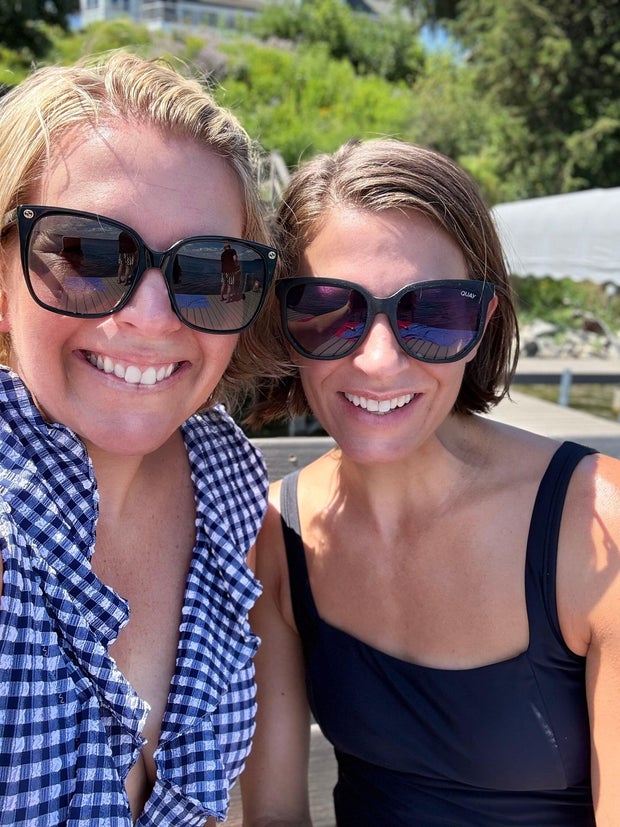

“I was just so excited for the surgery. I was excited for a transplant. I had no fear around such a major surgery,” Piccoli said. “I knew I would be cancer-free. For me, it was like the end of a long, terrifying, draining experience, and I just wanted to put it past me.”
A “new lease on life”
Dietch said Prior and Piccoli’s surgeries went smoothly. After the transplant, Piccoli stayed in Chicago for three months. During that time, she adjusted to anti-rejection medications and underwent frequent scans to ensure her disease wasn’t returning. It was hard to be away from her family for so long, Piccoli said, but visits every few weeks helped.
“It was hard, it was hard on everyone, but at the end of the day, I did this so that I can live a long life for my kids,” Piccoli said. “It felt really good to just have confirmation that everything I went through was worth it.”
Amy Piccoli 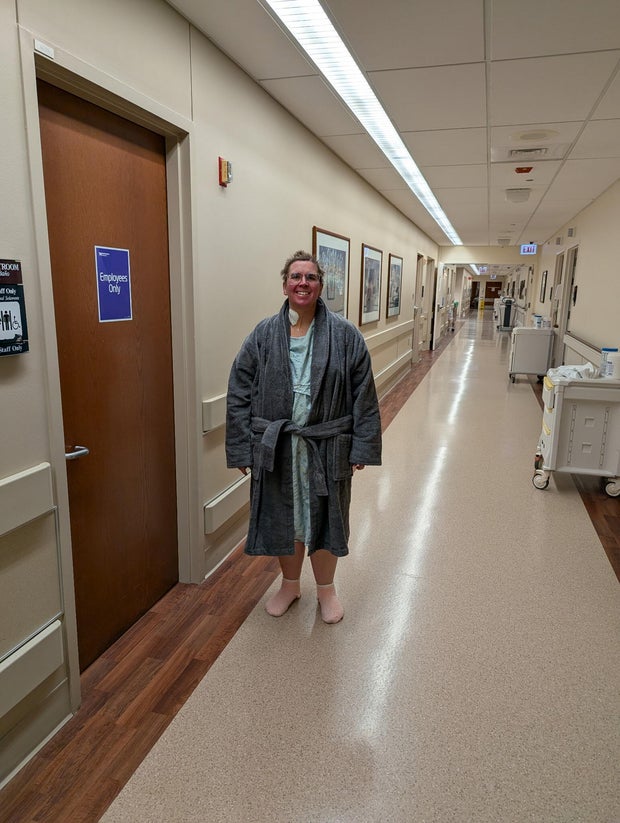

Piccoli left Chicago at the end of March. She will continue to have regular scans for the next five years, Nadig said. The goal is to spot and treat any cancer that may be detected early. In most qualified patients, the risk of recurrence is low, and if it occurs, it happens only in a small area that can be treated locally, Nadig said.
“It’s not a death sentence anymore,” Nadig said.
Going for the tests can be nerve-wracking, Piccoli said. But so far, everything has been clear. She plans to spend her summer with her kids, who are now four, seven and eight.
“Cancer is horrible, but it’s kind of a blessing, in the sense that it gives you a new perspective on life,” Piccoli said. “I’m just excited to live my life with this fresh perspective and spend time with my kids and not be on chemo and have a really fun summer with them, and not have so many doctors’ appointments, and just go back to living with this new perspective and this new lease on life.”