Dr. Sara Whittingham wasn’t initially worried about her occasional forgetfulness or tendency to trail off mid-sentence. She was an Air Force veteran, a mom of two and anesthesiologist. Her family had recently moved from Utah to Ohio. The COVID-19 pandemic was raging.
There was a lot going on at any given moment, and some lapses in focus seemed understandable. Even some new stiffness in her gait just seemed like her body reminding her she had recently turned 46. Then, during one family movie night in November 2020, her husband noticed her arm was shaking.
“Like any doctor might do, I turned to Google. I said ‘Why do I have a one-sided resting arm tremor?'” Whittingham recalled. “And it was one article about Parkinson’s after another.”
At first, Whittingham was in disbelief. She thought she was too young for Parkinson’s disease. But everything she read pointed to the same diagnosis. The next day, she consulted a neurologist at the Cleveland Clinic regional hospital she worked at.
Dr. Sara Whittingham 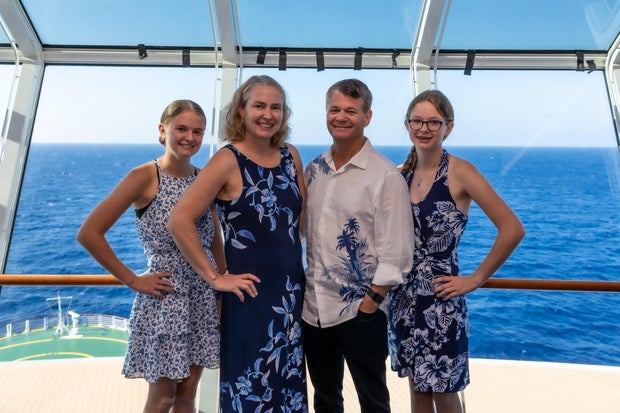

“He confirmed the diagnosis in the middle of my workday, which was not ideal, but I guess there’s never a good time to find out you have a life-changing disease,” Whittingham said. “It was really kind of one of those gut punches where, you know, your whole world just stops. Everything you imagined for your future gets brushed aside.”
Parkinson’s disease and exercise
Parkinson’s disease is a progressive illness that affects the nervous system. Symptoms may start small, like with Whittingham’s tremors, but will eventually escalate, according to the Mayo Clinic. In the months after her diagnosis, Whittingham couldn’t stop thinking about worst-case scenarios. She feared a steep decline in quality of life and struggled with anxiety and depression.
Then she learned about a study examining the effects of cycling on the progression of Parkinson’s. As a former runner whose activity had been limited by her earlier symptoms, she was eager to enroll.
“It ended up being a lifeline,” Whittingham said. “The more I started riding the bike, the better I felt. I felt like I was coming back to life.”
Dr. Sara Whittingham 

The study was run by Dr. Jay Alberts, who noticed that some data showed patterns of activity in the brains of Parkinson’s patients after exercise looked similar to the activity seen after a person takes medication to manage Parkinson’s symptoms. His research, some of the first on how aerobic exercise may alter disease trajectory, showed that if patients maintained a cycling rate of 75 rotations per minute or more for 30 to 40 minutes at least three times a week, the disease progression could be slowed.
Alberts called it an “exercise prescription for Parkinson’s disease.”
“If you think about this disease, this is a disease that robs individuals of control,” Alberts said. Most treatment options are up to a neurologist. But the self-directed element of the “exercise prescription” helps give “some control back to the patient,” Alberts said.
Dr. Ben Walter, Whittingham’s neurologist at the Cleveland Clinic, said it’s not entirely clear why exercise slows Parkinson’s progression, but said that the reason is “probably multifactorial.” Keeping the body strong and flexible can certainly help counteract the stiffness and slowness caused by Parkinson’s, he said. The exercise can also strengthen brain healthhe said.
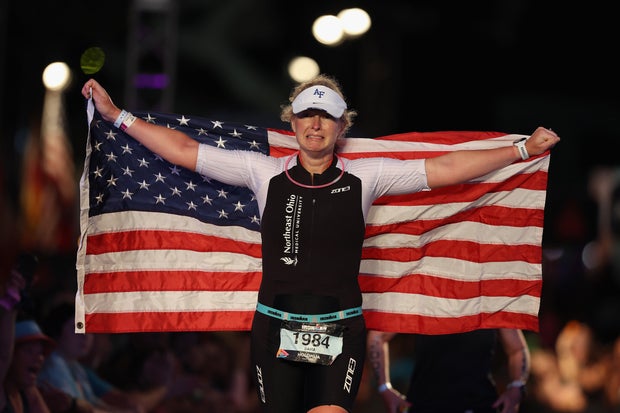
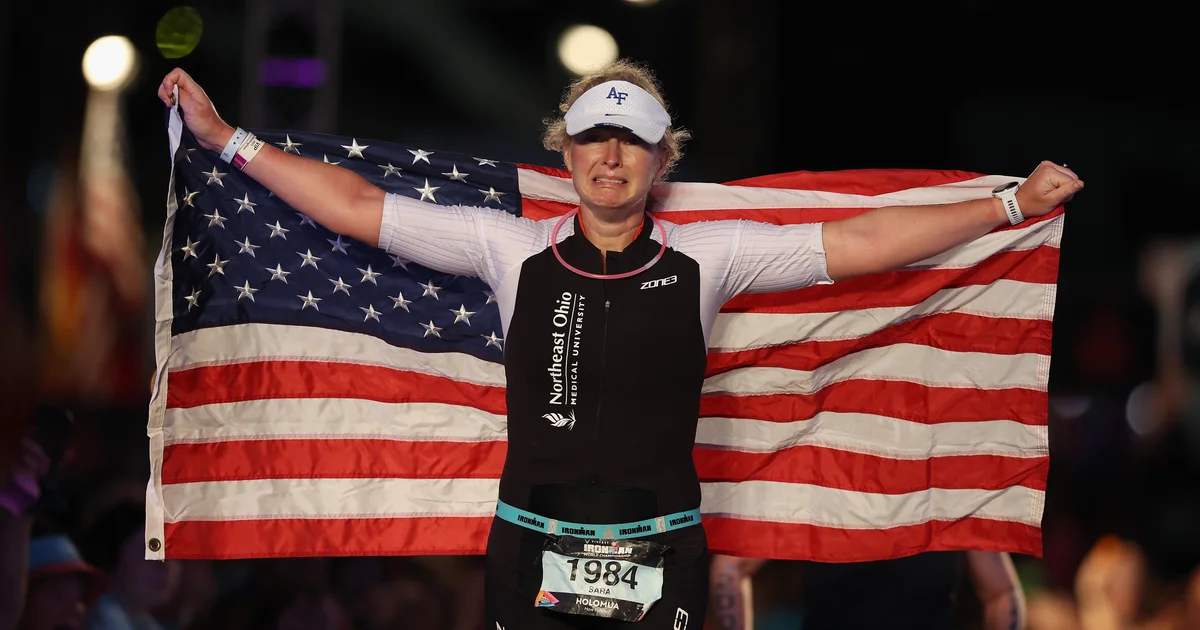
For Whittingham, participating in the study was the first step in a new journey. A few months into the study, her husband signed up for a half triathlon — an event that involved running, biking and swimming. She began to join him in the pool. As she trained, she started to wonder if she could also compete in the race. She didn’t tell anyone when she signed up. When she competed, she beat her husband. From there, her ambitions kept growing. In 2023, she raced in the Ironman World Championship.
“I never, ever thought that would be something that I would be able to accomplish,” Whittingham said. “To cross the finish line and hear my name being called — ‘Sara Whittingham, you’re an Ironman’ — three years after my diagnosis was just unreal.”
Dr. Sara Whittingham 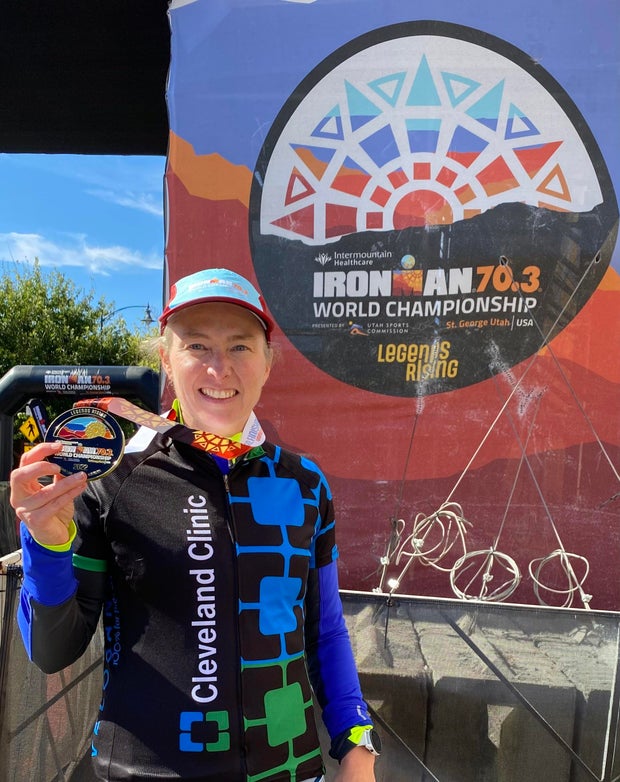

“Set the most outrageous goal”
Whittingham joined another study looking at exercise and Parkinson’s patients in 2025. The ongoing research examines what happens when people with Parkinson’s exercise in a community environment, instead of alone at home.
“Once you’re there, our energy kind of feeds off each other. It’s so fun to see people who maybe have never been on an exercise bike, now two months into the study, they’ve got their cycling shoes and they’re gung-ho, ready to get cycling,” Whittingham said. “Seeing how the community inspires each other has been really powerful for me.”
Outside the trial, Whittingham still races, and even took part in a qualifying event for the U.S. Paralympic Team in 2024.
Dr. Sara Whittingham 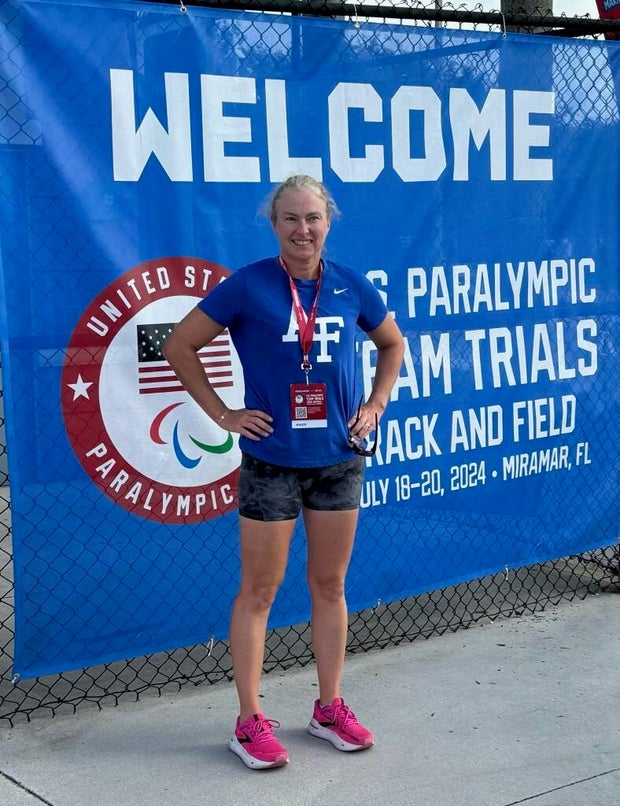

When not racing, Whittingham has embraced a “new mission” as a Parkinson’s advocate. She recently spoke at a policy forum hosted by Michael J. Foxand was appointed to an advisory council for the National Institutes of Health’s National Plan to End Parkinson’s. She is working on a book about her experience, and said she hopes sharing her story can inspire others.
“The brain is such a miraculous, adaptable organ, that it will find a way,” Whittingham said. “You don’t need to finish an Ironman, but set the most outrageous goal you can think of. Whether or not you achieve that goal isn’t the point. Taking small steps will make you stronger and give you a purpose.”
Christian Petersen