


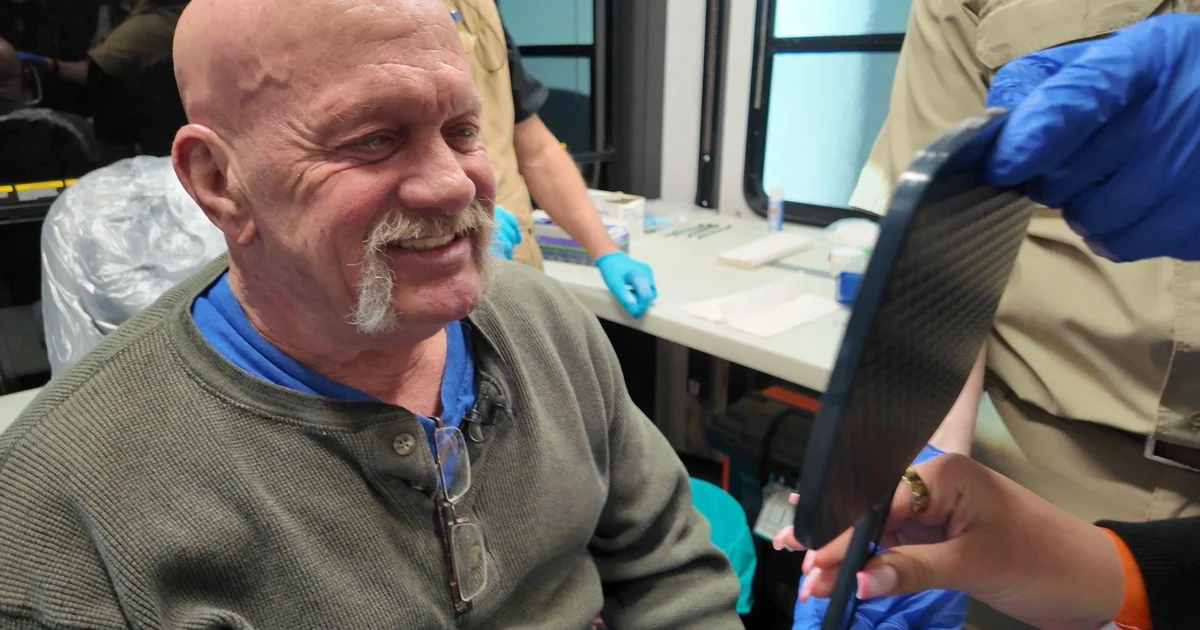
Dave Burge slept in his truck overnight in frigid weather for a dental appointment.
Burge needed dentures, but was unable to afford them. He was one of more than 1,200 patients, some of whom waited in line for days, to get a free appointment at a Remote Area Medical pop-up clinic in Knoxville, Tennessee. RAM provides medical, dental and vision care to uninsured and underinsured Americans around the country.
“When they hand you your life back, that’s life changing,” Burge said. “That’s what teeth mean to me. I could be a normal human again.”
The people who need help
Burge already spent around $140,000 on medical bills after an uninsured drunk driver ran a red light and nearly killed him in 2012, he said. Then, one day, a construction accident while at work wrecked his teeth again.
“By then I was pretty thin on money to do much about it. So I didn’t have a lot of choices. I just kept working.”
Sandra Tallent, who drove more than 200 miles from Alabama and spent two nights sleeping in her car for a dental appointment with RAM, said she would also be unable to afford dentures if not for the free clinic.
60 Minutes 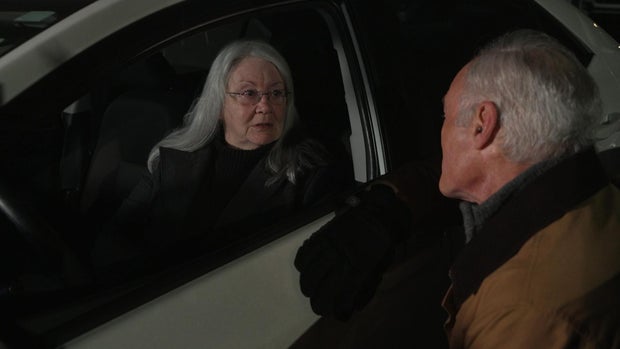

Health care is a major cost across the U.S., and one many cannot afford. About a third of Americans say they’ve skipped meals, borrowed money or cut back on utilities to pay for health care, according to a March Gallup poll.
And while the Trump administration has lowered prices on more than 50 drugs, it has also let premiums rise in the Affordable Care Act marketplace, and made the biggest cuts ever under Medicaid. Around 3 million people have lost insurance under the Trump administration, according to government data, and it’s estimated up to 10 million could lose insurance in the next three years.
About half of the patients at RAM clinics have no insurance. The rest have insurance they can’t afford to use because of co-pays and deductibles – or they can’t find a provider who will take their insurance.
According to RAM CEO Chris Hall, approximately 60% of patients need dental care. About 30% request eye exams and glasses, with around 5% asking for medical care. There’s also screenings for blood sugar, blood pressure, breast cancer, skin cancer and more.
The volunteers helping
RAM, which got its start decades ago parachuting doctors into South American jungles, today operates clinics nearly every weekend around the U.S.
“Nobody here that’s working or volunteering today is going to judge any person that comes through that door. We are here to help,” Brad Sands, a former paramedic who coordinates RAM clinics, said.
60 Minutes 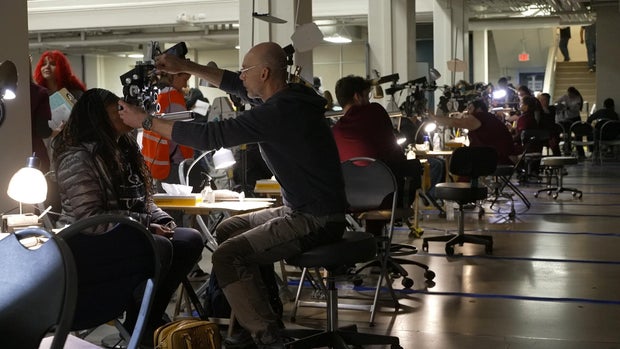
There were 887 volunteers at the Knoxville weekend. Medical professionals pay their own way to come and bring medical students with them.
“I’ve said it a million times, if you ever lose faith in humanity, go spend ten minutes at a RAM clinic. You’re going to see hundreds of people there that are donating their time,” Sands said. “They’re coming out and they’re donating large swaths of their own money, slash time, to help their neighbors.
Dr. Glen Goldstein, a New Jersey dentist, started volunteering with RAM after seeing a 60 Minutes report in 2008 on the organization.
“And as soon as your segment was over, about this organization, I immediately went online, looked it up and registered down here,” he said.
In the years since, volunteering with RAM has become a regular event in his family, with his wife, his children and his daughter-in-law volunteering as well.
Goldstein said he sees patients who’ve suffered without health care, and who have no hope for the future. He’s had young patients who’ve asked him to remove all their teeth, because they don’t have money to get them fixed.
“And it’s heartbreaking to take all the teeth out,” Golden said. “It’s terrible.”
RAM operations
Depending on the size of the clinic, RAM will spend between $100,000 and $500,000 over a weekend. The money comes from donations, Hall, the CEO, said.
“Over 81% of our supporters are individual donors, people that write $5, $10, $20 checks every month,” Hall said.
RAM also gets supplies and clinic space donated.
60 Minutes 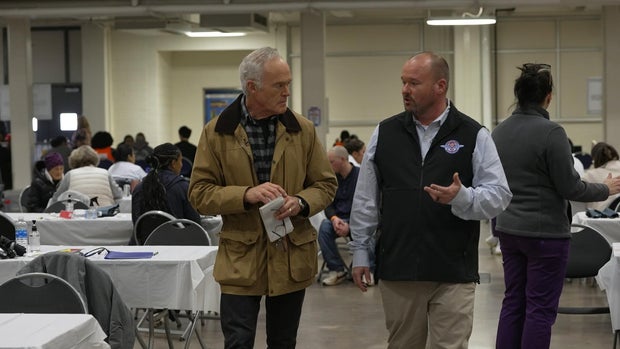
The charity got its start under the late Stan Brockan eccentric Englishman, who was a cowboy in the Amazon, a pilot, and later one of the stars of TV’s “Wild Kingdom.” When 60 Minutes met Brock in 2008, he was 73, had no family, took no salary, lived in an office he donated to RAM, and showered with a garden hose.
At the time, he was staging 12 clinics a year. After the broadcast, $4 million in donations poured in, along with thousands more volunteers. RAM now runs 90 clinics a year.
RAM has now treated more than a million patients since its start, thanks to more than a quarter-million volunteers.
Across the Knoxville weekend, RAM provided over a million dollars in medical care, at no cost to the patients. RAM volunteers treated 1,224 patients, made 588 pairs of glasses, pulled 1,467 teeth, filled 283 cavities, did 342 dental cleanings and conducted 247 medical exams.
And then there were the denture patients, including Dave Burge and Sandra Tallent.
At the Knoxville clinic, there was a trailer where 3D printers were used to make and print dentures. Connor Gibson, the 22-year-old engineer who helped build it, has slept in the trailer to keep the printers running nonstop. He’s inspired by something he calls the mirror moment: when a patient with a new set of dentures sees themselves in the mirror.
“You just see all that stress melt away. And no matter if they’re 18 or 80, we see grown men cry sitting in the chair,” Gibson said.
Burge and Tallent, with their new sets of dentures, both smiled when they had their mirror moments.
“I don’t know what I’d do [without RAM,]” Tallent said. “You know, the Lord would make a way. But I feel like he has made a way through RAM.”