


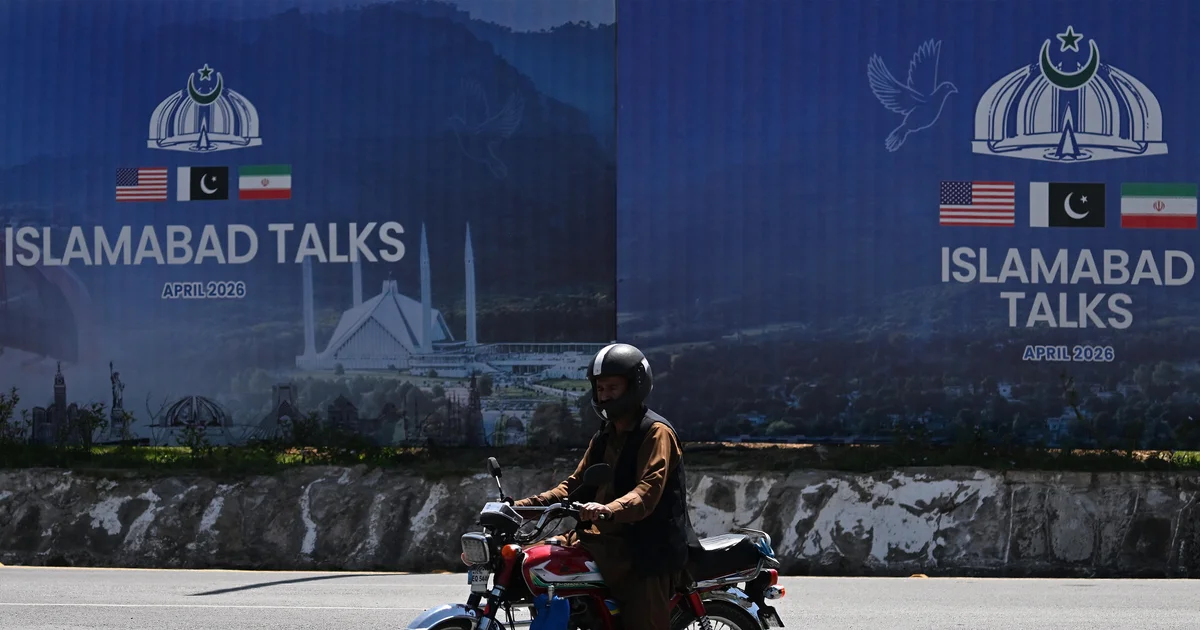
A senior Pakistani government official confirmed to CBS News that Islamabad has intensified diplomatic efforts to bring Tehran and Washington back to the negotiating table over the Iran was.
Despite the lack of a breakthrough in the historic face-to-face round of talks over the weekendPakistani authorities said they remain cautiously optimistic about the prospects for continued engagement between both sides.
Aamir Qureshi/AFP via Getty Images 

Notably, there appears to be an element of rebranding underway, with officials now increasingly referring to the “Islamabad Talks” as the “Islamabad Process,” a shift that suggests an effort to frame the engagement as an ongoing diplomatic track rather than a one-off meeting.
The top-level source also said Monday that Pakistan is in active contact with both Washington and Tehran, urging them to resume dialogue at the earliest opportunity. The primary objective is to reach a workable understanding before the current ceasefire — set to expire around April 22 — ends in order to prevent a return to all-out-war. Efforts are now underway to facilitate a second round of talks within this narrow window.
According to the source, these diplomatic initiatives are being pursued under the direct instructions of Pakistani Prime Minister Shehbaz Sharif and Army Chief Field Marshal Asim Munir. Both played a key role in bringing the two sides together, were present at varying times throughout the 21 hours of inconclusive talks, and have been working intensely to move the process forward.
CBS News has been told Pakistan is now waiting for responses from both the U.S. and Iran.
Pakistan, a nuclear power with a population of 250 million, has been trying to rebrand itself to attract investment and stabilize its crippled economy.
Successfully mediating such peace talks would be a diplomatic coup and go some way toward helping the nation’s desire to be seen as a global player.
If the current ceasefire holds, Pakistan may have some wiggle room as it tries to bring the Americans and Iranians back around the table.
But with U.S. threats to blockade the Strait of Hormuzand Iranian promises to retaliate, officials might be counting the time they have at their disposal in hours, rather than days.