


The failure to protect explicit case evidence in “American Nightmare” survivor Denise Huskins’ kidnapping and sexual assault case is driving reform at the California State Capitol. New developments in her case exposed a little-known gap in state law that could expose videos of sexual assault victims.
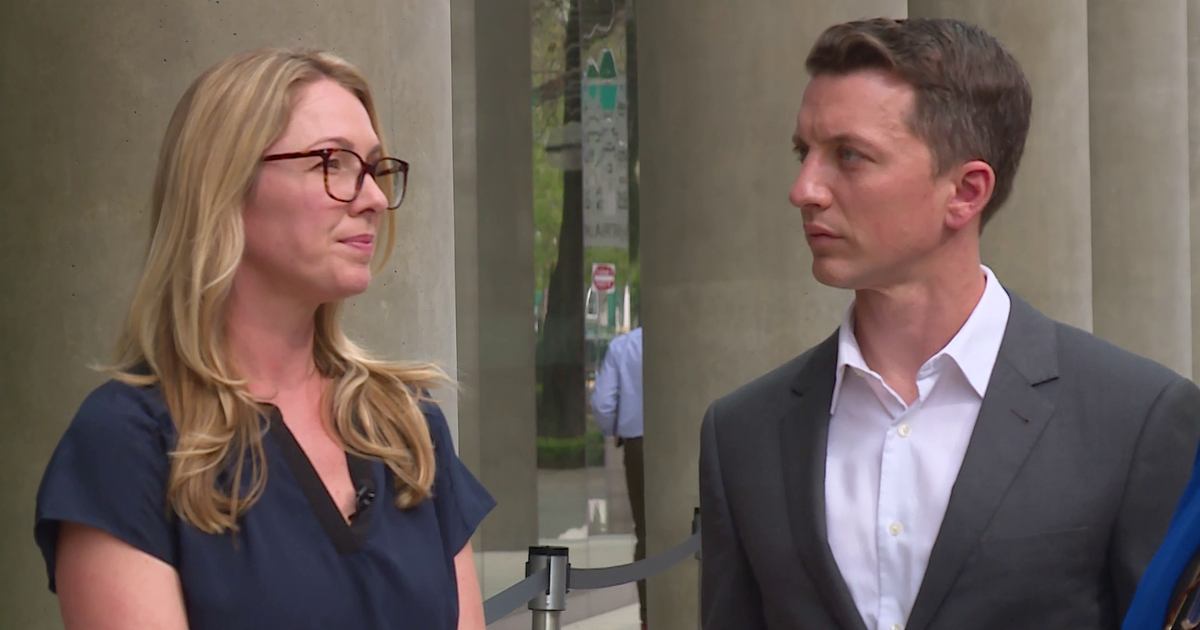
Huskins and her husband, Aaron Quinn, are preparing to testify on behalf of a victims’ privacy bill after discovering her kidnapper and his wife had been given copies of explicit case evidence during his trial. A decade after his conviction, his now ex-wife still had the evidence in her home.
Huskins’ kidnapping was the subject of one of Netflix’s most-watched true-crime docuseries, “American Nightmare.” In March 2015, Matthew Muller invaded Quinn’s Vallejo home, blindfolding and drugging the couple. He kidnapped, raped, and held Huskins for ransom in South Lake Tahoe for two days before releasing her.
Law enforcement officials then falsely accused Huskins of orchestrating her own kidnappinga claim widely compared to the plot of the movie “Gone Girl.” Months later, after authorities arrested Muller for a separate attempted kidnapping, he pleaded guilty to kidnapping and sexually assaulting Huskins.
Exposing a legal loophole
Huskins and Quinn worked with law enforcement over the past year to help reopen and solve cold case crimes tied to her attacker.
It was during those investigations and subsequent confessions from Muller that they discovered a failure to protect explicit evidence in her case and potentially others.
According to investigators, and a decade after Muller’s conviction, his now ex-wife confirmed that they had been given explicit evidence of the sexual assaults as part of the legal discovery process — videotaped recordings of the assaults investigators say Muller made as he committed the crimes. Muller represented himself for a period, and his ex-wife said she was working as his legal assistant.
CBS News California has reached out to the district attorney, the public defender, and the court to understand how Muller ended up with the explicit evidence and why his ex-wife wasn’t asked to return it for more than a decade.
The Solano County District Attorney’s Office pointed to a protective order governing the videos, signed by the Deputy District Attorney who prosecuted the case and Muller’s defense attorney, Deputy Public Defender Stephanie Grogan-Jones, who is now a Solano County judge.
The order specified, “While the defendant may review the materials in the presence of counsel, under no circumstances shall the defendant be given copies of any part of these materials to keep, nor shall the defendant be left alone with these materials.”
The protective order also required that the materials, and any copies, “be returned to the Court for destruction within thirty (30) days of the conclusion of this case.”
Investigators now say that did not happen.
“Part of videoing it is his ability to continue to exploit and re-victimize me over and over again every time he viewed it,” Huskins explained.
The discovery was deeply disturbing for Huskins, not just because of the failure to protect the evidence in her case, but because it exposed a breakdown in state law and in how court-ordered safeguards were carried out.
“It’s unnecessary and, quite frankly, it feels cruel,” Huskins said.
CBS News California is still awaiting responses from prosecutors, the public defender who handled the case — now a Solano County judge — and the Solano County court about who was responsible for safeguarding the evidence, how the protective order was implemented, and whether it was ultimately enforced.
A gap in California law
California law already requires courts to seal sexually explicit evidence involving children, but protections are far less clear for adult victims.
“There isn’t a law,” said Sacramento County Deputy District Attorney Sonja Satchell, who has a long career prosecuting sex crimes. “We are governed by best practices… and those practices can vary from county to county. There is no uniformity.”
Even in cases where protective orders are issued, there is no consistent system to track or verify compliance once a case ends.
That means decisions about how to handle explicit evidence involving adult victims are often left to individual prosecutors or the courts without consistent statewide standards.
To learn that there wasn’t more care, more guidelines and restrictions, was just another insult to injury,” Huskins said. “In this digital age, it just seems like common sense to make sure that any kind of video footage or any kind discovery that included sensitive material around sexual assault, that there would be stricter protocols and guidelines around it.”
The push for reform: SB 1056
Huskins and Quinn are now working with lawmakers to set those guidelines.
They are backing Senate Bill 1056, authored by Senator Tim Grayson, which would require courts to issue protective orders governing sexually explicit evidence involving victims of any age, and limit how that material can be copied, shared, or accessed.
Grayson’s bill would shift responsibility from prosecutors to the courts, creating a uniform standard across California. It would also prohibit attorneys from providing copies of that material directly to defendants or others without court approval and a showing of good cause, while still allowing access for legal preparation under strict court-ordered conditions.
“If survivors don’t feel like they’re going to be safe and protected, they are not going to come forward,” Huskins said.
The bill comes as new scrutiny is placed not just on the lack of statewide standards, but on whether existing court orders are being followed and enforced.
From survivor to advocate
The effort represents the next chapter in Huskins and Quinn’s journey, which began with trauma and is evolving into advocacy.
They are expected to testify before the California State Senate Public Safety Committee as lawmakers consider the bill on March 24.
CBS News California accompanied them to the State Capitol, where they had the chance to visit the hearing room that they’ll be testifying in. Huskins described the moment as both surreal and meaningful.
“It’s healing to know that we have a voice… and we can use it,” she said.
A broader impact
The couple says the goal is simple: ensure no other survivor has to worry that evidence of their assault could resurface years later, outside their control, re-victimizing them as it did Huskins.
“We’ve met so many people who are already doing amazing work,” Huskins said.” “So if we could just help in any way, it’s a huge honor and it’s worth every second.”
Their case, once dismissed as a hoax, is now exposing gaps in both the law and the system meant to enforce it — and driving changes that could better protect victims moving forward.