By Saad Sayeed and Ariba Shahid
ISLAMABAD, April 9 (Reuters) – Pakistan is under huge pressure to pull off what some diplomats regard as mission impossible: broker a peace deal between Iran and the United States to stabilize the world economy while safeguarding delegates already arguing over a fragile truce.
Army chief Field Marshal Asim Munir and Prime Minister Shehbaz Sharif engaged in weeks of diplomacy to halt a war that could deepen instability along Pakistan’s western border with Iran and Afghanistan, with which it has recently exchanged fire.
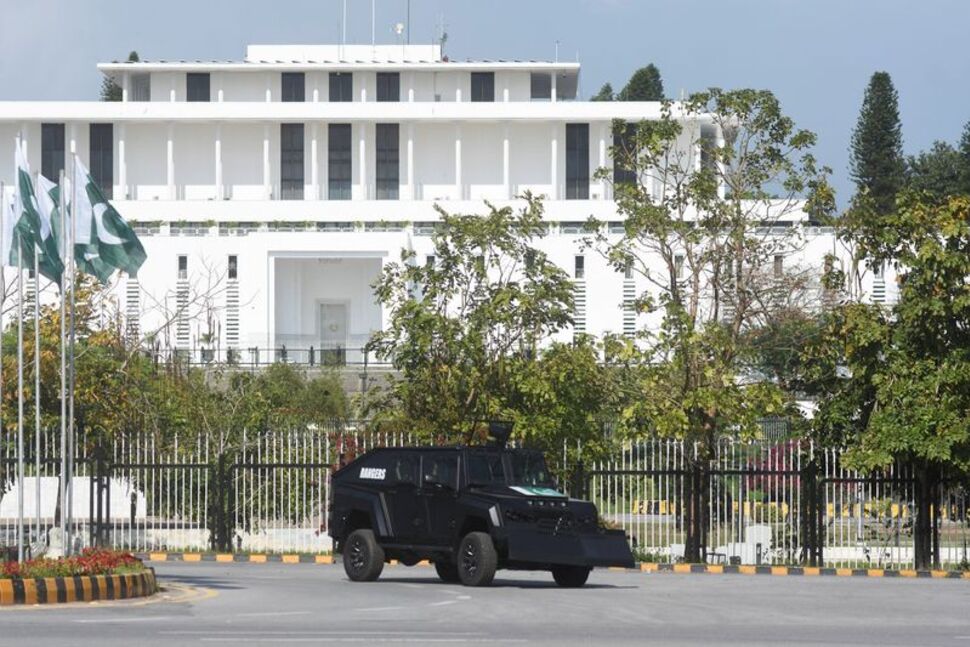
Authorities effectively locked down parts of the capital Islamabad on Thursday as Iranian officials flew in, with the U.S. delegation, led by Vice President JD Vance, arriving on Friday.
Once they have brought Washington and Tehran to the negotiating table on Saturday, the Pakistani officials will try to steer the talks toward a lasting agreement, analysts say.
“Pakistan does not want anarchy in Iran as an outcome of continued warfare, which would greatly exacerbate the pre-existing acute security situation on its western flank,” said Kamran Bokhari, senior resident fellow with the Middle East Policy Council.
Pakistan’s role marks a stunning reversal in fortunes, with the country relegated to the diplomatic margins until only a year ago. Success in Saturday’s dialogue would go a long way toward maintaining its newfound prominence, while failure could erode the veneer of success.
“Pakistan has publicly invested political capital in mediation; if talks collapse, it risks being seen as overpromising and underdelivering,” said Muhammad Faisal, a security analyst at the University of Technology Sydney.
Authorities in Islamabad have fortified the streets around the luxury Serena Hotel, where two sources said the talks are set to take place. The hotel has been cleared of guests and placed under government control, while roads leading to the area have been sealed. Checkpoints, barricades and patrols have been stepped up across the city and extra security forces deployed.
The scale of the precautions points to how exposed Pakistan feels, not only to militant violence at home but also to the risk that any disruption could derail a delicate diplomatic opening. Security officials said the measures went beyond routine arrangements for a high-profile visit, with airspace surveillance enhanced and emergency services placed on standby.
While attacks in Pakistan’s major urban centers have become increasingly rare, militancy has risen along its border regions with Afghanistan since the Taliban returned to power there in 2021.
A suicide attack in Islamabad in February magnified concerns and was among the reasons Pakistan launched airstrikes on Afghanistan days later, leading to weeks of fighting with its once-close ally.
“Given those risks, the lack of preparation time, and the high-profile nature of these talks, this is a very challenging visit from a security perspective and speaks to the importance this administration places on the negotiations,” said Elizabeth Threlkeld, director of the South Asia Program at the Stimson Center.
The challenge for Pakistan is not just to protect the venue, but to prevent the diplomacy from being overtaken by forces outside the room, security analyst Zahid Hussain said.
“There are indications that Israel has accepted the ceasefire rather conditionally,” he said, adding that any renewed escalation could quickly narrow the space for meaningful negotiations.
ACTIVE ROLE IN NEGOTIATIONS
Hours before the two-week ceasefire was announced by U.S. President Donald Trump on Wednesday, mediation efforts to end the conflict appeared to have fallen apart.
But a last-ditch effort by Pakistan’s military and civilian leadership brought Iran back to the negotiating table.
Bokhari said Pakistan’s role had evolved from relaying messages into playing an active part in the negotiating process.
“Islamabad has the ability to shape perceptions on both sides,” he said.
“The Trump White House chose Munir, Shehbaz et al. because the Americans knew that the Pakistanis could not just talk to them but actually influence the thinking of the Iranians. As the process unfolds, the Pakistanis also gain greater trust of the Americans, which creates an opportunity for Islamabad to shape U.S. thinking as well.”
On Saturday, Islamabad will likely raise the grievances of Gulf nations allied with the U.S. that were hit by Iranian strikes during the conflict, analysts said.
It will also attempt to push the U.S. to extend the ceasefire to Lebanon, whose prime minister sought Sharif’s support for bringing an immediate end to Israeli attacks. Iran said it had been on the verge of responding to strikes on Lebanon on Wednesday when Pakistan intervened.
While Pakistan now has sufficient access and credibility to mediate and perhaps keep the process alive, it may not have enough power to guarantee the outcome the world is waiting for: the reopening of vital shipping route, the Strait of Hormuz.
“What it lacks is meaningful leverage to compel concessions if the U.S. and Iran are not willing to come to terms,” Threlkeld said.
“That remains a fundamental limitation to the role it is able to play, and one it must navigate carefully.”
(Reporting by Saad Sayeed, Ariba Shahid and Mubasher Bukhari in Islamabad; editing by Philippa Fletcher)
Copyright 2026 Thomson Reuters.