


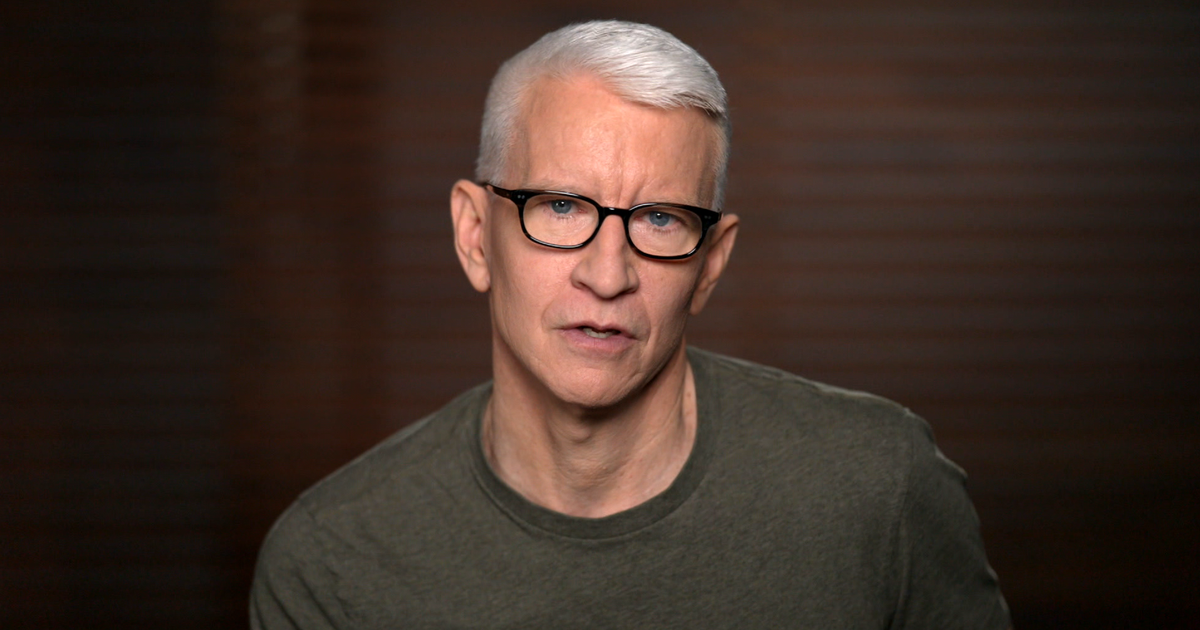
In Port-au-Prince, hidden in a guarded enclave, the orphanage Have Faith Haiti stands as a refuge from the gang violence just outside of its walls that has nearly consumed the country’s capital.
“Most of these kids have not left this orphanage for four years because of the security situation in Haiti,” correspondent Anderson Cooper told 60 Minutes Overtime.
Founded by bestselling author Mitch Albom, Have Faith Haiti gives Haitian children from the most desperate circumstances food, shelter and an education. The mission has turned the lives of children around: 16 kids graduated from the orphanage school and received scholarships to American colleges and universities.
“We’re trying to prepare them to be the next generation in Haiti that can hopefully change things,” Albom told Cooper in an interview.
In the two days 60 Minutes reported from the orphanage, gunshots were heard from outside the walls. Students told Cooper they once felt bullets fly over their heads as they walked through the orphanage’s courtyard.
“The security situation in Haiti is completely out of control. And it is as dangerous as I have ever seen in the decades that I’ve been traveling to Haiti,” Cooper told Overtime.
Cooper spoke to 60 Minutes Overtime about his reporting background in Haiti, which goes back to the fall of the military regime led by Joseph Raoul Cédras, and his personal connection to the country through his high school teacher.
When Cooper was a student at The Dalton School in New York City in the mid-1980s, he took an algebra class taught by Yves Volel, a Haitian man who was passionate about returning to his home country and changing it for the better.
“Yves Volel was working with groups of people who had left Haiti, who were here living in New York, trying to mobilize support for Haiti,” Cooper said. “Back then in New York, a lot of cab drivers were Haitian… and I would always ask them, ‘Hey, do you know Yves Volel?’ And they would all say, ‘Oh my God, of course.'”
Cooper says he wasn’t very interested in math but Volel’s stories about growing up in Haiti always kept his attention in class. “Everybody at my school knew that he wanted to go back to Haiti one day and try to do something for his country,” Cooper told Overtime about his teacher.
Volel returned to Haiti and ran for president in a 1987 general election that would have replaced the military-backed interim government led by Henri Namphy.
CBS Evening News 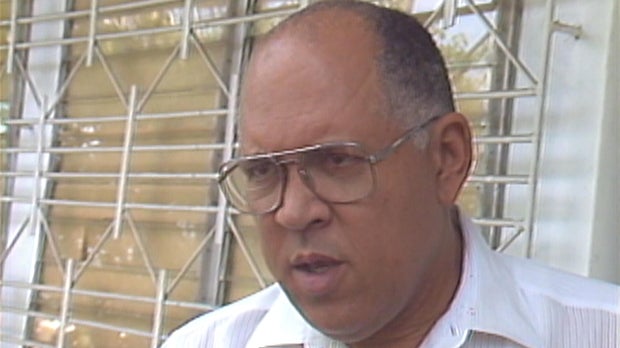

On July 3, 1987, Volel, an outspoken critic of the interim government, showed CBS News reporter Victoria Corderi his car, which had been strafed by gunfire in what he believed was an assassination attempt by men associated with the former dictator Jean-Claude Duvalier.
“I am a target because I have taken a strong position against the CNG [Haiti’s interim government],” he told CBS News. “They know that my position is very strong regarding those who have stolen millions of dollars from the public fund. And I want this money to go back to the state, in order to make work for the Haitians.”
On Oct.13, 1987, two years after Cooper graduated high school, Volel was talking to the media outside of a police station when he was shot and killed.
Police ordered journalists at the scene to destroy all recordings of the shooting. But CBS News was able to broadcast audio of the moments before and after the assassination on CBS Evening News the next day.
“To see and hear somebody I knew so well, my math teacher, be assassinated, was an extraordinary thing when I was a teenager to witness… it continued my desire to learn more about Haiti,” Cooper told Overtime.
A year after graduating from college, Cooper applied for entry level positions at CBS News and ABC, but didn’t get hired.
He did however get a job as a fact checker at Channel One, a daily newscast that played in high schools and middle schools in the United States. He quit after less than a year to become a foreign correspondent.
“[I] ended up getting a friend of mine to make a fake press pass for me, borrowed a camera, and I started shooting stories in war zones,” he told Overtime.
In Sept. 1994, Cooper first reported from Haiti for Channel One on Operation Uphold Democracy: a U.S.-backed overthrow of the government led by Joseph Raoul Cédras that would return the exiled, democratically-elected president Jean-Bertrand Aristide back into power.
Cooper rode in the back of a Jeep with U.S. Army Special Forces who were tasked with disarming Cédras loyalists to a remote mountain town called Bainet.
Crowds gathered and cheered as automatic weapons were confiscated by American soldiers. They called for the loyalists to be arrested, something the soldiers said they couldn’t do due to the risk of losing order. The Green Berets left the Haitian military and police in charge, but only with enough weapons to defend themselves from the angry mob outside.
“What are they scared of that the civilians will do?” Cooper asked a soldier.
“That they’re going to kill them. A date with a Firestone tire,” one U.S. soldier said. “That’s when they put a tire around their neck, soak it with gasoline and light it on fire.”
In 2010, Cooper reported for CNN from Port-au-Prince the morning after the 7.2 magnitude earthquake that rocked the country.
“I remember getting there and leaving the airport… people searching through the rubble with bare, bloodied hands and, you know, shovels if they were lucky, to try to find their children or their fathers, or their grandparents, or their neighbors,” Cooper recalled.
Cooper continued his reporting for six weeks, documenting harrowing stories of life and death. He watched as neighbors dug out a 13-year-old girl, Bea, who had been trapped under the rubble of a collapsed building for 18 hours. The girl survived.
“I ended up staying there for six weeks. It was one of the most remarkable and terrible experiences of my life,” Cooper said.
“The actual death toll will never really be known, the estimates are about 200,000 to 220,000 people. They were picking up the dead like cordwood and tossing them in the back of trucks…we followed the trucks one morning because nobody knew where they were taking the bodies. And they were just dumping them in these mass pits.”
In the wake of the 2010 earthquake, humanitarian aid organizations from around the world established a presence in the country to help it rebuild after the disaster.
“There was a huge outpouring around the world for raising money for Haiti. It was an extraordinary thing to see,” Cooper explained. “And yet, there’s not much sign of it today in Port-au-Prince.”
Today, as much as 90% of the Port-au-Prince metropolitan area is controlled by gangs. Rapes, robberies and murders are common. The U.N. estimates that more than a million people have been displaced from their homes by violence.
“Gangs committing sexual assaults, and robberies, and killings… this is happening, you know, a two-hour flight from Florida,” Cooper said.
Because U.S. commercial flights cannot fly directly to Port-au-Prince, Cooper and the 60 Minutes team had to fly to Cap-Haitien in the north, and then take a helicopter to the capital. They took every safety precaution.
“[We] drove in a convoy of armored vehicles with bullet-proof vests and heavily armed Haitian security personnel,” Cooper explained.
The 60 Minutes team traveled outside the walls of the orphanage to shoot a “stand up” shot with Cooper on a busy street in Port-au-Prince accompanied by a security team of about a dozen armed guards.
“In a very active war zone or very dangerous area, you will have security in perimeters… they get a sense of what’s happening a block or two away if a roadblock is being set up or anything to stop you because word has filtered out that you’re there,” Cooper explained.
Cooper and his team spent 5 minutes on the street shooting the “stand up” for his 60 Minutes story. Then they left quickly and immediately.
“In a very dangerous place, it’s important that you get in, get out as quickly as possible… that was all I saw outside the walls of that orphanage.”
Cooper met 16 kids from Have Faith Haiti on scholarships in the U.S. that were staying at Mitch Albom’s house outside Detroit, Michigan, during the winter break. They all said they hope to return to Haiti and help their country.
“The end goal is to be a senator in my country one day… Haiti isn’t just my country. It’s like my home where I was raised, and I have a deep, deep connection to Haiti, so yeah, my future is with Haiti,” a student named J.U. told Cooper.
“I have never been to a place that has more resilience than Haiti,” Cooper told Overtime.
He remembered a scene the team came upon while stuck in traffic on his most recent trip.
“In the chaos of Port-au-Prince… there was a church service. All these people in their Sunday best. And hanging outside the church, talking to each other. You know, kissing hello to each other,” Cooper told Overtime.
“In the midst of gang violence in Haiti…. life goes on. And life thrives. And it is a vibrant, extraordinary place full of extraordinary people.”
The video above was produced by Will Croxton. It was edited by Nelson Ryland. Jane Greeley was the broadcast associate.
Video and photos of Anderson Cooper in Haiti in 2010 courtesy of CNN.