


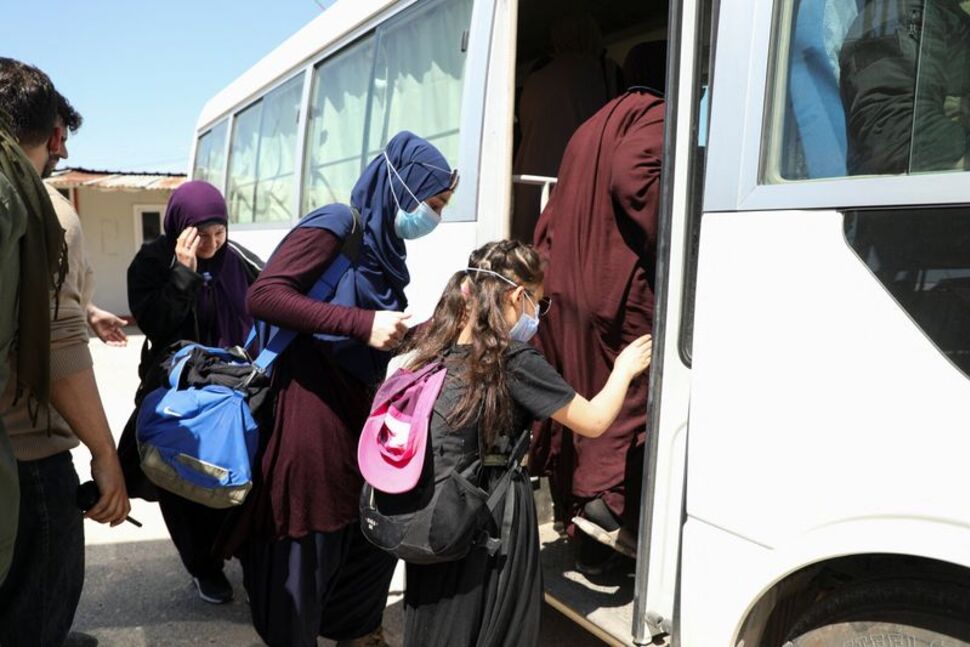
SYDNEY, May 6 (Reuters) – Australia said on Wednesday that 13 members of Australian families in Syria linked to the extremist group Islamic State plan to travel home, but will receive no government assistance.
Home Affairs Minister Tony Burke said there were “very serious limits” on what authorities could do to prevent Australian citizens re-entering the country.
“The government is not assisting and will not assist these individuals. They made an appalling, disgraceful decision,” Burke told reporters, adding the group includes four women and nine children.
“The government’s complete lack of support for these individuals is a direct reflection of the decisions that they made.”
Burke said any returnee suspected of criminal activity would “face the full force of the law without exception”, though he did not specify potential charges.
Australian authorities have been preparing for such returns for more than a decade. Burke said law enforcement and intelligence agencies have maintained contingency plans since 2014 to manage individuals linked to extremist groups.
Australian Federal Police Commissioner Krissy Barrett said some returning Australians could be arrested and charged upon arrival, while others may remain under investigation. Children will undergo community reintegration and support programs.
Some Australian women travelled to Syria between 2012 and 2016 to join their husbands, who had allegedly become members of the Islamic State. Following the collapse of the caliphate in 2019, many were detained in camps while some had returned home, according to Australian media reports.
One of the main detention facilities was Al-Hol camp, near the Iraqi border, which held relatives of suspected Islamic State fighters captured during the U.S.-backed campaign against the jihadist group.
In January, the United States began moving detained IS members out of Syria after the collapse of the Kurdish-led Syrian Democratic Forces, which had been guarding around a dozen facilities holding IS fighters and affiliated civilians, including foreigners.
By February, fewer than 1,000 families remained at camps in Syria’s northeast that had been used to detain relatives of suspected Islamic State militants.
(Reporting by Renju Jose in Sydney; Editing by Stephen Coates)
Copyright 2026 Thomson Reuters.