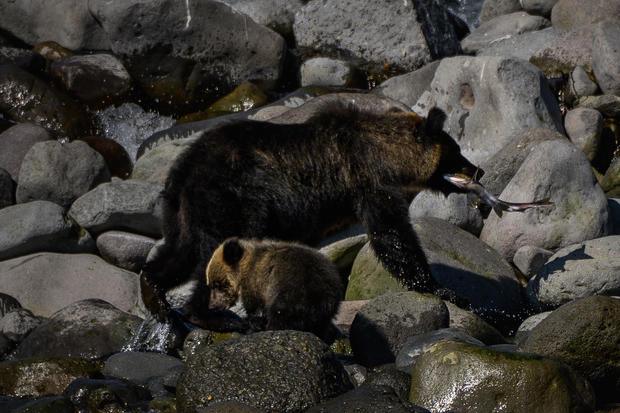
Japan confirmed Friday the first fatal bear attack of 2026 after a record 13 deaths last year, with reports pointing to a jump in sightings as the animals emerge hungry from hibernation.
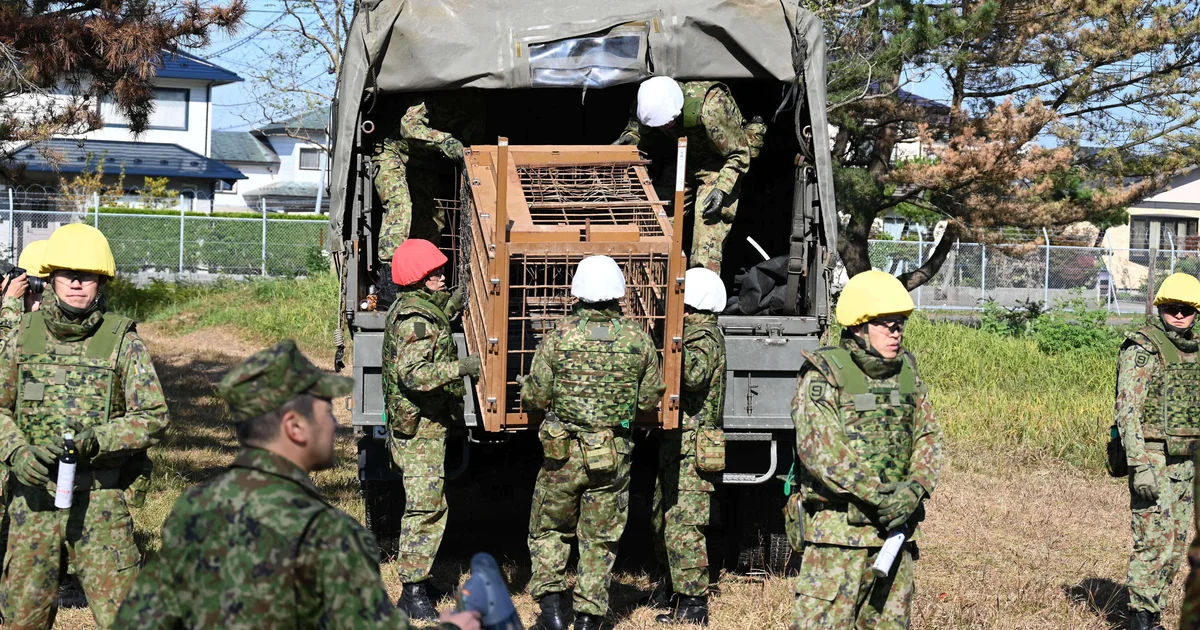
A spate of bear encounters, including at hot spring resorts and in supermarkets last year, sparked alarm, with the government deploying troops to help hunt and trap them. The GPS watch of one of the victims revealed that the animal dragged the man’s body over 100 yards away from the trail where he was killed.
Record sightings have been reported again this year as the bears emerge from their winter slumber, according to local media.
This year’s first confirmed fatality, reportedly a 55-year-old woman, was discovered on April 21 in Iwate prefecture in northern Japan, according to the environment ministry.
Two more sets of human remains were found this week, police told AFP, with media reports drawing a link to bear attacks.
One of the bodies was discovered elsewhere in the Iwate region on Thursday, while another was found in a forest in Yamagata prefecture on Tuesday, police said, without providing the cause of the deaths.
ANDREW CABALLERO-REYNOLDS /AFP via Getty Images 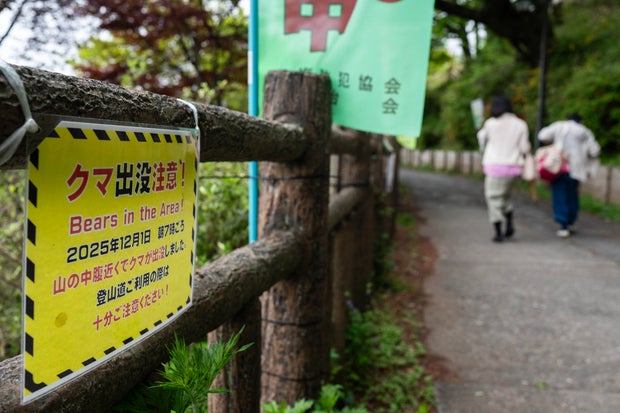

Broadcaster NHK identified one of the two as Chiyoko Kumagai, 69, who went missing after going to a mountain forest to pick edible wild plants.
Police and rescuers launched a search on Thursday in the forest where her car was parked and found her body shortly after 8:00 am, NHK reported.
She reportedly had injuries on her face and head that appeared to have been caused by an animal’s claws.
City officials said local hunters were expected to begin patrolling the area on Friday, according to the broadcaster.
Supermarket sweep
Last year’s record number of fatal attacks was more than double the previous high of six. More than 200 people were also injured.
The animals were seen on airport runways, walking on golf coursesroaming near schools and causing panic in supermarkets and hot spring resorts almost on a daily basis. A bear that rampaged through a supermarket for two days was lured out with food coated in honey, and police said the animal was trapped and later killed.
AP 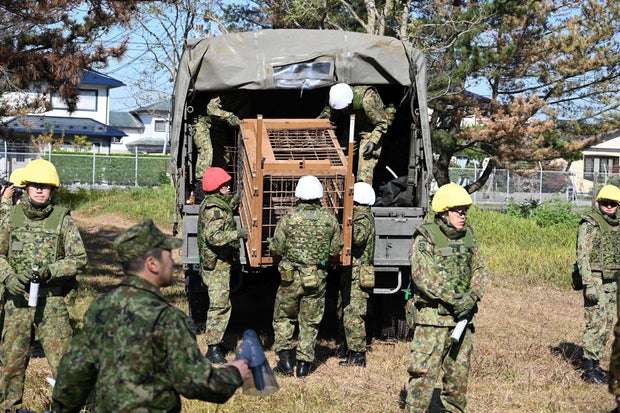
Scientists say that last year’s upsurge was driven by fast-growing numbers of bears, combined with a falling human populationespecially in rural areas.
That depopulation has left bears “a chance to expand their range,” biologist Koji Yamazaki, from Tokyo University of Agriculture, told CBS News‘ Elizabeth Palmer in 2023.
Bears are thriving thanks in part to an abundance of food — including acorns, deer and boars — under the influence of a warming climate, experts say.
The brown bear population has doubled in three decades and now stands at around 12,000, while the number of Asian black bears has climbed on the main Honshu island, reaching 42,000, according to a 2025 government report.
This in turn has led to “overcrowding”, forcing some bears to stray out of the mountains — which make up around 80 percent of Japan — towards areas inhabited by humans, experts say.
Cubs in particular can become less fearful and develop a taste for farmed produce and common fruits such as persimmon.
But poor harvests in 2025 pushed bears to seek food elsewhere, including in towns and villages.
This year forecasts for nuts and other food are better, but as the animals have emerged from winter hibernation there have also been record numbers of sightings, according to local media.
In Miyagi, Akita, and Fukushima prefectures, the number of sightings in April was around four times that of the previous year, the Yomiuri daily reported.
Koji Yamazaki, a leading bear expert and head of Ibaraki Nature Museum, said residents in the northern Tohoku region must stay vigilant this spring.
“I’m not sure yet why we’re seeing this kind of unprecedented damage so early in the spring,” Yamazaki told AFP, adding this year is expected to be “calm”.
“Given that all the incidents have occurred relatively close to settlements and the bodies have been severely damaged, I suspect a bear has eaten them,” he said.
Yamazaki explained Tohoku has a dense bear population as “the number has been growing for about 20 years.”
“I also suspect factors such as abandoned farmland and unused land due to depopulation and an ageing population have an impact,” he said.
Brown bears — which can weigh up to half a ton and outrun a human — are found only in the main northern island of Hokkaido. A town plagued by wild bears in Hokkaido installed robotic wolves to howl at the animals and scare them off.
Smaller black bears, meanwhile, are common across large parts of Japan, including on the main island of Honshu, and are responsible for most of the attacks.
Salwan Georges/The Washington Post via Getty Images