


By Lisandra Paraguassu and David Lawder
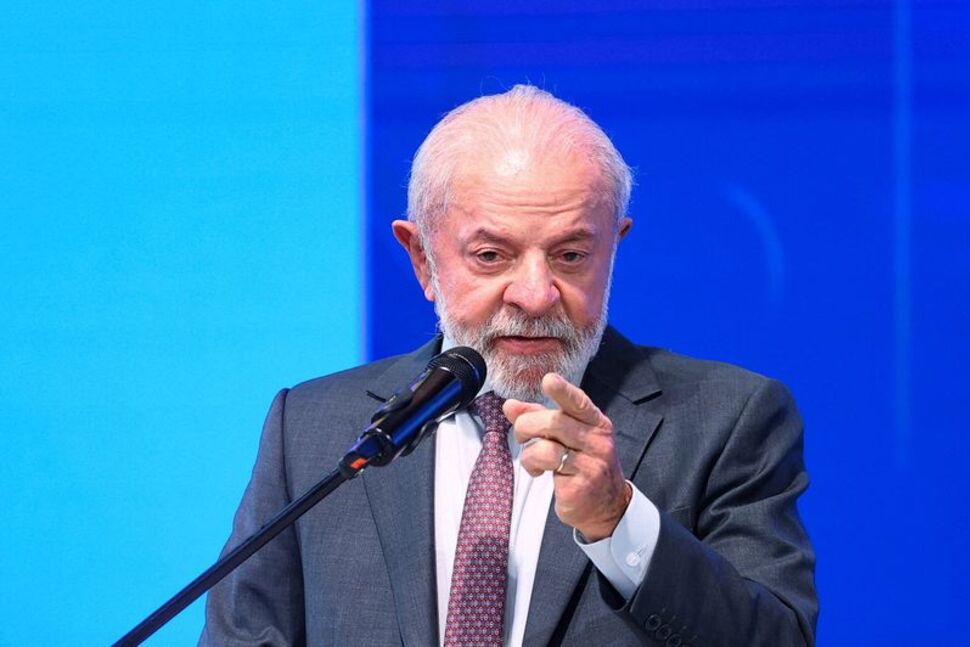
WASHINGTON, May 7 (Reuters) – Brazilian President Luiz Inacio Lula da Silva visits the White House on Thursday, aiming to revive what U.S. President Donald Trump last year called their “excellent chemistry,” avoid new tariffs, and show a willingness to negotiate deals on critical minerals and organized crime, three people close to the Brazilian president told Reuters.
“We don’t know if the visit will help,” one Brazilian official involved in arranging the meeting told Reuters. “But it’s more likely to help than doing nothing.”
Last year, Trump hit Brazilian products with 50% tariffs, among the highest on any U.S. imports, accusing the country of promoting a witch-hunt against far-right former president Jair Bolsonaro, who was later convicted for attempting to overthrow democracy.
Trump later withdrew most of the levies, including on Brazilian beef and coffee, at least in part to help calm rising U.S. grocery prices. In February, the U.S. Supreme Court struck down the global tariffs he imposed under a national emergencies law, eliminating many of the remaining levies.
Brazilian products still face an extra 10% tariff due to expire in July. But, in recent weeks, Brazil has seen signs that its exports could be hit with fresh tariffs connected to a Section 301 investigation into unfair trade practices.
Tensions remain over digital trade – as Brazil has blocked the U.S.-backed renewal of a World Trade Organization e-commerce tariff moratorium – and high Brazilian tariffs on some goods, including ethanol.
The Office of the U.S. Trade Representative last month also alleged that nearly half of Brazil’s timber exports come from illegal sources – which the Lula administration denies, arguing that it brought deforestation rates to historically low levels.
Brazilian officials became alarmed that a new wave of tariffs could be near during a meeting two weeks ago with U.S. Commerce Department officials. U.S. officials asked few questions, people in the talks said, reinforcing a perception that the investigation aimed to justify tariffs rather than resolve trade issues.
“What they are doing is building a case, even if unfounded, to justify the later adoption of tariffs,” one Brazilian official said.
A thaw started last September at the U.N. General Assembly, when Trump made the “chemistry” comment, in part recognizing Brazil’s vast reserves of critical minerals, said Monica de Bolle, a Brazilian economist and senior fellow at the Peterson Institute of International Economics.
The Trump administration’s desire to build a supply chain of rare earths needed for high tech manufacturing will likely keep Lula’s meeting on track, she said.
“On the part of the U.S., they are looking for some kind of deal – whatever that happens to be – on critical minerals and rare earths with Brazil,” de Bolle said. “The U.S. actually needs something from Lula.”
The Lula administration does not expect a critical minerals deal to materialize, people close to the president told Reuters, because officials struggled to agree on even a basic memorandum of understanding.
Brazil insists minerals be processed domestically, while the U.S. wants a price floor mechanism to keep China from using its market clout to undercut Western producers. Discussions remain vague, with no projections for investments, production, or timelines.
U.S. investments, most notably USA Rare Earth’s $2.8 billion acquisition of Serra Verde’s rare earth mining operations, are advancing without a clear regulatory framework, raising concerns in Brazil.
Still, both Trump and Lula have an interest in showing that they can work together, so that even a loose framework could be embraced as a victory.
“The bar is actually kind of low for both of them,” Bolle said.
There are also tensions over the White House efforts to designate Latin American gangs as terrorist groups.
The Lula administration is trying to avoid such a move regarding local gangs PCC and Comando Vermelho because it could open a path for military action by the U.S. in Brazil or sanctions against banks that unknowingly do business with gang members.
Such a decision could have “repercussions for the Brazilian economy, the productive sector, and the financial system,” Federal Police chief Andrei Rodrigues told Reuters in March.
Lula will instead propose increased cooperation on organized crime, money laundering, and gun trafficking.
“I don’t think we will be able to sign anything because we sent it very recently”, said one official who worked on the document.
(Reporting by Lisandra Paraguassu and David Lawder in Washington, Ricardo Brito contibuted reporting in Brasilia; Editing by Manuela Andreoni, Christian Plumb and Alistair Bell)
Copyright 2026 Thomson Reuters.