


The improvement in the key so-called diffusion index in the closely watched “tankan” report, recorded for the fourth quarter straight, comes even as worries grow about Japan’s economic growth and oil supplies because of the war in Iran.
The survey is an indicator of companies foreseeing good conditions minus those feeling pessimistic.
The index for large non-manufacturers, such as the service sector, stood unchanged from the last tankan at 36.
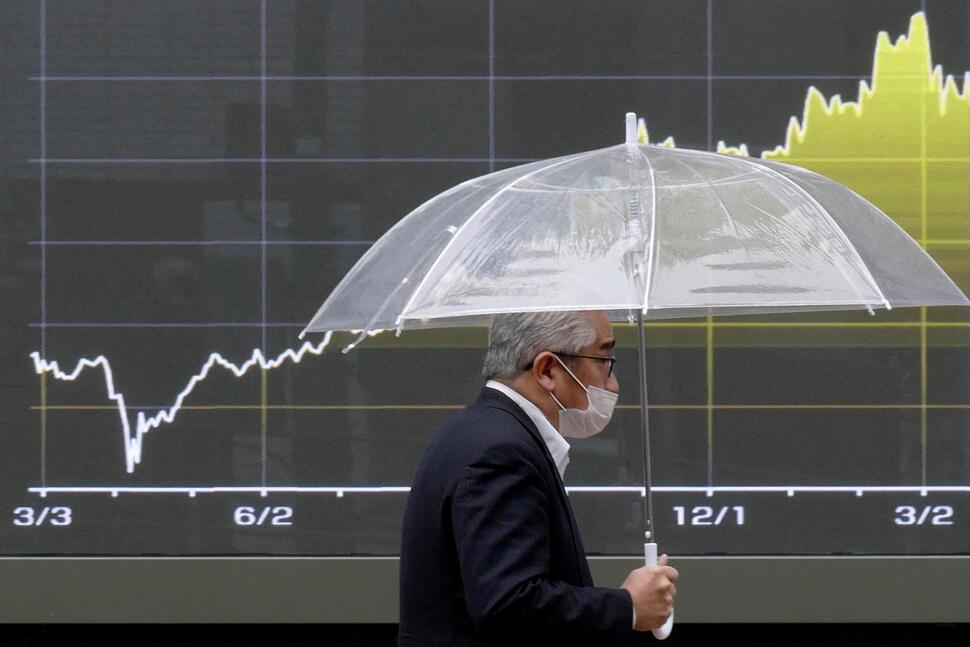
Japan’s inflation has so far remained relatively moderate, but worries are growing about prices at the gas stands and other products. Investors and consumers alike are filled with uncertainty about how much longer the war may last and what U.S. President Donald Trump might say next. Japan’s benchmark Nikkei 225 has gyrated wildly in recent weeks.
Analysts say the Bank of Japan may start to raise interest rates because of concerns about inflation, given the soaring energy costs and declining yen — two elements that greatly affect living costs for the average Japanese consumer.
Historically, Japan has benefited from a weak yen because of its giant exports, exemplified in autos and electronics. A weak yen raises the value of exports’ earnings when converted into yen.
But in recent years, a weak yen is working as a negative, as resource-poor Japan imports much of its energy, as well as other key products such as food and manufacturing components.
The U.S. dollar has been soaring against the yen lately.
Japan’s central bank had a negative interest rate policy for years to fight deflation until it normalized policy in 2024. It kept the rate unchanged at 0.75% in March. The next Bank of Japan monetary policy board meeting is set for April 27 and 28.
Copyright 2026 The Associated Press. All rights reserved. This material may not be published, broadcast, rewritten or redistributed.
Photos You Should See – March 2026

