
In the pre-dawn hours of March 23, 2015, Aaron Quinn and his girlfriend Denise Huskins were asleep in his Vallejo, California, home, unaware they were being watched.
Denise Huskins Quinn: … around 3 a.m., we were awoken to a strange man saying “This is a robbery. We are not here to hurt you, stay calm.”
They never saw his face, but, oddly, he was wearing a wet suit. He said he was part of a group of people there to rob them, but he did all the talking. In recalling what happened to them, Denise and Aaron call him “The Voice.”
The kidnapping of Denise Huskins
Denise Huskins Quinn: My eyes shot open and I saw flashing white light on the walls, and red laser dots scanning the walls … “The Voice” … instructed me to tie Aaron up with zip ties, left them on the edge of the bed …
Aaron Quinn: I’m tied up. He makes me hop to my closet. I could hear people downstairs going through the kitchen cabinet. I could hear a drill running.
Denise was ordered to go into the same closet. There, “The Voice” also tied her up, and made them drink a sedative.
Denise Huskins Quinn: … blacked-out swim goggles were placed over our eyes and … eventually, I was told that I was gonna be taken for 48 hours and … I was gonna be held until Aaron could “complete some tasks” for my release.
Those tasks included going to a bank for ransom money. “The Voice” took Aaron downstairs to the living room, where a security camera had been mounted to monitor him.
Aaron Quinn: “The Voice” tells me that … if I try to go to the police, they’ll kill Denise. So, I could hear him put Denise in the trunk of my car … I just hear Denise say, “OK,” and I’m just hoping that’s not gonna be the last thing I hear from her. …
Aaron says he soon passed out from the sedative. He woke in a stupor later that morning. “The Voice” had taken Aaron’s laptop, but had left his cell phone, saying they would contact him. Aaron says he wiggled his hands free from the zip ties but then struggled with whether he should call for help.
Tracy Smith: What was that like weighing that decision?
Aaron Quinn: … my thought was if I call the police, I know I’m gonna be safe. But then my fear is, uh, am I actually killing Denise?
911 OPERATOR: Emergency.
AARON QUINN: My, uh, girlfriend got kidnapped last night.
Aaron took the chance and called 911. The Vallejo Police Department responded. As Aaron told them what happened, he says investigators began to question his story.
Aaron Quinn: I don’t blame them for being a little skeptical, but … I gave them permission to search everything and I agreed to go down to the station to provide a statement, cause my whole goal, which I thought everyone’s goal, was to find Denise.
Aaron gave the police his cell phone and his clothes to test for evidence. He was given prison clothing to change into. And then the lead detective, Mathew Mustard, began to question him.
Aaron Quinn: And it’s about 40 minutes into our interview, he basically leans back and says … what I’m telling him is far-fetched and he doesn’t believe me.
Vallejo Police Department, courtesy of Denise Huskins Quinn 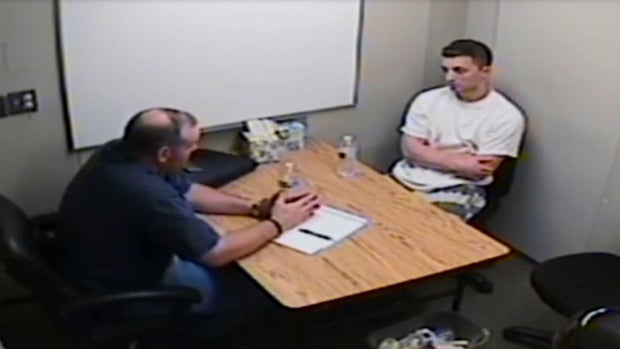
DET. MATHEW MUSTARD: I don’t think she was kidnapped from your home… I think something bad happened in your house…
Not only did he appear not to believe Aaron, he seemed to be accusing Aaron of killing Denise.
DET. MATHEW MUSTARD: Denise is going to be found … And when I say she’s found, she’s dead. … They did not come into your house and kidnap her and take her for ransom. That did not happen! It didn’t! No it did not!
AARON QUINN: I have nothing to admit to … I didn’t do anything … What the f— is going on?
Meanwhile, word got out to the media that Denise was missing.
Julie Watts is an investigative correspondent for CBS News California.
Julie Watts: And I think immediately people were captivated. …
Julie Watts: … folks assumed from the beginning that she was dead. … And immediately, her boyfriend, Aaron Quinn, was the suspect.
To Aaron, investigators were so focused on him, he wondered if anyone was looking for the people who had actually taken Denise. After being placed in the trunk of Aaron’s car, she was driven for a bit, transferred to the trunk of another car, and driven for hours.
Denise Huskins Quinn: … you think of all the possible things that are gonna happen. Where am I gonna be taken? … Am I gonna be tortured? Am I gonna have to withstand God knows what?
“The Voice” took Denise to a secluded home where she was kept blindfolded and sedated. He told her he would keep her there until his group received the ransom money. She was in and out of consciousness but remembered him telling her they’d done this before. He then raped her. The next morning, Denise says she heard someone come to the house.
CBS News 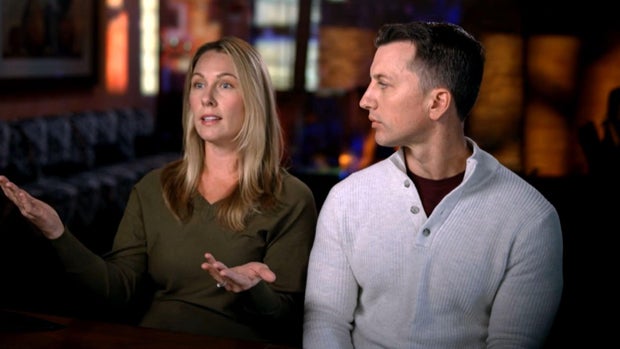
Denise Huskins Quinn: I heard his car drive off and … started walking down this alley and turn, and I see the street that I grew up on.
A neighbor called the Huntington Beach Police, and the news of Denise’s reappearance spread.
NEWS REPORT: A Bay Area woman reportedly kidnapped for ransom is safe tonight. What exactly happened to her? That’s still very much a mystery.
Although Denise and Aaron hadn’t communicated since the attack, Denise told the Huntington Beach officers the same story Aaron had. But she too began to sense she wasn’t being believed.
Denise Huskins Quinn: And it was, “OK. Yeah, yeah, yeah. But … we need to figure out what’s going on with Vallejo.” … And so it just felt like something wasn’t right.
Worried, Denise hired an attorney. That night, as she was making her way back to Vallejo, the Vallejo Police Department gave a press conference saying they could not substantiate anything Aaron had told them, and that Denise would not talk to them.
LT. KENNY PARK | Vallejo P.D. (to reporters): Mr. Quinn and Ms. Huskins has plundered valuable resources away from our community …
They essentially called the case a hoax. The media came up with another label.
Julie Watts: In the first few days after … the kidnapper released her, all of the headlines had the word “Gone Girl” in it. … relating it to the blockbuster movie that had just come out, I think the year before, where a beautiful blonde fakes her own kidnapping. … and it stuck.
That same night, Denise says her attorney told the Vallejo Police Denise had been raped and asked to set up a sexual assault exam hoping DNA evidence could help identify her attacker. But Denise says Vallejo Police refused to order an exam until she talked to them.
Denise Huskins Quinn: I could hear whoever what was on the phone say, well, how do we know she was raped? She won’t even talk to us. … You know, just tell her not to shower, keep her clothes on, don’t wash her hands, brush her teeth …
Denise says Vallejo Police made her wait until the next morning to come in.
DET. MATHEW MUSTARD (speaking to Denise): We’re not here to judge, um, and we are just looking to figure out the truth.
They interviewed Denise for six hours before she went to a hospital for the exam.
Denise Huskins Quinn: So, in a way, it’s like, yeah, I had to — to prove to them that I was worthy enough to have it scheduled.
Tracy Smith: To have — to have the exam.
Denise Huskins Quinn: (nods to affirm)
The initial testing led nowhere. After cooperating with the investigators, Denise and Aaron feared they might be charged with lying to police. All the while, knowing the people who attacked them were still out there.
Denise Huskins Quinn: … that was I think the most terrifying thing, knowing … They will do this again. … we know that the only way that we’ll be vindicated and the truth will come out is if they attack another family.
Another attack leads to an arrest and confessions
In June 2015, nearly three months after Denise Huskins and Aaron Quinn were attacked, a home invasion was reported in Dublin, California, about an hour south of Vallejo.
Julie Watts: An intruder came in. … The wife called 911 while the husband fought back.
The intruder escaped, but in the chaos he left his cell phone behind. Detectives traced it to a house in South Lake Tahoe.
Julie Watts: So they get their investigators together and they show up at the Tahoe cabin.
Dublin Police Services 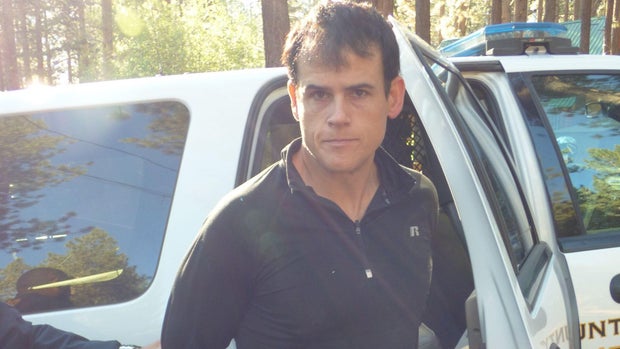
Inside was 38-year-old Matthew Muller. He was arrested on the spot for the Dublin attack.
Julie Watts: He is a Harvard-educated lawyer. He is formerly a Marine. He is not the type of person that you would expect.
And when they searched the house, they found some interesting evidence.
Julie Watts: They found Aaron’s laptop at Muller’s cabin.
Authorities also searched a stolen car parked nearby.
Julie Watts: Investigators … looked at the car GPS. And they saw that it had the GPS point where the kidnapper had dropped off Denise Huskins.
And in the back of the car —
Julie Watts: They found goggles, blacked out swim goggles … with a … single strand of blonde hair.
Dublin Police Services 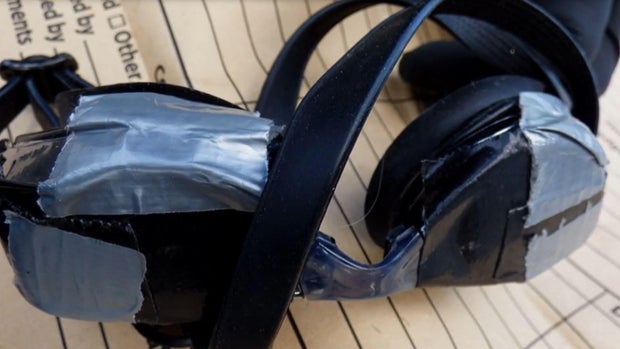
The hair was later confirmed to be Denise’s. The goggles, the GPS address and the laptop — all of it was strong evidence supporting the bizarre story Denise and Aaron had been telling all along.
Julie Watts: The only way they were vindicated was not by police work, it was by other people being harmed.
“The Voice” finally had a name. Matthew Muller would be charged with Denise Huskins’ kidnapping and rape.
Tracy Smith: Did Muller’s arrest make you feel safe?
Denise Huskins Quinn: A little safer. …
Aaron Quinn: The arrest made us feel a little safer but we still believe there’s other people out there.
But no one else was charged. Denise and Aaron steeled themselves to face Muller in court.
Tracy Smith: So you’re preparing … for him to go to trial. What happened?
Aaron Quinn: Well, he ended up taking a plea deal.
Muller ultimately received a sentence of 40 years total for the Dublin attack and their attack. Denise and Aaron had hoped for a life sentence.
Denise Huskins Quinn: The idea that he’ll be too old when he gets out to do something like this again … I don’t think that’s true.
Around this time Denise and Aaron filed a civil lawsuit against the City of Vallejo claiming defamation and emotional distress. They eventually settled for $2.5 million.
Tracy Smith: Did the Vallejo Police ever vindicate you?
Denise Huskins Quinn: No. …
Aaron Quinn: It was always … this case was too strange to believe.
The Vallejo Police Department did not respond to “48 Hours”‘ request for a comment, but they did issue a statement after the settlement saying, “The Huskins Quinn case was not publicly handled with the type of sensitivity a case of this nature should have been handled with…” Although their case seemed to be over, Denise and Aaron hoped authorities would continue to investigate Muller for other crimes and possible accomplices.
Denise Huskins Quinn: And there was still so many questions that were left unanswered … a big piece of that was, what else was he involved in? … We just knew that our case … wasn’t the only one.
Tracy Smith: You knew, but did you feel like anyone was listening to you?
Denise Huskins Quinn: Well, no. That’s the problem.
Denise and Aaron spent years trying to move forward. They got married and started a family and eventually decided it was time to tell their story in their own words.
Denise Huskins Quinn: We can … take back control of — of our trauma and maybe use it for good.
They wrote a book and participated in the Netflix series “American Nightmare,” which was watched by millions of people in 2024.
Chief Nick Borges: I was hooked as soon as it started.
One of those people was Nick Borges… the police chief in Seaside, California.
Chief Nick Borges: I’m watching this, just thinking, I want to reach out to these people. I want to hug her. I want to hug him and just like, oh my God, I’m so sorry.
Though he wasn’t involved in their case, Chief Borges reached out to Denise on Instagram to apologize on behalf of all law enforcement.
Tracy Smith: When you read that message, what did you think?
Denise Huskins Quinn: I think I got really emotional, um, cause it’s not – we’re not asking for a whole lot, you know, like just to be respected and listened to, um, and treated like we have value. … It meant the world to … feel like we had an ally.
Borges invited Denise and Aaron to Seaside to speak about their experiences with law enforcement.
AARON QUINN (at Seaside event): I gave them access to everything, and it wasn’t enough because they had already decided I killed her.
Borges wanted to do more to help Denise and Aaron get answers.
Chief Nick Borges: I don’t have a problem shaking the tree a little bit and flipping rocks.
He decided to write Muller in prison.
Chief Nick Borges: I was very honest with him … I want to know if you acted alone or not.
Within weeks, Muller wrote back.
Chief Nick Borges: Essentially in his first letter back to me he said he acted alone. …
Tracy Smith: So you start this kind of writing relationship with Muller.
Chief Nick Borges: Yeah. … He sent me back a second letter and this one was thick.
In the letter, Muller confessed to two crimes in Santa Clara County in 2009 — six years before Denise and Aaron’s attack.
Julie Watts: One was in Palo Alto, one was in Mountain View … He broke in sort of disguised and attempted sexual assault.
Back then, Palo Alto Police had identified Muller as a suspect because he’d been caught prowling in the area, but they didn’t have enough to charge him. Now, he was coming clean.
Chief Nick Borges: They were full-blown confessions with specific details that only the suspect would know.
Muller also indicated there were even more crimes — but only teased the details in his letters.
Vern Pierson: We know that Muller did some really awful things.
Vern Pierson is the district attorney of El Dorado County, where Denise Huskins was held captive. Although he was not involved with the original investigation, in 2024, Pierson also offered to help and wanted to speak with Muller directly. Pierson thought the best way to get him to open up more was to use a strategy called “science-based interviewing.”
Vern Pierson: One of the hallmarks of science-based interviewing is — is speaking to somebody without revealing any judgment you might have about either what they’re saying or what you think about them as a person. …
Tracy Smith: It just strikes me how different what you’re talking about is from the way that the Vallejo PD … handled Aaron and Denise’s case. …
Vern Pierson: Yeah … they passed judgment. … and they sought to confirm, confirm, confirm. … And every time he would say, no, that’s not what happened. They would cut him off, change the subject, go back to, you know, the theory that they had.
Pierson was determined to do things differently. He brought in a highly-trained FBI interviewer who specializes in this technique, and their strategy would pay off.
The confessions of Matthew Muller
In November 2024, D.A. Vern Pierson and the FBI interviewer flew to Arizona to speak with Matthew Muller at the prison where he was serving his 40-year sentence to see what else he might confess to — and figure out his motivations.
Vern Pierson: … he’s extraordinarily manipulative and … if he’s telling you anything … there is a reason why he’s telling you what he’s telling you.
With an audio recorder running, Muller claimed he now wanted to be upfront about his past because he’d undergone a religious transformation in prison. He shared that in the past he’d struggled with insomnia, which led to taking long walks at night.
MATTHEW MULLER: I started then looking in windows — where it started general curiosity, then went kind of sexual.
Muller described a long history of voyeurism, admitting that while at Harvard Law School in the early 2000s, he set up a video camera in an office bathroom. Evidence video shows him doing the same years later while on vacation in Hawaii.
Vern Pierson: … he installed a video camera in a public restroom … so he could look at it.
The more space they gave Muller to talk, the more depravity he revealed. After several hours, he began talking about yet another home invasion on the border of Contra Costa County just two weeks after he attacked Denise and Aaron.
MATTHEW MULLER: That night I climbed up onto the veranda, came in …
Muller described using a ladder to climb into a family’s house and waking up a mother, father, and their teenage son.
MATTHEW MULLER: … tied them up … telling them that we were … some sort of criminal organization that a relative of theirs owed money to …
He instructed the mother to go to a bank to withdraw a ransom. After she returned with $30,000, Muller threatened that if they ever told the police, he would come back and harm them. The family never reported it.
Tracy Smith: So, there was no crime that matched this reported back then, at that time?
Vern Pierson: No … there was nothing.
That wasn’t the only crime Muller said he’d gotten away with. He recalled another attack, which he said was his first, back when he was a teenager in the suburbs of Sacramento. Muller said one day he had walked by some campsites at a state park in nearby Folsom and fixated on a young couple. He returned that night with a stolen gun.
MATTHEW MULLER: I ordered them out of the tent … I believe I put them both on their stomachs and just asked them to put their hands behind their back.
Muller said he tied up the couple, then carried the woman away and down a bike trail.
MATTHEW MULLER: … took the woman across to do something bad to her.
Then, he says, he saw a light nearby. He sexually assaulted her, then fled.
MATTHEW MULLER: I basically forgot about it pretty quickly. … And I just put it out of my mind. I didn’t — it was like it didn’t happen.
Leaving that interview, Pierson set out to prove Muller committed these crimes — starting with the unreported home invasion.
Vern Pierson: … the interviewer … had him … describe the location … then we had him draw a diagram kinda roughly showed that … we looked on Google Maps and … we eventually came up with a community that very closely matched the diagram that he had drawn to us.
Pierson wondered if the ladder Muller mentioned using might still be there nine years later. It was a long shot, but his team asked Contra Costa investigators to search the ravine behind that house.
Vern Pierson: You can imagine it’s like, “hey, this was never reported to you, you guys don’t know anything about it … but we think there might be this ladder … would you go look for it?” And … a couple hours later I get a text message … that they found the ladder.
El Dorado County District Attorney’s Office 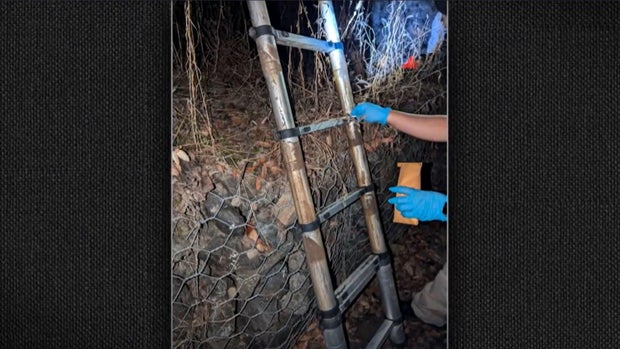
Tracy Smith: But how remarkable is that?
Vern Pierson: Pretty remarkable. (smiles)
The family who still lived there confirmed everything. Next, Pierson set out to find the campsite victims. His team scoured Folsom and Sacramento County records until finally, one of his staffers found a four-page State Parks report of an incident from Aug. 7, 1993. At the time, Muller was just 16.
Vern Pierson: … we look at it, and it’s very close to what he described. I mean virtually identical. … (reading from report) “Victim exited the tent with two sleeping bags and pillows and as told by subject to lay face down.”
This had to be it. Pierson notified the Sacramento County District Attorney’s Office, and Criminal Investigators Kevin Papineau and Michelle Hendricks took over the investigation.
Tracy Smith (at scene): Back in the day, in the 1990s, did it look pretty much like this?
Kevin Papineau: Essentially up here it did…
The campsites are no longer there and the original investigators have died, so Papineau and Hendricks started by retracing Muller’s steps that night.
Tracy Smith: So he brings her up here. And again, she has no idea what’s going — what’s going on.
Michelle Hendricks: Right.
Kevin Papineau: Yeah. She doesn’t know where she’s going.
Tracy Smith: My goodness.
Michelle Hendricks: And — and that night, this place is pitch-black …
Tracy Smith: Yeah. It must be terrifying. Absolutely terrifying.
Kevin Papineau: Yeah.
From the report, they knew the victim’s boyfriend had found her on a footbridge along the bike trail, untied her, and they had called for help.
Michelle Hendricks: … a park ranger showed up, a Folsom P.D. officer showed up and … they took a statement from … them and then they left … The officers left.
Sacramento County District Attorney’s Office 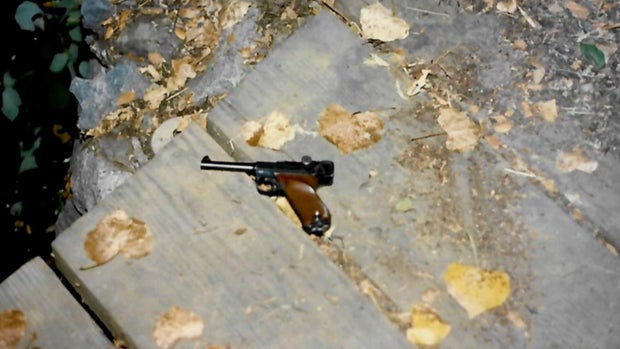
Papineau and Hendricks also found photos officers took that night, which showed a gun they believed Muller dropped when he fled. With no other leads to follow, they reached out to the victims.
Tracy Smith: How old were you in 1993?
“Lynn”: I was 19. … in the middle of the night … we were awakened to someone hitting the back of our tent …
“48 Hours” spoke to the female victim in 2025. She’s asked us not to show her face, and to call her “Lynn.” This is the first time she’s speaking publicly about what happened to her.
“Lynn”: The only thing I can really remember is just praying, praying for this to stop, praying for him to get away, praying that he doesn’t kill me.
CBS News 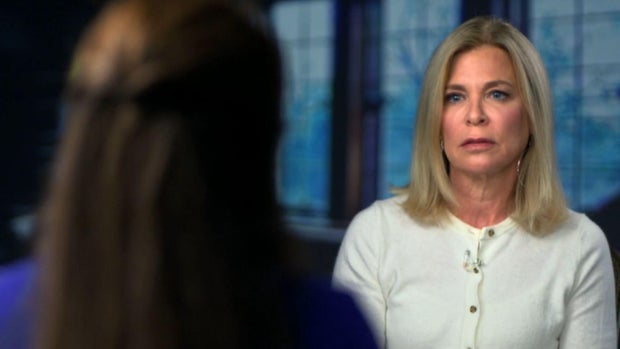
“Lynn” says after she and her boyfriend called for help that night, it didn’t feel like the officers were taking her assault seriously.
“Lynn”: It very much felt like they maybe didn’t believe me or believe my boyfriend … just by their line of questioning.
Tracy Smith: Like what?
“Lynn”: Like … with my boyfriend, they asked him, “you mean you didn’t see the gun? What do you mean you didn’t see the gun?” … instead of just listening to us and believing what we were telling them.
She says she called the parks department for months asking for updates, but nothing ever came from it.
“Lynn”: In fact, I even stopped telling people about it as time went on.
“Lynn” and her boyfriend eventually married and drew strength from each other, but she says it was difficult to ever feel truly safe.
Tracy Smith: Is there a way to describe the weight that you carried all these years?
“Lynn”: Hmm, it’s kind of hard to describe because … It’s just kind of part of who you are now. … for many years, I didn’t go by myself out at night … even during the daytime, I’d make sure I’d … keep an eye over my shoulder of who’s around and be aware of my surroundings at all times. … I didn’t feel comfortable wearing shoes … that I felt like I couldn’t run in, so like flip-flops or sandals … just in case I need to run.
But that began to change when she first spoke with Papineau and Hendricks.
“Lynn”: I felt this sense of relief … I knew that I was being believed. I knew that something was getting done about this, finally.
And “Lynn” felt more relief when she learned her attacker was now behind bars. But she wanted him to be held accountable for what he’d done to her.
“Lynn”: No, you didn’t get away with this. You didn’t just move on with your life and forgot it — that it happened. You don’t get to do that.
A reckoning for Denise and Aaron Quinn
Denise Huskins Quinn: … to learn that he was 16 years old the first time he attacked a couple … it made a lot of sense. … but it’s also just incredibly disturbing.
Denise Huskins Quinn and Aaron Quinn had long-suspected Matthew Muller had attacked before, but to learn the details – and have the crimes confirmed by investigators – was still devastating.
Aaron Quinn: … a lot of people have suffered from this man … Someone breaking in the middle of the night … tying you up, these … are things that are nightmares. …
Denise Huskins Quinn: … the voyeurism, the stalking … I think it’s a way of invading people’s lives. … to terrorize.
In late 2024, Matthew Muller was charged with the attempted rapes in Santa Clara County — the first attacks he had confessed to in the letters. He was flown back to California to face those charges. There, he was also charged with attacking the family in Contra Costa. While sitting in the Santa Clara County Jail, Muller wrote another letter.
Vern Pierson: He sent a letter to Nick Borges, essentially indicating he had additional … information that he wanted to provide to Denise and Aaron.
Tracy Smith: … he’s trying to … lure Denise and Aaron into coming and talking to him.
Vern Pierson: A hundred percent. … I read that letter exactly that way.
District Attorney Vern Pierson thinks meeting with Denise – in particular – may have been Muller’s objective for confessing all along.
Denise Huskins Quinn: D.A. Pierson was like … he’s confessing to certain things for a reason. They’re all in California. I think he wants to get back to California … in hopes that he can meet with you.
Even though they were fully aware Muller may have ulterior motives, Denise and Aaron did still want to talk with him. Muller had confirmed and given details about other crimes he had committed, but still maintained he acted alone in theirs. Denise and Aaron are adamant they heard other people during their attack.
Denise Huskins Quinn: I felt like maybe of all people, he would be more honest with us.
But having already spent many hours interviewing Muller, Pierson did not want them in a room together.
Vern Pierson: I didn’t think that was a good idea.
They came up with a compromise. On Feb. 13, 2025, Muller and his attorney met with Pierson, the FBI interviewer, and Chief Borges at the Santa Clara County Jail. Denise and Aaron were there too, watching from another room.
FBI AGENT: Denise, Aaron … are all present in building today and observing this live.
MATTHEW MULLER: OK.
Denise Huskins Quinn: … they let him know early on in the interview … They’re observing they’re … not coming in. … I think that irritated him. … the FBI interviewer had said … That conversation was very different …
When asked why he wanted this meeting, Muller claimed he was there to help Denise and Aaron … mostly.
MATTHEW MULLER: I have an obligation, um, to make it possible for them to visit with me, to get a closure on this … it’s in a way that I need closure as well.
El Dorado County District Attorney’s Office 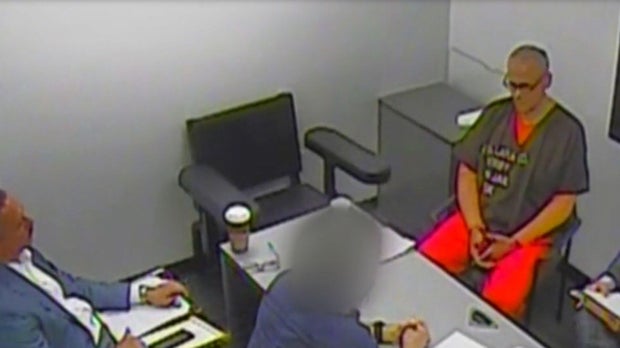
But when the FBI agent pushed for the answer to Denise and Aaron’s question —
FBI AGENT: … they are continuing to suffer in the sense that they continue to believe that there are other people …
At first, Muller didn’t directly respond and talked in circles.
MATTHEW MULLER: The only other information I could provide, and it does go back a bit into the religious matter. So, you know, if you are having events that seem to be described by the Bible or the Quran or anything else …
Denise Huskins Quinn: … he’s just an incredibly frustrating human.
Eventually, Muller again denied he’d had accomplices.
MATTHEW MULLER: I guess the best I can do is say, look, every other thing that I’ve done was a lone actor situation. And I’m just sort of a loner generally.
But Muller did go into detail about how he said he had tricked Denise and Aaron into believing he was working with a group.
Vern Pierson: … he did various steps … to make it look as though he … had somebody else with him, there was multiple people … he told us that he had used … a— a device that he could make it sound as though he was … talking to somebody downstairs and getting a response using a recorder.
MATTHEW MULLER: … there was like a whisper track or something like that. And then I pretended to be whispering to someone at the same time.
Tracy Smith: Do you believe what Muller was saying about “well, I was pretending that there were other people in the room.”
Aaron Quinn: I mean, I don’t believe everything Muller says. … I know what we saw. We know what we heard. …
CBS News 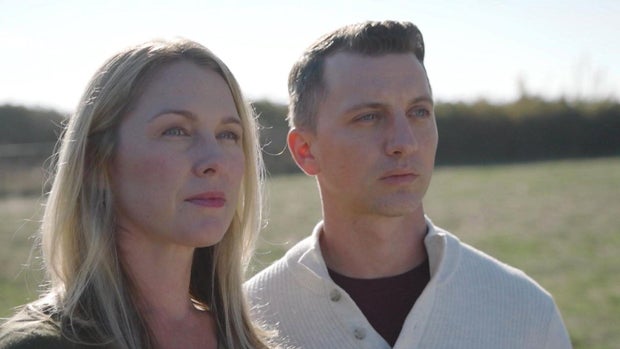
Although Denise and Aaron didn’t get the answers they hoped for, they say that confronting Muller – even through the interviewers – was a form of reckoning.
Aaron Quinn: … for us, it was more … showing him that we’re not scared of you. We see you. We see who you are.
And they were determined to see Matthew Muller face justice for all the crimes their work and persistence had uncovered. In June 2025, he was finally charged with Lynn’s attack and faced a life sentence for each of the additional crimes he was now charged with. Denise hoped this would finally lock him away forever.
Denise Huskins Quinn: I don’t believe if he’s ever free, that he could help himself. … I feel like he’ll always figure out a way to terrorize someone in some way.
“We have to believe victims”
By the summer of 2025, Matthew Muller was convicted of all the charges brought as a result of the new investigation spurred by Denise and Aaron. At Muller’s sentencing, “Lynn” read a victim impact statement three decades in the making.
“Lynn”: I think for so many years, feeling like my voice was silenced … feeling like my voice could be heard finally … felt very empowering … I got the last word. Now, you get to be silenced.
Muller was sentenced to four life terms.
Tracy Smith: How does that feel? That he’s now serving four life sentences for four crimes that … he might have never confessed to had you not written that letter?
Chief Nick Borges: Goosebumps. I have them right now.
“Lynn” says she felt relief knowing Muller would stay locked up while she walked free — finally able to live without fear and enjoy old pastimes and new ones.
Tracy Smith: How are you with going outdoors and camping now?
“Lynn”: It’s – it’s easier now. Um, and one of the ways that we were able to do that was through … playing disc golf … it gave me something to focus on outdoors that felt safe again.
She has also connected with Denise.
Denise Huskins Quinn: She actually reached out to me on Instagram … (crying) When I saw, you know, “I’m Matthew Muller’s first victim,” like I — I was like, what?
“Lynn”: I wanted to say thank you and just let her know … that 32 years of waiting was finally over because of her continuing to seek answers.
While “Lynn” finally has answers, Denise and Aaron still questioned whether Muller acted alone. DA Vern Pierson hoped forensics could prove if there was another assailant. Pierson learned Vallejo Police had only done preliminary testing on Denise’s rape kit, so his office had it fully tested in 2025.
Vern Pierson: Well, the results are essentially inconclusive.
Pierson says the test showed a mixture of DNA, including Muller’s, so they can’t rule out the possibility that Denise could also have been assaulted by someone else. But Pierson doesn’t think so.
Vern Pierson: Based on everything I know … I don’t believe that there was an accomplice. … I think that was a ruse that … he created … and perpetuated very successfully.
Chief Borges isn’t so sure.
Tracy Smith: Do you think Muller had accomplices?
Chief Nick Borges: I think it’s very possible. I — I certainly think it’s very possible.
But Borges and Pierson both believe Muller committed additional crimes.
Chief Nick Borges: Everywhere that man traveled, he was a threat.
And Borges says it’s possible Muller went even further.
Chief Nick Borges: One of the times I interviewed him, I asked him if he ever killed anybody, it just seemed like an appropriate question. … he kind of told me that he didn’t have the heart to do that. …
Tracy Smith: Do you believe him?
Chief Nick Borges: Not fully. I — I don’t fully believe him. I mean, at what point do you actually stop?
Borges says he hasn’t stopped investigating — looking for other crimes and accomplices.
Chief Nick Borges: If anyone else is involved, we’re coming for you. Just trust me. We’re going to get you if you’re involved.
Today Denise and Aaron continue to speak to law enforcement — trying to change how officers interview victims and suspects.
Chief Nick Borges: Denise has said … not being believed … was more traumatic in many ways to her than the actual assaults themselves. If that doesn’t open your eyes in law enforcement, something’s wrong with you.
CBS News 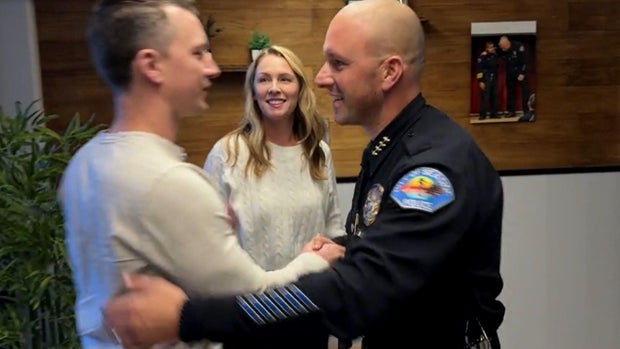
Borges says that is the biggest lesson he’s learned from Denise and Aaron.
Chief Nick Borges: We have to believe victims. When they come forward, we have to listen to what they say and follow the evidence.
Despite all they’ve been through, the Quinns say that while their case revealed a lot of problems, it also shows the solutions.
Aaron Quinn: We understand it’s a really hard job. People make mistakes. … What you’re hoping is that people recognize mistakes, they learn from mistakes and then it changes their actions going forward.
And these unlikely advocates are determined to use their voices for good.
Tracy Smith: I don’t think anyone would blame you if the two of you said, OK, enough. We don’t need to talk about this anymore. … Why not just move on?
Denise Huskins Quinn: I think there’s a sense of responsibility. … the publicity was so damaging to us in the beginning. … And so I feel like in a way … having this strange, unique position, it almost seems irresponsible to not utilize it in a positive way that can maybe … help others.
Kenny Park left the Vallejo Police Department in 2020. Mathew Mustard retired in 2024. “48 Hours” was unable to reach them for a comment.
Produced by Dena Goldstein and Lauren Clark. Greg Fisher is the development producer. Atticus Brady, Chris Crater and Michelle Harris are the editors. Lauren Turner Dunn is the associate producer. Lourdes Aguiar is the senior producer. Nancy Kramer is the executive story editor. Judy Tygard is the executive producer.