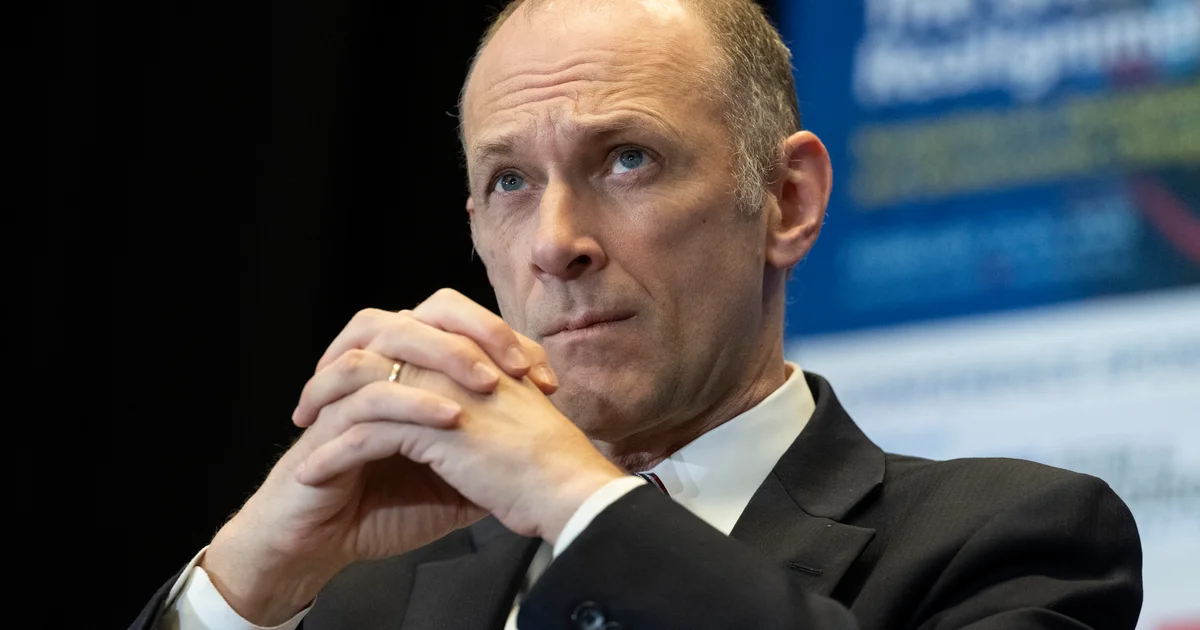
Federal Reserve Bank of Chicago President Austan Goolsbee thinks that the Iran was risks fueling inflation, which would make it harder for the central bank to ease interest rates in 2026.
Goolsbee — who emphasized he was speaking for himself and not for the Federal Reserve as a whole — told CBS News that, before the start of the conflict, he was confident the Fed could cut its benchmark rate this year. But that optimism has waned as the war drives up oil and fuel prices.
“Before the war, before we got the oil shock, I’ve been on the optimistic side of the rate — I believed rates could come down even multiple times in 2026,” Goolsbee said.
The energy shock “complicates that picture for me — that if we’re truly not going to see any improvement in inflation, to me that starts pushing these decisions off to 2027 at the earliest,” he said.
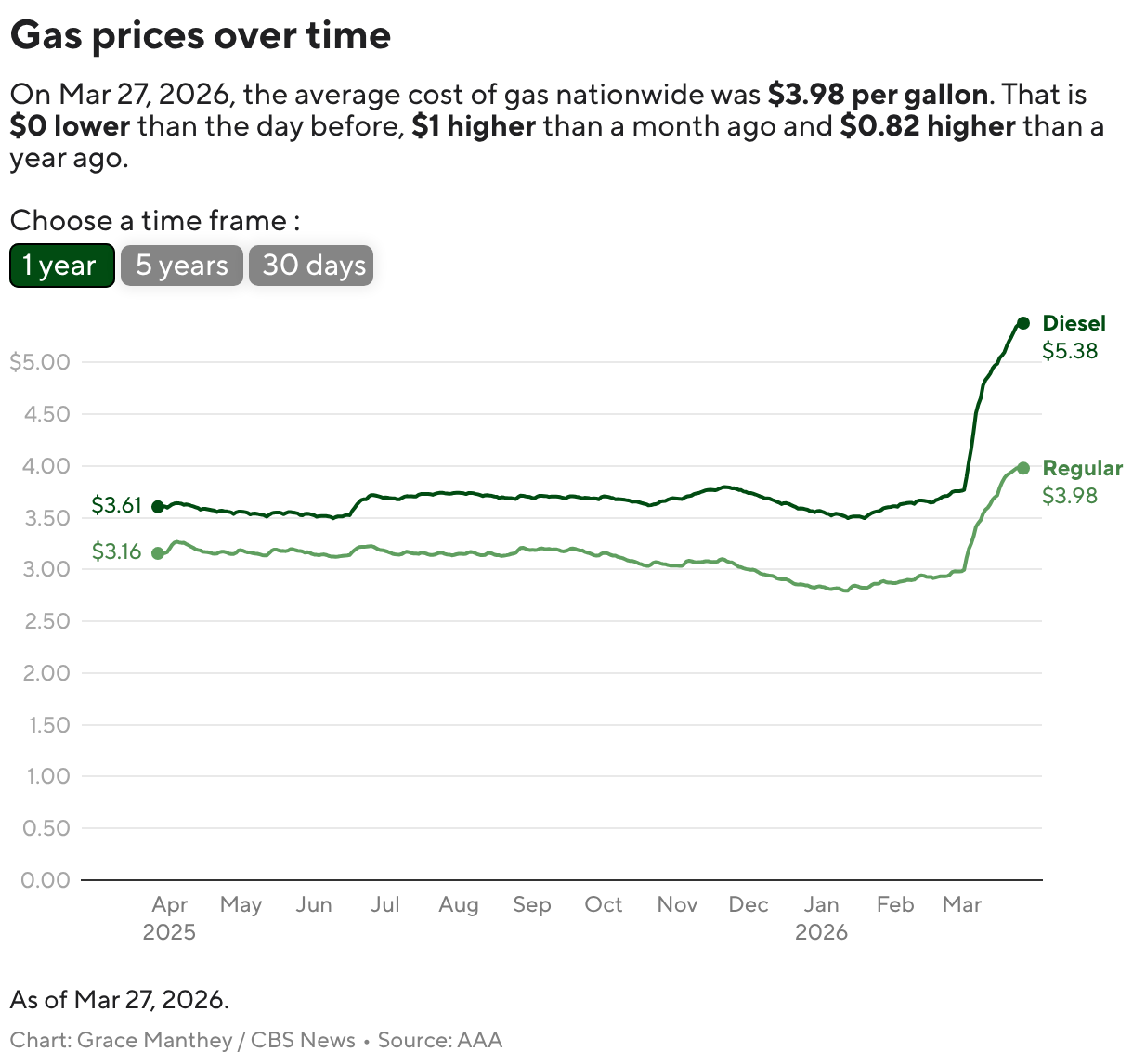
The Fed in March left the federal funds rate — what banks charge each other for short-term loans — unchanged because of mounting economic uncertainty amid the Iran war, although policymakers indicated they still expected to cut rates once in 2026. Since then, energy costs have continued to rise, with the average price of gasoline hitting $4.09 a gallon on Friday, more than $1 higher than before the war.
In 2026, Goolsbee is serving as one of five alternate members of the Federal Open Market Committee, the central bank’s rate-setting panel. He participates in discussions and contributes to economic assessments, and is slated to rotate onto the committee as a voting member in 2027, according to the Fed.
Private economists are also paring their forecasts for interest rate cuts this year due to the risk that higher oil and fuel prices will reignite inflation, which remained well above the Fed’s 2% annual target before the Iran war began. CME FedWatch, which bases the probability of rate cuts based on 30-Day Fed funds futures prices, now predicts that the Fed won’t issue a single rate cut in 2026.
The next Consumer Price Index report, set to be released on April 10, is likely to show that March prices rose at a 3.1% annual pace, accelerating from February’s 2.4% rateaccording to economists polled by FactSet.

Pressure on household budgets from higher energy prices could threaten to derail consumer spending, Goolsbee told CBS News. Even before the war, many Americans were feeling pinched financially, and coping with the sharp increase in gas prices could cause some to pull back on spending in other areas, he added.
“It’s in the near term, but not immediate, that you would start to see that weighing down the consumer,” he said. “They would just get sticker shock — people were already highly concerned about affordability and the cost of living, and this would just be piling onto it.”
Consumer spending has been “the backbone of our growth,” Goolsbee said, adding that the pressure on households from higher costs “endangers the extended nature of this boom.”
Goolsbee also worries that economic uncertainty arising from the Iran war could spill over into the labor market, which on Friday posted stronger-than-expected March gains, with 178,000 new jobs created last month. The Labor Department revised February’s payrolls report lower to a loss of 133,000 jobs, larger than the 92,000 decline originally reported.
The labor market has been described as “low hire, low fire,” meaning that while companies aren’t doing much hiring, they also aren’t making large layoffs. Economic uncertainty is likely behind the current state of the labor market, Goolsbee said.
“I think that combination comes from so much uncertainty. Most of the businesses that I’m out here talking to in the Midwest say they’re a little bit sitting on their hands until they get some resolution, whether it’s geopolitical and the price of oil or tariffs, and what the rates are going to settle down to,” Goolsbee said.