


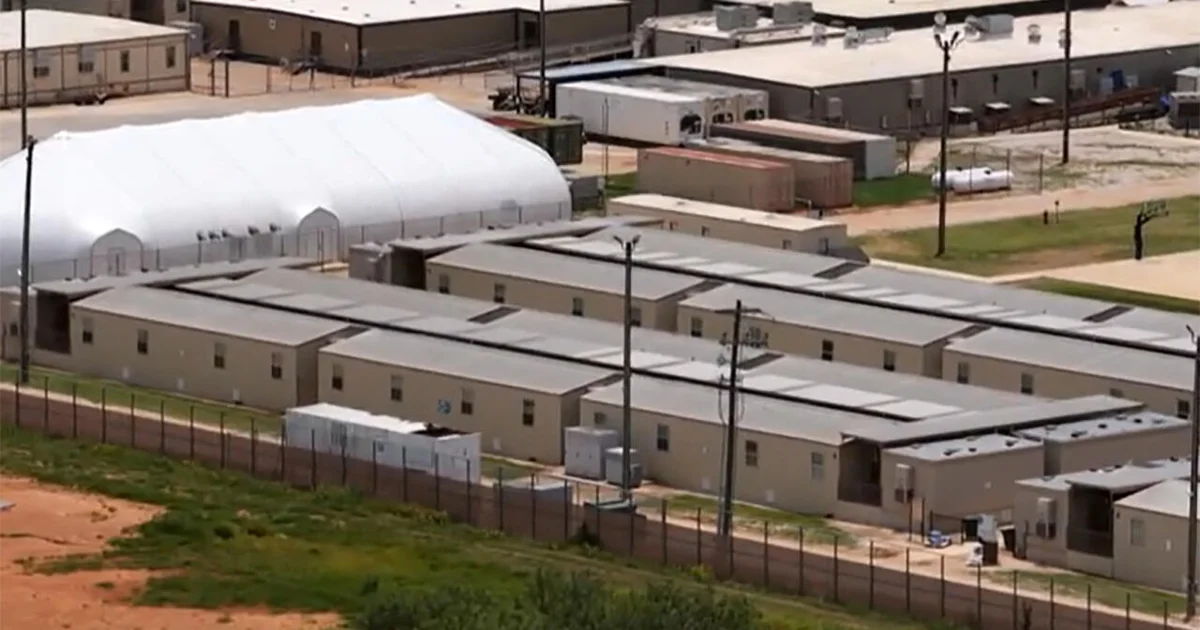
Joel Andre is a 17-year-old immigrant from the Democratic Republic of Congo, a soccer-obsessed high school junior who now lives just outside of Portland, Maine. At the moment, for Joel and his younger sister, Estafania, homework is taking a back seat to this summer’s World Cup – which is the perfect distraction at this dinner table for a family that badly needs one. “Every time I’m doing something, I always think about Olivia,” said Joel.
Olivia is their 19-year-old sister. All three, along with their mother, Carine, were detained last November at the South Texas Family Residential Center in Dilley, Texas.
“In Dilley was very hard, very hard,” said Joel. “Especially to kids, right? The food, the water you drink, even the water you shower, is the worst.”
But when Joel, Estafania and their mother were released in March, Olivia, at 19 years old, had to stay. Joel said, “We all went like, why? Why?”
Estafania said, “I have a hope that we can all be together, but I don’t know when, where.”
Family Photo 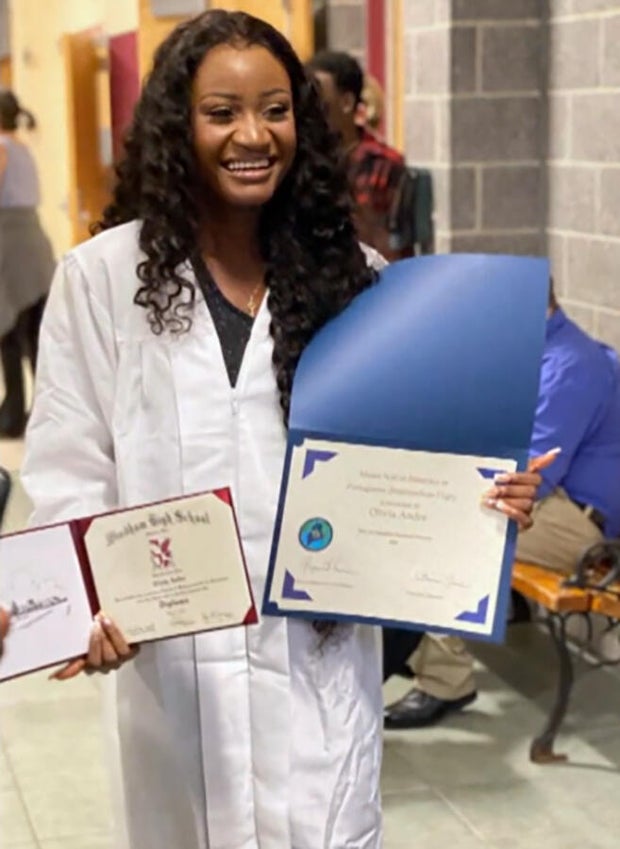

The family had fled the Congo after Carine, an activist, was brutalized for speaking out against the ruling regime. They came here seeking political asylum.
Elora Mukherjee, director of the Immigrants Rights Clinic at Columbia University, and the family’s lawyer, says if Carine and her children did not leave the DRC, chances are they would not be alive.
According to Mukherjee, when the family arrived in 2022, they were vetted and released to await their hearing after they were deemed to pose no threat. They complied with all their check-ins. “They showed up for every single appointment, and did everything they were supposed to do,” she said.
But it wasn’t enough.
In February of 2025, a judge ordered them deported. Scared of being sent back to the Congo, they tried to go to Canada, but were denied entry and sent back to the U.S., where they were then sent to Dilley.
CBS News 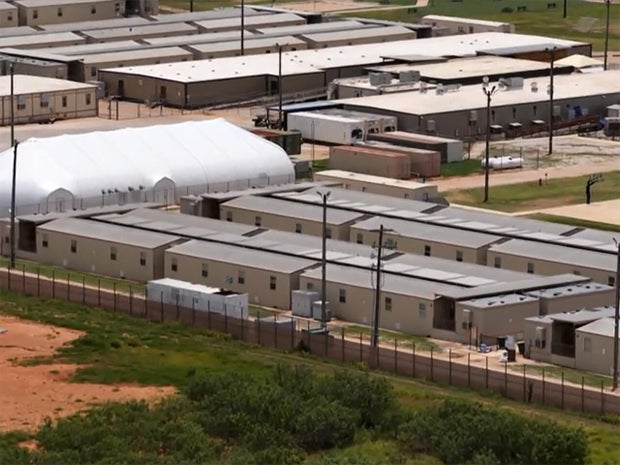

Mukherjee has been inside Dilley. “It is a series of trailers,” she said. “Families and children alike consistently report that they do not have access to sufficient clean drinking water, that they found live worms, bugs and mold in their meals. The lights are on 24/7, making it really difficult for everyone detained there to sleep.”
Those accounts have been repeated by dozens of detainees in sworn testimony, written letters, and interviews.
CBS News 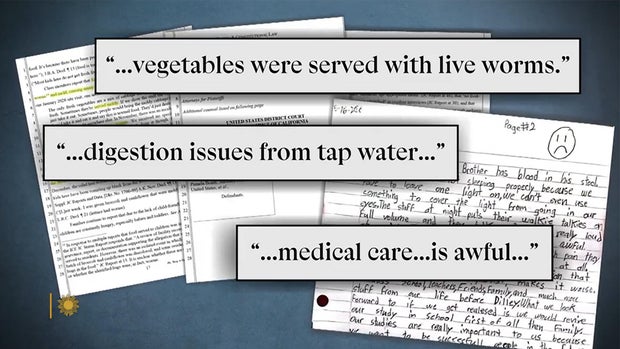

More than 6,300 children under 18, some as young as two months old, have been detained by federal immigration authorities during President Trump’s second term. Nearly half have been detained at Dilley. Ninety-seven percent had no criminal record.
“It’s the only place I can think of in America where we imprison young children who have done absolutely nothing wrong,” said Congressman Joaquin Castro. “Instead of treating them like asylum seekers who were vetted to come into the country, they’re treating them like criminals.” The Democrat Representative from San Antonio is calling for Dilley to be shut down.
Asked what the policy objective could be for creating conditions such as those reported from inside Dilley, Castro replied, “I think it’s meant to send a very ugly message, that we don’t want you here, that you’re not welcome.”
Dilley opened in 2014. President Obama intended to hold migrant families there who’d been caught crossing the southern border illegally. President Biden closed it a decade later.
When President Trump reopened Dilley in 2025, a for-profit company, CoreCivic, was given a contract worth $180 million annually to run it.
CoreCivic denies the charges of any substandard care or conditions at Dilley, telling “Sunday Morning,” “The conditions described in your inquiry do not reflect the operations, standards or care provided at the Dilley Immigration Processing Center.” [See full statement below.]
CBS News 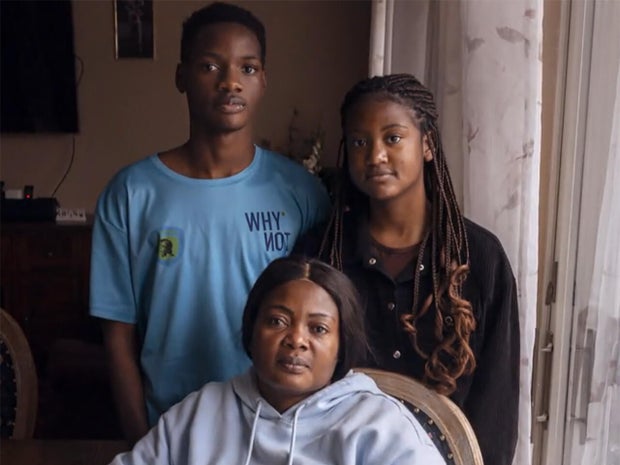
Joel, Estafania and Carine were held at Dilley for almost four months. “For, like, all we’ve been through,” said Estafania, “going to Dilley just, like, broke our hearts.”
That alone violated something called the Flores Settlement, a federal order that’s been in place for nearly 30 years requiring the prompt release of children. One federal court has said that means no more than 20 days.
Asked if he’d thought that there were laws in place that would prevent them from being held in Dilley more than 20 days, Joel replied, “Yes. But they broke all those laws.”
While a federal court has rejected a White House effort to terminate the Flores Settlement, the administration is appealing.
Inside Dilley
This past week, we went with Congressman Castro to Dilley, where families also complain about a lack of health care and a lack education for their kids. “These kids, they’re hugging my leg and they’re asking me to get ’em outta there,” Castro said. “I mean, they are four years old, six years old, and they’re basically in a trailer prison.”
Our CBS News crew got as far as the front gate. The restrictions in place at Dilley say no reporters are allowed. And even those who do get in, like Members of the U.S. House of Representatives, have to surrender their phones upon entry, meaning there are somewhere near 100 children inside Dilley – and not one picture of the conditions in which they live.
CBS News 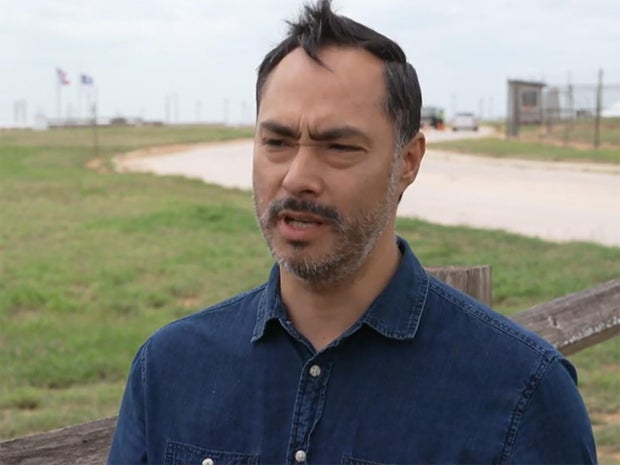
It was Castro’s sixth trip to Dilley since President Trump returned to office. Upon leaving, he said, “They told us that there are three kids who are under the age of three. We met with a 15-year old boy, he said that he hasn’t eaten in days because he doesn’t feel like eating, he’s depressed.”
I asked, “Are you surprised that even you can’t use your camera, use your phone?”
“Yeah, I’m surprised that we let them get away with this,” Castro replied. “I’m surprised that we have not taken a stronger stand and said, when you’ve got a group of people, including kids, that have committed no crime, we’re not gonna put up with that, we are going to be able to see what’s going on.”
According to its 2027 budget proposal, the White House wants to add 30,000 more beds in family detention centers.
Our requests to the Department of Homeland Security to discuss Dilley were denied. But they did provide a written statement: “Another day and another hoax about the South Texas Family Residential Center … Any claim that there are subprime conditions at ICE detention facilities is FALSE. All detainees are provided with proper meals, quality water, blankets, medical treatment.” The statement also called the Flores Settlement “a tool of the left.” [See full statement below.]
Elora Mukherjee said, “Americans don’t yet know what is happening at the Family Detention Center in Dilley. And once more people know, people will feel motivated to speak out against the abuses there.”
As for Joel, Estafania and Carine, while we were still with them in Maine, they got the call: Olivia would be released, after more than five months in detention.
A few days later, an airport reunion gave this family’s Dilley story a happier ending than most.
CBS News 
While Joaquin Castro and others share the family’s joy, he says this is the exception, not the rule. “The government knows they’re not criminals, and yet they’re being held like criminals,” he said.
And it’s what we can’t see where Congressman Castro thinks we should train our focus: “To really understand that’s going on with Dilley, we gotta be able to see what’s going on behind those walls. There’s a brutality behind those walls.”
Full statement from DHS
The following statement was provided to “Sunday Morning” by a spokesperson for the Department of Homeland Security:
“Another day and another hoax about the South Texas Family Residential Center. Nearly every single day, this office responds to media questions on FALSE allegations about illegal alien detention centers. The media is clearly desperate for these allegations of inhumane conditions at this facility to be true. Here are the facts: Dilley does meet federal detention standards and actually undergoes regular audits and inspections. When will the media stop peddling hoaxes about illegal alien detention centers and start focusing on American victims of illegal alien crime?
“Any claim that there are subprime conditions at ICE detention facilities is FALSE. All detainees are provided with proper meals, quality water, blankets, medical treatment, and have opportunities to communicate with their family members and lawyers. ICE has higher detention standards than most U.S. prisons that hold actual U.S. citizens. It is a longstanding practice to provide comprehensive medical care from the moment an alien enters ICE custody. This includes medical, dental, and mental health intake screening within 12 hours of arriving at each detention facility, a full health assessment within 14 days of entering ICE custody or arrival at a facility, and access to medical appointments and 24-hour emergency care. This is the best healthcare many aliens have received in their entire lives. Meals are certified by dieticians. All of this is funded the by the U.S. taxpayer.
“Children residing in the facility have access to educational programming, age-appropriate books and toys, and outdoor activities. Infant care packages include formula, baby food, bottles, diapers, wipes and hygiene items; the facility also provides sippy cups and cribs. Staff also provide for special diets and allergy accommodations when necessary.
“For years, the Flores consent decree has been a tool of the left that is antithetical to the law and wastes valuable U.S. taxpayer funded resources.
“Parents have a choice if they want to be removed with their children or ICE will place the children with a safe person the parent designates. This is consistent with past administrations’ immigration enforcement.
“DHS takes its responsibility to protect children seriously and will continue to work with federal law enforcement to ensure that children are safe and protected. Parents, who are here illegally, can take control of their departure. Through the CBP Home App, the Trump Administration is giving parents illegally in the country a chance to take full control of their departure and self-deport, with the potential ability to return the legal, right way and come back to live the American dream. It is free and available for all mobile devices.”
Full statement from CoreCivic
The following statement was provided to “Sunday Morning” by Brian Todd, manager, Public Affairs, at CoreCivic:
“Nothing matters more to CoreCivic than the health, safety and well-being of the people in our care. The conditions described in your inquiry do not reflect the operations, standards or care provided at the Dilley Immigration Processing Center (DIPC).
“The responsive information we have provided below is independently verifiable and directly contradicts the allegations in your inquiry. We would welcome the opportunity to review any evidence CBS Sunday Morning has gathered that it believes supersedes this record before broadcast.
“DIPC gets the same clean drinking water the local utility supplies to the surrounding community. The City of Dilley Water Department conducts monthly independent tests on DIPC’s water supply to verify its safety and cleanliness for drinking. Consumer Confidence water quality reports, which are available for public review, are also provided annually by the City, consistent with the federal Safe Drinking Water Act. State officials at the Texas Commission on Environmental Quality have also performed their own assessments, confirming that the water is safe and clean for consumption. As an added measure, locations where drinking water is accessed at the facility are equipped with filters to help ensure consistent taste quality.
“We provide three nutritious meals daily at DIPC, including fruits and vegetables, with menus reviewed and approved by a registered dietitian. On religious dietary accommodations, DIPC provides halal, kosher and other religious dietary options as appropriate. The suggestion that religious dietary needs are being denied is false and not consistent with our documented practices.
“Staff routinely drink the water and eat the meals at DIPC.
“The children and their families at DIPC receive health care that is clinically rigorous, federally overseen and delivered with dignity. Residents receive:
- Timely medical evaluation by providers trained in pediatrics, including general pediatricians, child and adolescent psychiatrists, therapists and psychologists.
- Trauma-informed mental health screening at intake, using validated clinical tools, with ongoing reassessment and access to continued support.
- Care from an interdisciplinary team, including nurses, dentists, advanced practice providers and specialists, operating within a medical home model to ensure continuity of care.
“We would direct you to this comprehensive statement from CoreCivic’s Chief Medical Officer, Dr. Kristen Dauss, which provides additional detail on the care provided at DIPC.
“Democratic U.S. Representative Henry Cuellar recently visited the DIPC and comments on a number of these issues, including food, water and medical care, beginning at 4:44 in this Facebook post.
“Currently, staff educators are facilitating age-appropriate educational programs and activities for children housed at the facility. All educators are bilingual, and additional language services are available at the facility based on any needs. CoreCivic has finalized plans to further expand educational program offerings, with the expectation that all educational requirements will be fulfilled by mid-July.
“We also encourage you to take this virtual tour of the facility.
“We also point you to the following link, which directly addresses many of the concerns at DIPC you raised in your inquiry – https://www.corecivic.com/news/setting-the-record-straight-dilley-immigration-processing-center
“It’s worth noting that family residential centers have operated under federal authority since the Obama administration, across administrations of both parties. CoreCivic does not set or enforce immigration law. What we do — and what we’re committed to — is ensuring that every person in our care receives safe, humane and appropriate treatment while that law is administered. The record we have provided here reflects that commitment.”
For more info:
Story produced by Sara Kugel. Editor: Jason Schmidt.
See more: