


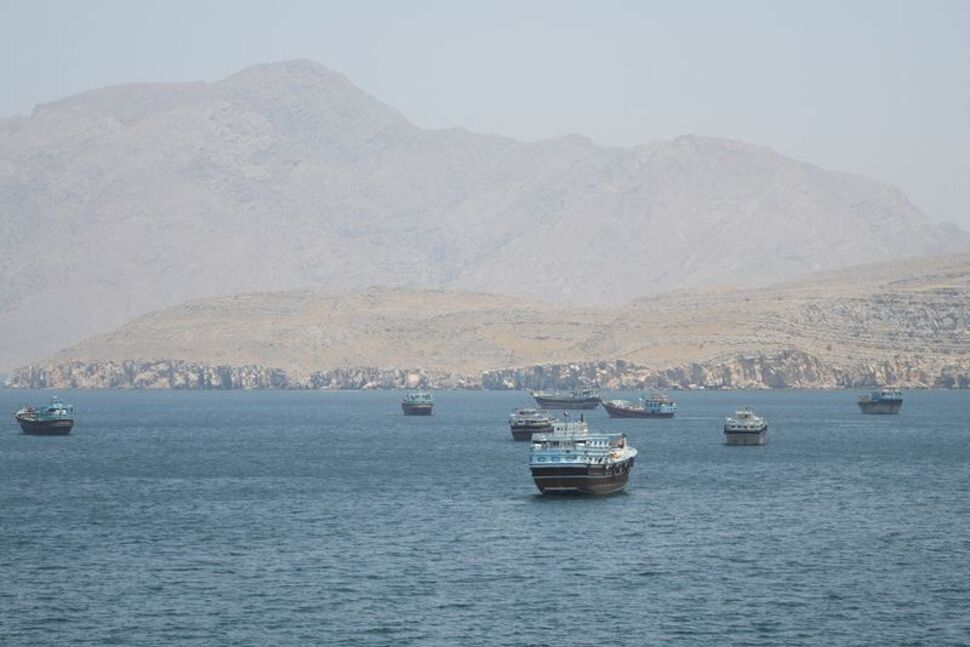
WASHINGTON, May 12 (Reuters) – Senior U.S. and Chinese officials agree that no country can be allowed to exact shipping tolls in the Strait of Hormuz, the State Department told Reuters on Tuesday, in a sign that the two countries are trying to find common ground on efforts to pressure Iran to give up control of the vital waterway.
The statement by the State Department comes ahead of a high-stakes summit between President Donald Trump and Chinese President Xi Jinping later this week, where Iran’s chokehold on the strait will be on the agenda.
Iran’s near-complete closure of the vital trade artery since the joint Israeli-U.S. airstrikes on the country on February 28 has sent shockwaves through global energy markets.
The State Department said Chinese Foreign Minister Wang Yi and U.S. Secretary of State Marco Rubio discussed the issue in an April phone call.
“They agreed that no country or organization can be allowed to charge tolls to pass through international waterways like the Strait of Hormuz,” department spokesman Tommy Pigott told Reuters in response to questions about the call. The State Department has not previously provided a readout of the call in a break from its usual practice.
China’s embassy did not dispute the U.S. account of the discussion, saying it hoped all sides can work together to resume normal traffic through the strait, which before the war handled one-fifth of the world’s oil and gas supply.
“Keeping the area safe and stable and ensuring unimpeded passage serves the common interest of the international community,” embassy spokesperson Liu Pengyu told Reuters.
Tehran has demanded a right to collect tolls on shipping traffic as a precondition for ending the war. The U.S. has imposed a naval blockade on Iran, and Trump has floated the possibility of imposing its own fees on traffic or working with Iran to collect tolls. After domestic and international pushback, the White House has since said Trump wants to see the Strait of Hormuz open up for traffic without any limitations.
Chinese officials so far have avoided direct mention of tolls, even while condemning the U.S. blockade.
‘NORMAL AND SAFE PASSAGE’
Two sources briefed on the Wang-Rubio exchange said Rubio had raised the prospect of Chinese vessels paying tolls, which they said appeared aimed at encouraging Beijing to apply more pressure on Tehran to bring the conflict to an end.
China maintains ties with Iran and remains a major consumer of its oil exports. Trump has been leaning on China to use its influence to push Tehran to make a deal with Washington.
In a subsequent meeting with Iran’s foreign minister, Wang said the international community shared a “common concern about restoring normal and safe passage through the strait” while reiterating that China supports Iran in “safeguarding its national sovereignty and security.”
China vetoed a U.S.-backed resolution in the United Nations last month encouraging states to work together to protect commercial shipping in the Strait of Hormuz, arguing it was biased against Iran. That prompted U.S. ambassador to the United Nations, Mike Waltz, to argue that Beijing was tolerating Iran holding the global economy at gunpoint.
Washington together with Bahrain has drawn up another U.N. resolution demanding Iran halt attacks and mining in the strait, but diplomats say this is also likely to meet with Chinese and Russian vetoes if it comes to a vote.
That resolution also calls for an end to “efforts to exact illegal tolls” in the strait.
China has ordered its companies not to comply with U.S. sanctions against Chinese oil refineries over purchases of Iranian crude, measures intended to isolate and pressure Tehran.
(Reporting by Michael Martina; Additional reporting by David Brunnstrom and Andrea Shalal; Editing by Andy Sullivan and Alistair Bell)
Copyright 2026 Thomson Reuters.