


BEIJING, March 16 (Reuters) – China said on Monday it is in communication with the U.S. about President Donald Trump’s visit, after Trump threatened to delay the trip over the Strait of Hormuz, and suggested sanctions previously imposed on Marco Rubio are no longer in effect.
Trump said countries that benefit from shipping through the Strait of Hormuz should help secure it, in comments published by the Financial Times on Sunday.
“I think China should help too because China gets 90% of its oil from the Straits,” Trump told the newspaper, adding he would prefer to know Beijing’s position before the planned visit. “We may delay,” he said of the trip.
The White House had previously said Trump will travel to China from March 31 to April 2, for a highly anticipated summit with Chinese President Xi Jinping.
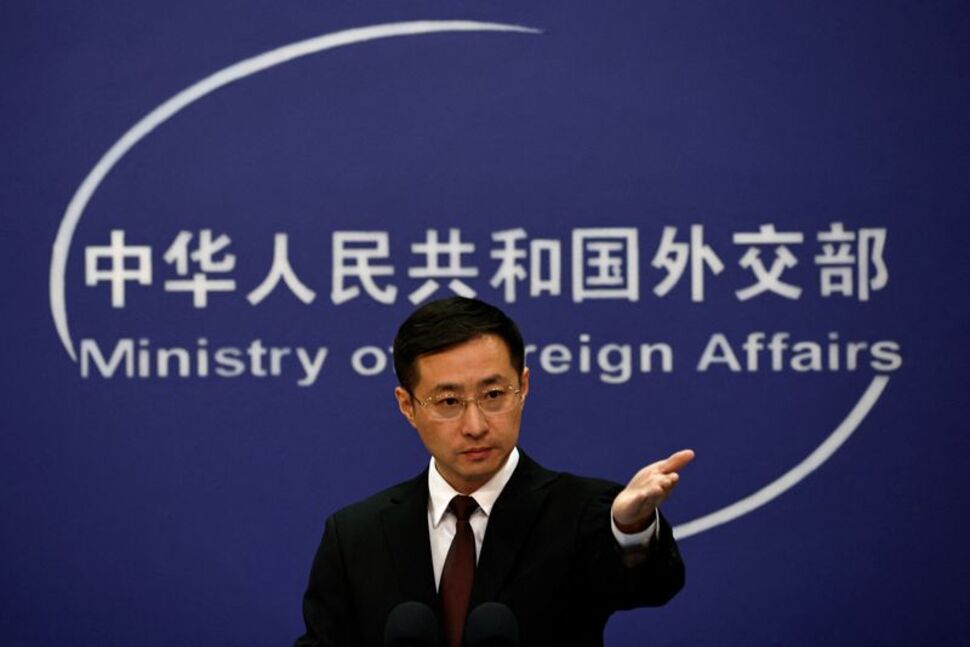
“Head of state diplomacy plays an irreplaceable role in providing strategic guidance to China-U.S. relations,” said Lin Jian, a Chinese foreign ministry spokesperson, when asked about Trump’s remarks during a regular press conference. Both sides are in communication about the trip, Lin added.
Beijing also signalled that U.S. Secretary of State Marco Rubio, who is expected to accompany Trump on his trip to Beijing, would be allowed to enter the country despite sanctions imposed on him in 2020 over remarks about Hong Kong and Xinjiang when he was then a U.S. Senator.
“China’s sanctions were aimed at Mr. Rubio’s words and deeds concerning China during his tenure in the United States Senate,” Lin said, when asked if the sanctions would affect Rubio’s ability to travel to China.
Chinese and U.S. officials are meeting in Paris this week, with potential areas of agreement in agriculture, critical minerals and managed trade that could be taken up by Trump and Xi during the summit in Beijing.
(Reporting by Colleen Howe; Writing by Xiuhao Chen and Liz Lee; Editing by Jacqueline Wong and Raju Gopalakrishnan)
Copyright 2026 Thomson Reuters.