


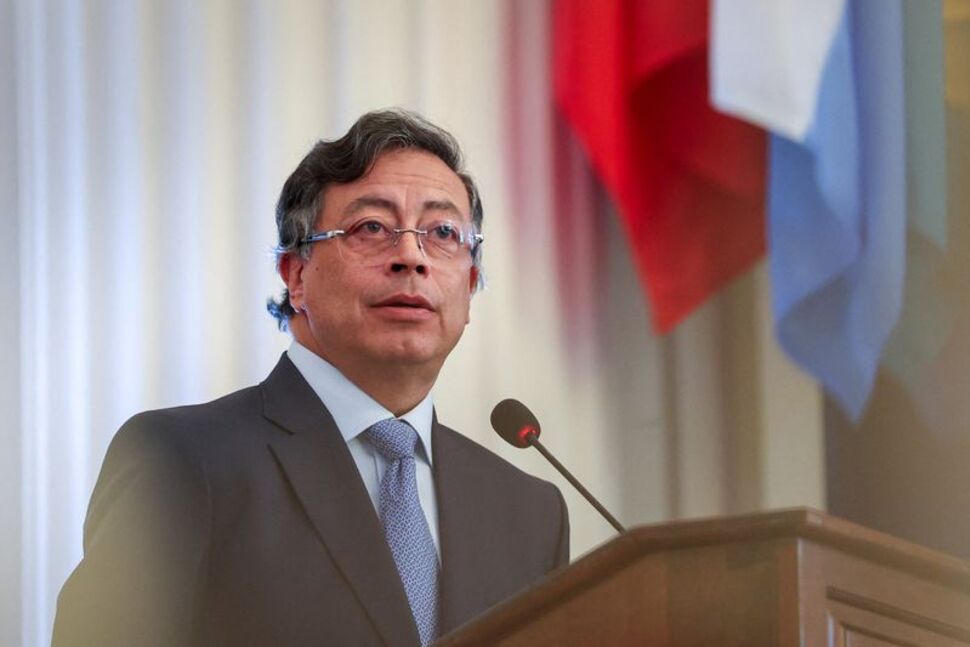
BOGOTA, April 15 (Reuters) – Colombia’s Constitutional Court ordered President Gustavo Petro’s government on Wednesday to return funds collected during an economic emergency that was declared unconstitutional.
The decision is the latest blow to the Petro administration’s finances, strained by setbacks in Congress, where several proposals for fiscal reforms have failed to gain support.
The court had struck down the economic emergency declared by Petro’s government in January to raise 11 trillion pesos ($3.07 billion) to finance part of this year’s budget.
The government had collected 1.67 trillion pesos ($467 million) as a result of the decrees enacted during the economic emergency, according to a source at the country’s National Tax and Customs Directorate who spoke on condition of anonymity.
The economic emergency is a state of exception that allows the government to make decisions by decree without prior authorization from Congress.
Among the measures the government had established during the state of emergency were a tax on liquid assets exceeding 2.1 billion pesos, a special income tax for the financial sector, and a 19% tax on the sale of alcoholic beverages and gambling, as well as on certain vehicles, motorcycles, and aircraft, among others.
On previous occasions when the court declared other economic emergencies unconstitutional, the ruling was not retroactive; meaning it did not require the government to return the funds already collected.
Latin America’s fourth-largest economy is experiencing a deterioration in its finances, which forced the government in June to suspend a fiscal ruling under which the Ministry of Finance raised the fiscal deficit target for 2025 to 7.1% of GDP, from an original 5.1%.
Last week, Finance Minister German Avila announced that he would present a new tax reform bill to Congress worth 16 trillion pesos ($4.47 billion) to finance this year’s spending budget, less than three months before the end of the legislative period.
(Reporting by Carlos Vargas; Editing by Sarah Morland and Brendan O’Boyle)
Copyright 2026 Thomson Reuters.