


Key Takeaways
- Consumer sentiment improved in June as optimism over a ceasefire in the Middle East and lower gas prices grew.
- Inflation expectations cooled slightly.
Consumers appeared to take the ongoing ceasefire between the U.S. and Iran, as well as moderating gas prices, as a reason to improve their moods in June.
That’s the final reading of the consumer sentiment index from the University of Michigan as it rose a little more than 10% to 49.5 from 44.8 in May. Inflation expectations improved also, with 12-month annual prices forecast to increase by 4.6%, down from 4.8% previously.
“Increases were seen across income, wealth, and political affiliation,” Joanne Hsu, director of surveys, wrote in an analysis. “Expected business conditions over the next five years surged 16% as consumers’ worries over long-term consequences of the Iran conflict appear to be easing.”
Still, sentiment is about 13% below where it was before the conflict in the Middle East began in late February.
“The cost of living remains at the forefront of consumers’ minds; for the third straight month, over half of consumers spontaneously mentioned that high prices are weighing down their personal finances,” Hsu added.
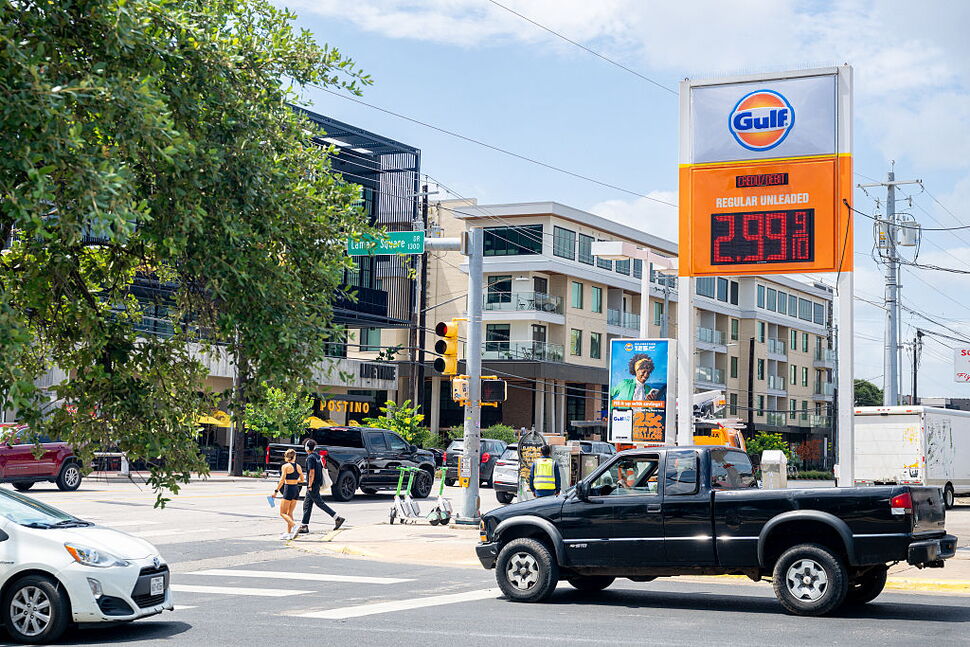
There has been some relief in gas prices since earlier this week, when President Donald Trump announced a 60-day ceasefire aimed at hammering out final details. But the flow of oil through the narrow Strait of Hormuz is not back to its prewar level, and experts warn that it may take a while before gasoline prices fall back to the $3 a gallon range. Gas prices are currently running $3.90 a gallon on average.
“Our commodities strategists project Brent crude oil will trade at about $80 per barrel by the end of the year, compared with a peak of about $118 in April during the war between the US, Israel, and Iran,” Goldman Sachs Chief Economist Jan Hatzius wrote in a briefing Friday morning.
The firm also lowered its 12-month recession probability to 15%, within the normal range, from 25% earlier.
Still, inflation is running hot with the latest wholesale prices coming in at a 4.1% annual rate, the highest since 2023. And the latest report showed that it was not just higher energy costs driving prices up, but also financial services and insurance, as well as health care and housing.
“Some relief has already come for American households and this should translate to cooler inflation readings in June and beyond,” Navy Federal Credit Union Chief Economist Heather Long wrote on Thursday. “But how quickly inflation cools is the big question now. Inflation’s surge is more than an oil price story. Housing, medical care and electricity are also putting pressure on family budgets and overall inflation.”
“The Federal Reserve is likely going to have to hike interest rates twice this year,” Long added. “The fact that the labor market continues to show signs of improvement – jobless claims declined last week to a low 215,000 – gives the Fed room to act.”