A global energy shock triggered by the Iran was sent U.S. inflation soaring in March, with the Consumer Price Index rising at a 3.3% annual rate.
By the numbers
Economists had predicted inflation would jump nearly an entire percentage point from 2.4% in February to 3.3% in March on an annual basis, according to the average of six separate forecasts reviewed by CBS News. The CPI, a basket of goods and services typically bought by consumers, tracks changes in prices over time
Inflation ran hot in March as a result of higher energy costs tied to the Iran war, which has constrained the flow of crude through the Strait of Hormuz, a critical chokepoint for global oil supply.
Brent crude, which was trading at $73 a barrel before the war started on February 28, was at $95.88 a barrel as of Friday morning.
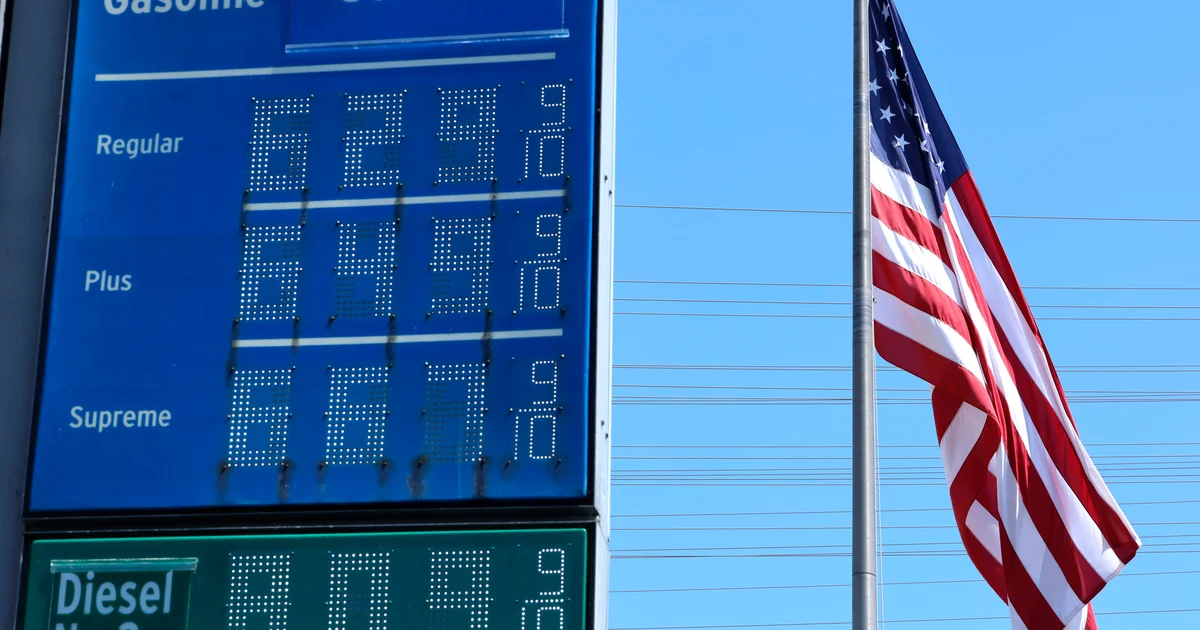
U.S. gasoline prices have soared nearly 40% since the conflict erupted, reaching $4.15 a gallon on Friday, according to AAA. The increase represents the biggest one-month jump in gas prices since 1957, according to Pantheon Economics.
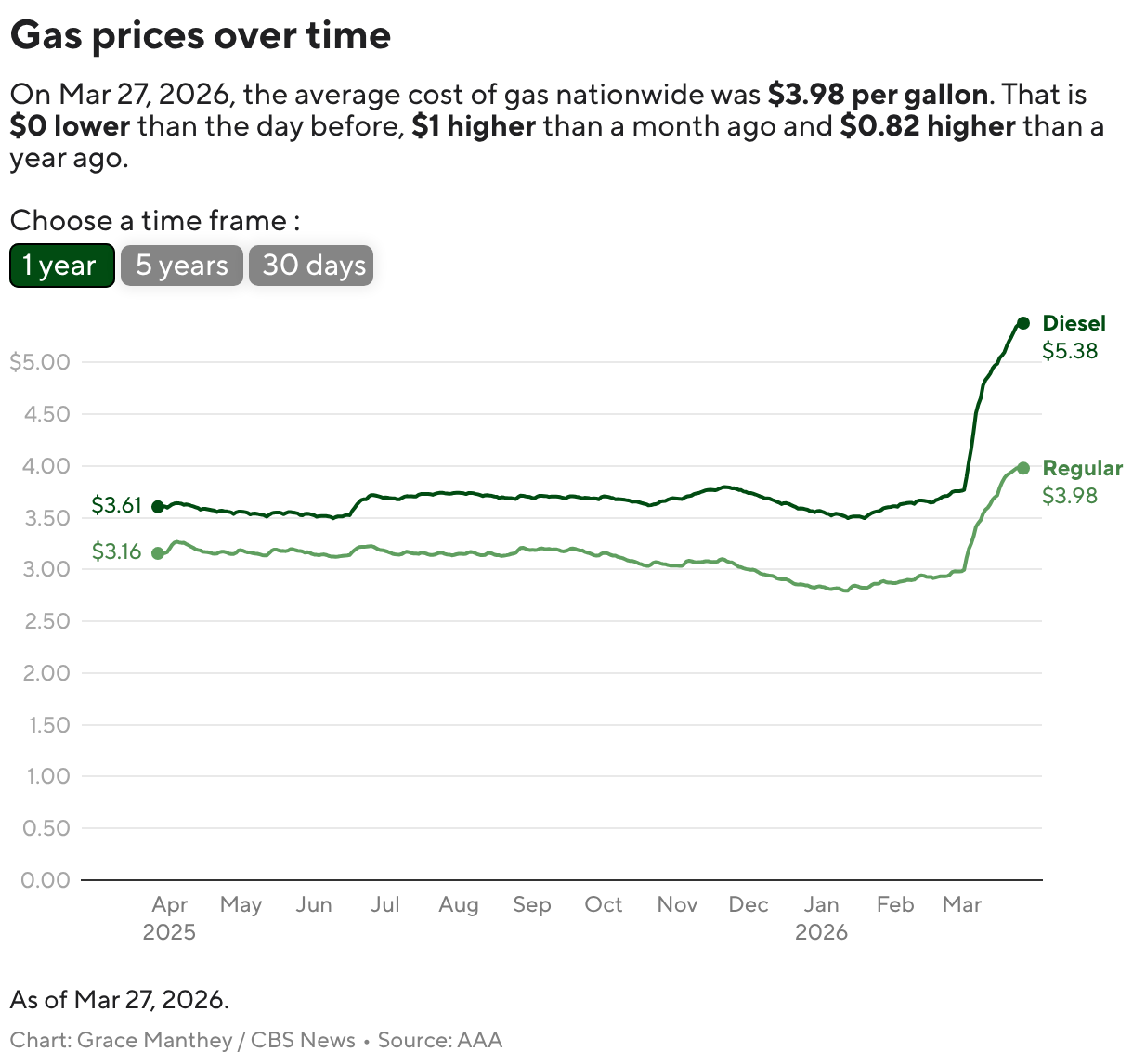
A two-week ceasefire between the U.S. and Iran announced on Tuesday could ease gas prices if it holds, but energy experts said it will likely take weeks to recede below $4 a gallon.
The CPI reading follows the release of another key inflation gauge known as the Personal Consumption Expenditures (PCE) price index on Thursday, which showed costs were elevated even before the war erupted. PCE rose 2.8% on an annual basis in February, the same as January, but stubbornly above the Federal Reserve’s 2% annual target.