HAVANA, March 22 (Reuters) – Cuba had restored power to nearly half of the capital Havana by Sunday afternoon, officials said, less than 24 hours after the national grid collapsed for the second time in a week amid a U.S. oil blockade that has dealt a major blow to the island’s already ailing energy infrastructure.
The grid failed Saturday evening at 6:32 p.m. (2232 GMT) after a major power plant in Nuevitas, in eastern Cuba’s Camaguey province, went offline, grid operator UNE said, causing a cascade effect that knocked out power to the nation’s approximately 10 million people.
Nearly 500,000 homes and businesses in Havana – approximately 55% of the total – as well as 43 hospitals, were back online by Sunday afternoon, UNE said.
The grid operator was also preparing to fire the country’s largest oil-fired power plant and expected it to be operating by day’s end, sharply boosting generation.
Life carried on as normal across most of Havana despite the ongoing blackouts, which have become a regular part of the daily routine in the capital even when the national grid is operational.
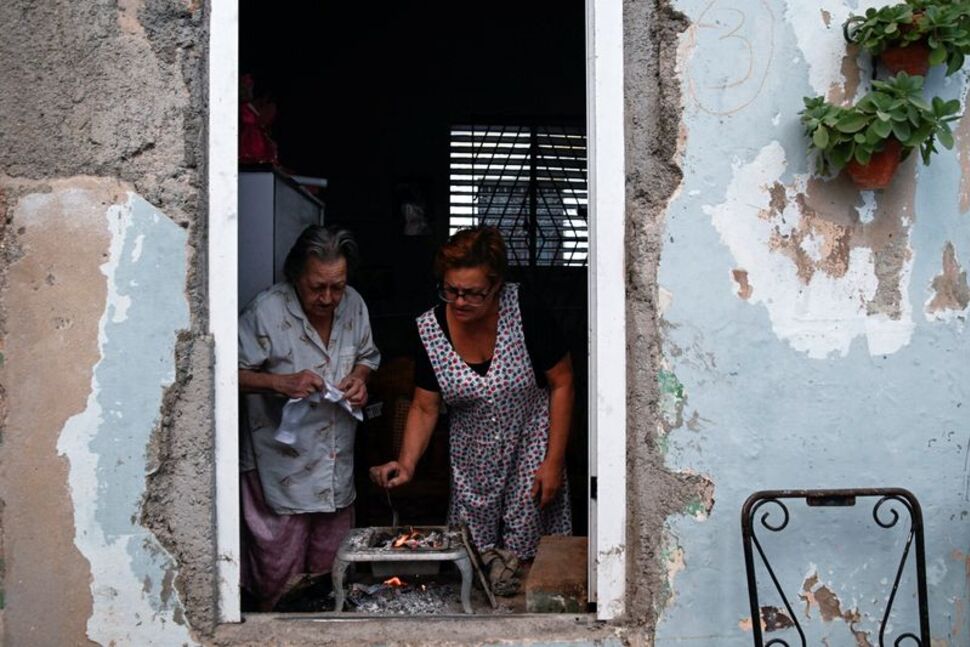
“We’re stuck in the same rut,” said Havana resident Leoni Alberto, who said he was forced to cook with firewood several times a week due to the outages. “It’s absolute madness. There’s no other way around it.”
Outlying provinces also reported a gradual restoration of power, though a dramatic shortage of diesel fuel means only a portion of the grid’s capacity is available for generation, meaning many areas will continue to see lengthy blackouts despite restoration efforts, officials said.
Cellular service and internet remained spotty countrywide but had improved in many areas by afternoon.
Havana resident Yordanis Lopez, like many in the waterfront capital, was still waiting for the lights to come back on at midday Sunday. He said the outage had left him in the dark in more ways than one.
“When the power grid fails, social media networks go down as well,” he said. “You have no idea what is happening.”
Cuba’s electrical grid has been teetering on the edge of collapse and unreliable for months, with hours, and sometimes day-long blackouts the norm.
But Saturday’s grid failure marks the third major power outage this month, as a majority of the system went down on March 4 when a key thermoelectric generating plant stopped suddenly. The power grid also went completely offline on Monday for unexplained reasons.
Cuba has experienced a series of total outages in recent years, but two nationwide blackouts in the space of a week is exceptional.
Many Cubans have been closely watching the track of two tankerships in the Atlantic with Russian-origin fuel cargoes, with hopes that they would provide some relief amid the U.S. blockade. But at least one, the Hong Kong-flagged vessel Sea Horse, appeared to have diverted away from Cuba earlier this week.
U.S. President Donald Trump began taking measures to block oil from reaching the Caribbean island after Washington deposed Venezuelan President Nicolas Maduro on January 3. Venezuela had previously provided oil to its close ally on favorable terms.
Since then, Trump has cut off Venezuelan exports to Cuba and threatened other countries with punitive tariffs if they sell oil to the island.
Cuba has long blamed the U.S. trade embargo for economic failures including its obsolete power grid, while Washington has attributed the shortfalls to Cuba’s Soviet-style command economy.
(Reporting by Dave Sherwood in Havana; additional reporting by Anett Rios and Alien Fernandez, Editing by Hugh Lawson and Diane Craft)
Copyright 2026 Thomson Reuters.