


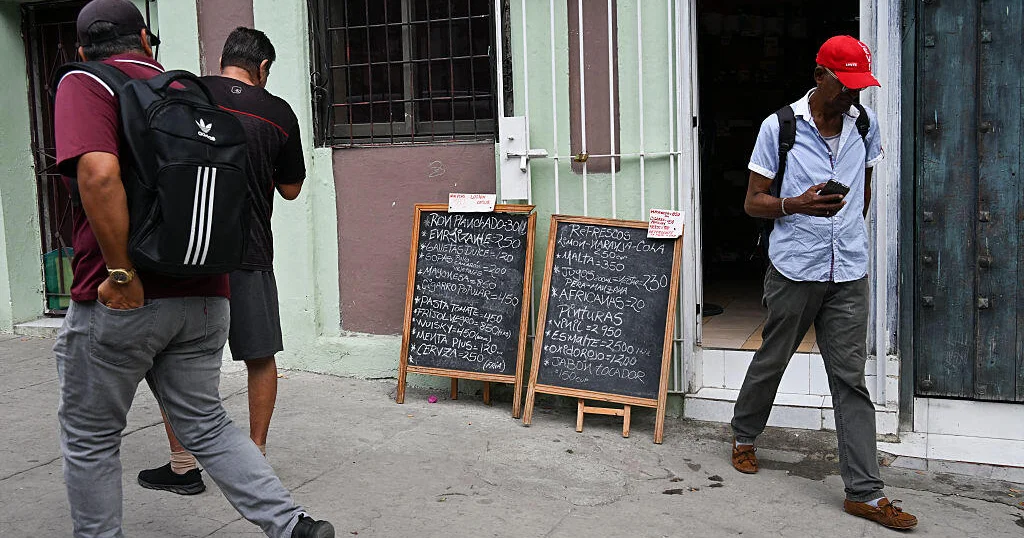
Officials in Cuba reported an island-wide blackout Monday in the country of some 11 million people as its energy and economic crises deepen. Cuba has blamed its woes on a U.S. energy blockade after President Trump in January warned of tariffs on any country that sells or provides oil to it.
The Ministry of Energy and Mines on X noted a “complete disconnection” of the country’s electrical system and said it was investigating. Officials were implementing protocols to restore the system, the post said.
President Miguel Díaz-Canel on Friday said the island had not received oil shipments in more than three months and was operating on solar power, natural gas and thermoelectric plants, and the government has had to postpone surgeries for tens of thousands of people.
A massive outage over a week ago affected the island’s west, leaving millions without power. In 2025, nearly exactly a year agoCuba suffered a massive outage in western Cuba.
YAMIL LAGE /AFP via Getty Images 

Cuba has relied heavily on foreign assistance and oil shipments from allies like Mexico, Russia and Venezuela. But critical oil shipments from Venezuela were halted after the U.S. attacked the South American country in early January and arrested its then-president, Nicolás Maduro.
While Cuba produces 40% of its petroleum and has been generating its own power, it hasn’t been sufficient to meet demand as its electric grid continues to crumble.
In recent days, videos circulating on social media have shown residents in Havana and other cities banging pots and pans in protest, CBS News Miami reported. The traditional form of public dissent known as a “cacerolazo” reflects growing frustration as the country struggles with electricity outages, food shortages, and deteriorating living conditions.
Blackouts have previously prompted anti-government demonstrations in 2021, 2022, and 2024.
On Friday, Díaz-Canel confirmed that Cuba was holding talks with the U.S. government as the problems continue to deepen.
Earlier this year, a U.S. official told CBS News the Trump administration does not seek to trigger a collapse of the Cuban government, but rather to negotiate with Havana to transition away from its authoritarian communist system.