


In 15th-century France, the medieval town of Grasse had a problem. It reeked of dead animals from its booming leather trade.
Then came a clever idea to mask the stench: a pair of gloves infused with the scent of local flowers. It sparked a new industry. Flowers were planted; techniques invented. And what began as a cover-up grew into an art form, establishing Grasse as the perfume capital of the world.
In 1921, when Coco Chanel wanted to create a signature scent for her fashion house, she went to this town in the south of France, where fields once bloomed in abundance, but have faded over the decades.
Now, a revival is underway, and that’s where our story begins tonight, in Grasse, where flowers for the world’s most famous perfume have been grown and gathered for more than 100 years.
This is the Rose Centifolia – nicknamed the May Rose – because it blooms in spring.
Cultivated in row after pink row, it is a flower worthy of a serenade. Piano notes play over speakers – farmers say the vibrations help the buds bloom evenly.
Twelve of these roses go into a bottle of Chanel No. 5. But the real star is this tiny, white flower: jasmine. It opens at night and is harvested as the sun comes up. One thousand jasmine flowers go into a bottle of No. 5, giving it the floral scent that has sat on grandmothers’ dressers for generations.
Olivier Polge: We all have a great nose.
Cecilia Vega: I don’t know about that.
60 Minutes 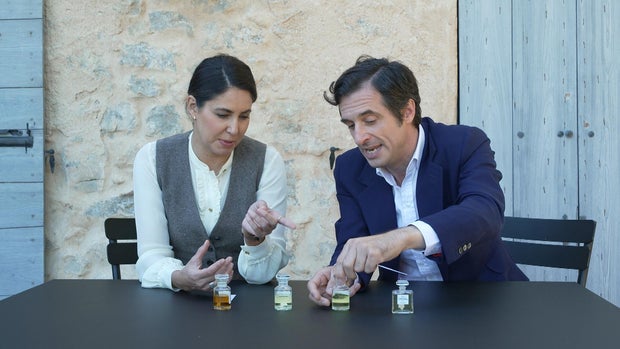

At Chanel’s annual jasmine harvest, we met Olivier Polge where he spends many of his working days in the fields of Grasse sourcing flowers. He is Chanel’s master perfumer. In the fragrance world, he’s known simply as a “nose.”
Cecilia Vega: What should I call you? A perfumer? A nose?
Olivier Polge: I prefer perfumer because people always think that my nose is very special.
Cecilia Vega: Is it not?
Olivier Polge: And I don’t smell things that you don’t. The work of a perfumer is not to smell things that nobody smells, but it is to identify the scents.
His job is to create new fragrances for Chanel and make sure the classics smell as they always have. It is part art, part science. A “sommelier of scent,” Polge can detect thousands of smells with a sniff.
Cecilia Vega: Do you have a favorite smell?
Olivier Polge: I love the scent of iris– violet, powder, slightly woody.
Cecilia Vega: I have to tell you, I was very self-conscious getting ready this morning putting my perfume on, thinking you were going to smell it immediately and judge it. Did you when we met?
Olivier Polge: No, but you– you forgot that we are surrounded with such strong stren– scents of flowers.
Cecilia Vega: This is over– overpowering. Phew, okay, good.
According to Chanel, five bottles of No. 5 are sold somewhere in the world every minute — fitting, since it’s named after Coco Chanel’s lucky number.
The iconic designer came to Grasse during its golden age, searching for the world’s finest and most expensive perfume ingredients.
60 Minutes 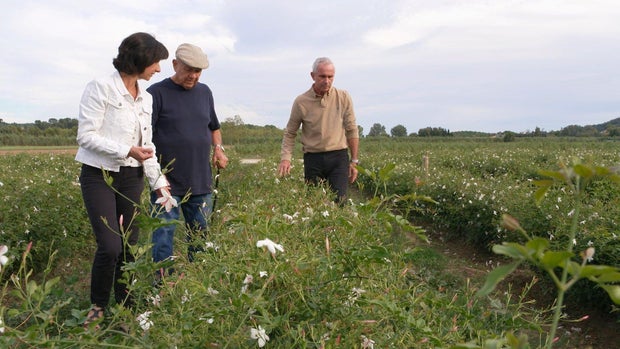
But over the decades, farms began to shut down as the French Riviera became a luxe real estate market and cheaper flowers were grown abroad in places such as India and Egypt.
Cecilia Vega: Would Chanel No. 5 really smell that differently if you sourced the jasmine from elsewhere?
Olivier Polge: Yes, it would definitely have an impact. Far from me the idea to say one is better than the other, but you have to recognize their differences.
So, what exactly does it smell like? Well, this is admittedly tough to convey on TV since we’re doing the smelling…
Olivier Polge: This is the jasmine from Grasse.
Cecilia Vega: Okay. Oh, wow.
Grasse jasmine is grassy and fruity with a note of green tea, delicate like the flower itself.
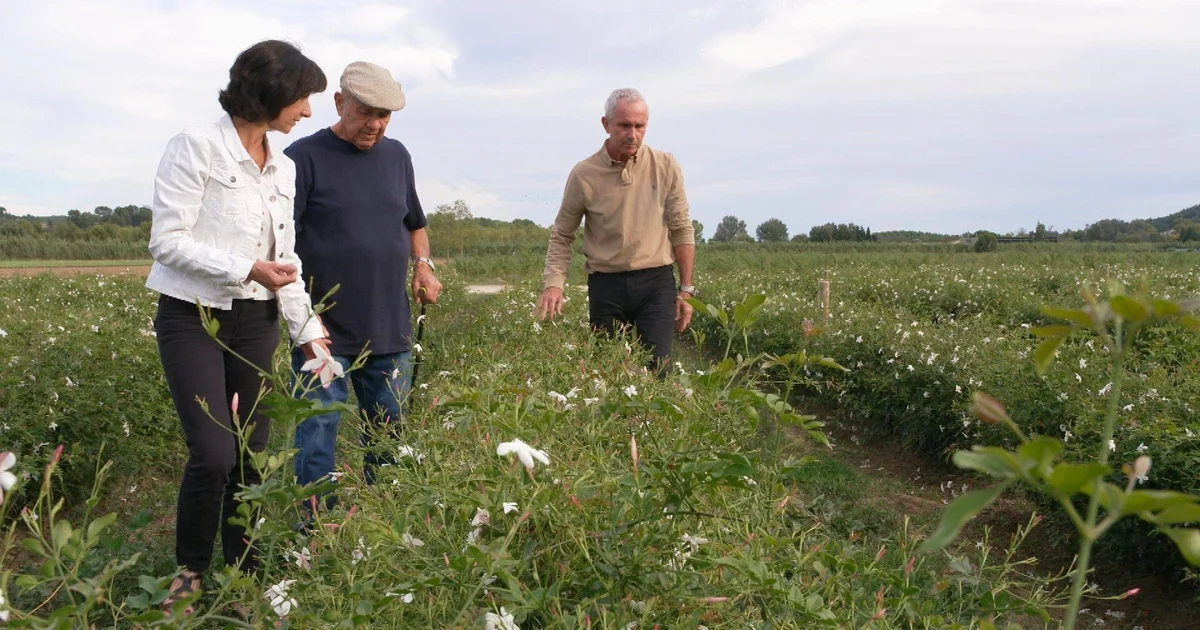
In the early 1900s, Grasse had about 12,000 acres of flower fields. Today, only 124 acres remain. And where nearly 2,000 tons of jasmine were once harvested each year, now there are fewer than 15 – grown mostly by one family.
Since the 1800s, for six generations, the Muls have farmed this land.
Cecilia Vega: What has it been like to watch the decline here in Grasse?
Joseph Mul (speaking in French/translated in English): It’s very sad. It was a pity to see this evolution, but we couldn’t do anything about it. It’s how it went. So we had to hang in there for many years.
Joseph Mul is the 87-year-old patriarch.
Cecilia Vega: How often are you in the fields?
Joseph Mul (speaking in French/translated in English): Every morning, 7 a.m.
Cecilia Vega: Is he still the boss?
Colette Mul Bianchi (speaking in French/translated in English): Yes. He’ll always be the boss.
60 Minutes 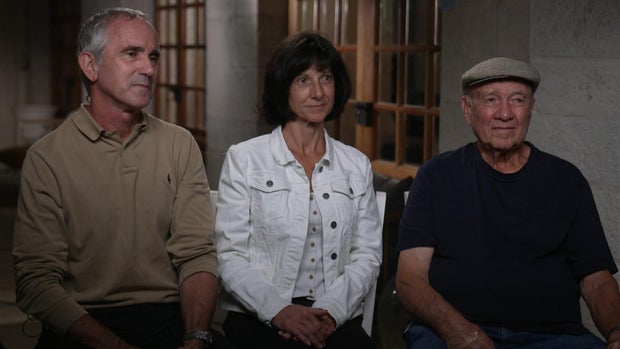
Joseph’s daughter, Colette, runs the office. Her husband, Fabrice, oversees the fields.
Cecilia Vega: Who’s done the most picking here?
Colette Mul Bianchi (speaking in French/translated in English): We all picked jasmine.
Fabrice Bianchi (speaking in French/translated in English): We had to help, in my case, it was my grandparents. And they would tell us, “If you wish to go and swim in the sea, first you have to help us pick flowers.” So every morning—
Cecilia Vega: No fun. Pick, first.
Fabrice Bianchi(speaking in French/translated in English): –that’s exactly what we did.
They say their jasmine has a distinct scent because like grapes used in wine, it matters where it’s grown: here in the hills where the Mediterranean meets the southern Alps, in a cool climate and rich soil.
Joseph Mul (speaking in French/translated in English: You can’t put Burgundy in a bottle of Bordeaux, because people will tell you, “No, that’s not Bordeaux!” For the fragrances we do here for Chanel, it’s exactly the same thing.
That’s why, in 1987, Chanel offered the Muls a deal: to grow and sell flowers exclusively to them — the first time a luxury brand partnered directly with Grasse farmers.
Cecilia Vega: They say even the birds smell good here in Grasse.
Jérôme Viaud: Thank you very much. I think so.
It’s the kind of partnership Grasse Mayor Jérôme Viaud says helped revive the region.
Cecilia Vega: A lot of people thought the perfume industry here was over.
Jérôme Viaud: Yes, a lot of people say it’s the end of the perfume.
Cecilia Vega: Why did you think you could make a difference?
Jérôme Viaud: Because we have the knowledge. And we have the weather. And we have everything to get success. So we think it’s possible, and we are working on it every day.
Serge Haouzi/Xinhua via Getty Images 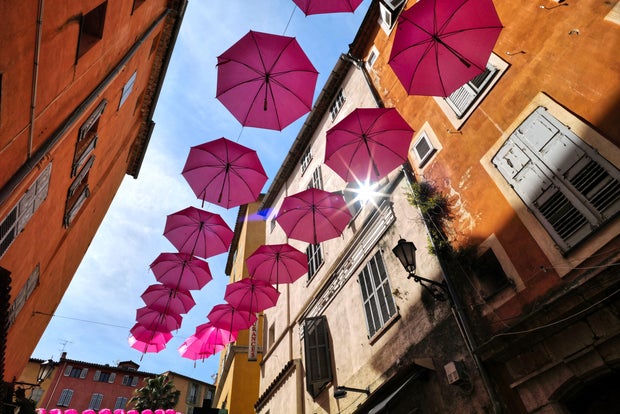

Since taking office in 2014, the mayor has filled the streets with thousands of pink umbrellas — a tribute to the rose, and a picture-perfect backdrop for the two million tourists who visit Grasse each year.
He also helped designate Grasse a United Nations Cultural Heritage Site, recognizing its centuries-old perfume-making traditions.
And he blocked development on 170 acres of land so that new flower fields can be cultivated.
Cecilia Vega: A lot of mayors want the development to come to their town. What was your fear with that development?
Jérôme Viaud: We want development, but we want to choose our development.
Cecilia Vega: You want it to be specific to the perfume industry.
Jérôme Viaud: Definitely, yes.
Cecilia Vega: Is there a renaissance in the perfume business underway right now?
Jérôme Viaud: I think so. You saw it.
We did. It’s hard to miss.
Over the past decade, major luxury houses have invested in Grasse by tying their brand to its reputation.
Lancôme built what looks like a Barbie dream house on a farm where it grows roses for its fragrances.
Downtown, an abandoned perfumery became a workshop for Louis Vuitton.
And Christian Dior’s former estate was restored, preserving the gardens that inspired the designer’s first scent.
Honorine Blanc: It’s nice to smell– everywhere I go I put my nose.
Cecilia Vega: You do?
Honorine Blanc: I smell everything.
60 Minutes 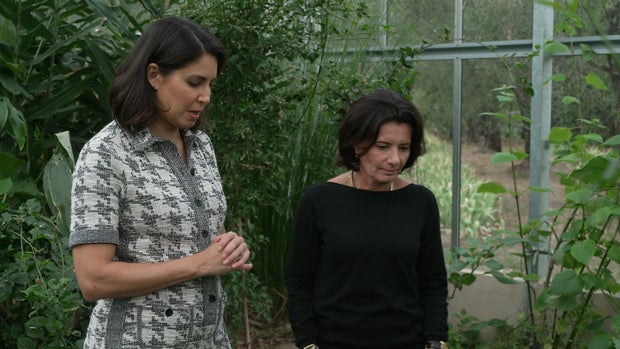
Honorine Blanc is a master nose for one of the world’s largest fragrance companies, creating perfumes for brands such as Valentino and Gucci.
Honorine Blanc: Let’s smell it. It’s patchouli.
Honorine Blanc: People don’t realize how much work there is behind creating a fragrance. Sometimes I need 20,000 trial.
Cecilia Vega: 20,000 is how long it’s taken you sometimes–
Honorine Blanc: Yeah, yes.
Cecilia Vega: How do you know when it’s right?
Honorine Blanc: I would say there’s two ways: your clients say, “Stop, this isn’t practical.” Or, it’s instinct, it’s like music.
As part of the Grasse revival, her company, DSM-Firmenich, opened Villa Botanica five years ago, a private retreat for its top perfumers to discover new smells– the good–
Honorine Blanc: It’s very clean.
–and the bad.
Olivier Cresp: What can you do with this?
Nathalie Lorson: It smell like feet, feet.
Cecilia Vega: There’s an undiscovered world of scent out there still?
Honorine Blanc: I believe so. I think there are plenty of new odors to discover and plenty of new plants to discover. For a perfumer, it’s– it’s heaven.
Cecilia Vega: Does Grasse still hold the same significance that it did to the perfume industry?
Honorine Blanc: Yes, and I think even more than ever. You know why? Because we’re going back to authenticity.
Cecilia Vega: What– what does that mean in– when you’re talking about perfume authenticity.
Honorine Blanc: For me, when I come to Grasse, it’s a place where I can slow down and smell the value of an ingredient. Because, you know, everything is speed, speed, speed, speed.
Today, fine fragrance is a more than $20 billion a year industry, largely built on synthetics bottled in a lab. Blanc says man-made scents are essential to modern perfumery.
Honorine Blanc: You create perfection by balancing note that are unpleasant with note that are pleasant. If your apple is too perfect, you say, “Oh my god, it’s not organic, it’s not natural.” So the imperfection, and this off note, are very important for your fragrance.
Cecilia Vega: So, it’s kind of like baking. You have to put a little bit of salt in the cake mix.
Honorine Blanc: Yes.
Chanel also uses synthetic scents created in a lab. We can’t tell you exactly what’s in a bottle of No. 5 – Olivier Polge told us the secret formula is kept in a safe in Paris.
Cecilia Vega: I’ve heard that Chanel No. 5 has more than 80 separate scents.
Olivier Polge: Yes.
Cecilia Vega: How many of those roughly are from Grasse?
Olivier Polge: The most important are from Grasse.
…which brings us back to the jasmine.
Starting at dawn, when the jasmine flowers are at their most fragrant, each one is picked by hand, too delicate for machines.
The harvest ends before the midday heat can damage the petals, which are kept covered in wet cloth to stay cool.
Workers line up to weigh what they’ve picked. Four thousand jasmine flowers equal just one pound.
60 Minutes 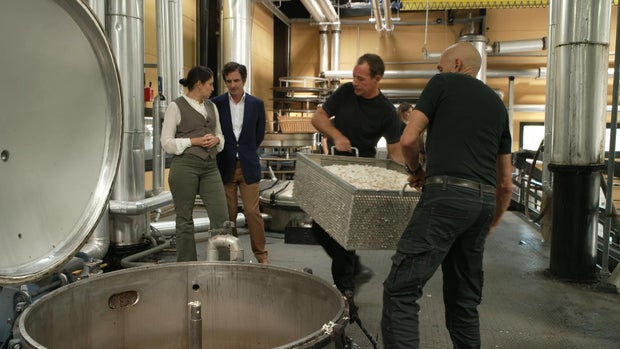
The blooms are then rushed to an on-site factory, where their fragrance is extracted using a 150-year-old technique developed in Grasse.
Cecilia Vega: You have to work really fast?
Olivier Polge: Yes.
Cecilia Vega: Because what happens when they get brown— the smell changes?
Olivier Polge: Yes. It smells of– of bad fruit, like a ripe fruit.
Crate after crate of jasmine is layered into this vat and steeped overnight like tea.
Then, the flowers are removed. They leave behind withered petals and a liquid that cools into a thick wax. It took 35 million jasmine flowers to get this 22-pound tub.
The wax is turned back into a liquid –
Cecilia Vega: Oh wow, so strong.
– and filtered again into the most concentrated form of jasmine.
Olivier Polge: So this will be sent up to our factory near Paris, and a few drops will go in each bottle of No. 5.
Cecilia Vega: Does the jasmine today smell like the jasmine originally used in No. 5?
Olivier Polge: I think so. I think this is why we are very careful in maintaining the way we harvest the jasmine, the way we extract the jasmine, and we do it exactly as it was at the beginning.
Produced by Natalie Jimenez Peel and Mirella Brussani. Broadcast associate, Katie Jahns. Edited by Thomas Xenakis.