By Catherine Cartier and Emilie Madi
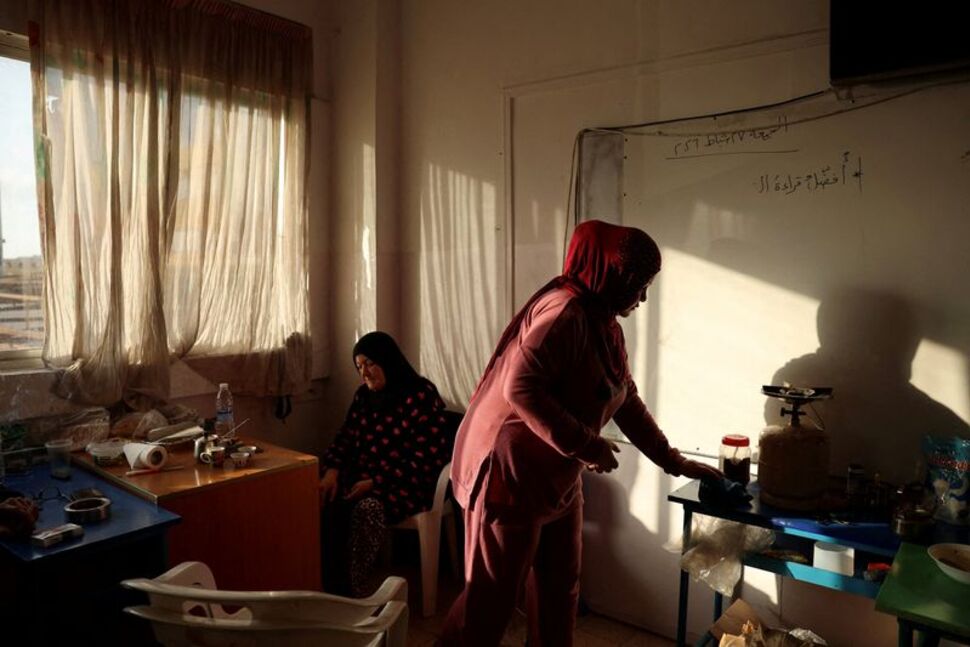
BEIRUT, March 27 (Reuters) – When Israeli strikes rained down on southern Lebanon in early March, Hawraa Houmani, 29 years old and almost nine months pregnant, fled her village near Nabatieh to a shelter in a school in Beirut. She no longer had access to the doctor that had cared for her throughout her pregnancy.
“I had prepared myself physically and mentally for that doctor, for her to be the one delivering,” Houmani said.
A Beirut hospital turned her away for a pre-delivery check-up, though when she started having contractions a week later, it admitted her. She gave birth to her son, Ali, on March 11.
The next day, she returned to the classroom where she now lives with her husband, four-year-old son, and other displaced relatives. They are among over a million people who have been displaced in Lebanon since a new war between Israel and Hezbollah erupted on March 2.
There are 13,500 displaced pregnant women in Lebanon, according to the UN Population Fund UNFPA, the world body’s reproductive health agency. As many as 1,500 women are expected to give birth in the next 30 days.
In the shelter, where multiple families share bathrooms, Houmani worries about cleanliness, breastfeeding and bathing her children. Within the first two weeks of his life, Ali has caught a cold and a rash has spread across his face. His family is anxious for a pediatrician to treat him, but so far, none have come to the shelter.
Grandmother Sabah Marji, 64, cradled Ali in one arm and his cousin Fatima, born just days before the war started, in the other.
“Right now, I feel great about them, but the joy is incomplete. It’s not the same as when a person is living in their own home with everything around them,” she said.
Midwife Ahlam Sayegh, who also fled Nabatieh, supports displaced pregnant women and new mothers in Beirut as best she can with limited means.
“We are giving support, but at the same time most of that support is mainly psychological support – support by telling them what they should do, when the necessities required to put that into practice on the ground are not reaching them,” she said.
When the strikes began, 31-year-old Sarah Shahla was five months pregnant with a baby girl. She too fled from Nabatieh with her husband and two sons. In the shelter, she has opened a small stand selling candy and snacks.
As Lebanon approaches one month of renewed conflict, Israel has threatened an occupation of the south. Still, Sarah hopes to return to her home before giving birth.
“Of course, I hope that she comes into a life better than this one, that she comes into a life with stability, safety, a family atmosphere, a sense of home, all of these things.”
(Reporting by Catherine Cartier and Emilie Madi)
Copyright 2026 Thomson Reuters.