


March 30 (Reuters) – NASA’s Artemis II mission is expected to last about 10 days, sending four astronauts on a high-speed journey around the moon and back in the first crewed lunar mission since the Apollo era. Artemis II is designed to pave the way for future missions aimed at returning astronauts to the lunar surface later this decade.
Here is a day-by-day outline of how the flight is expected to proceed.
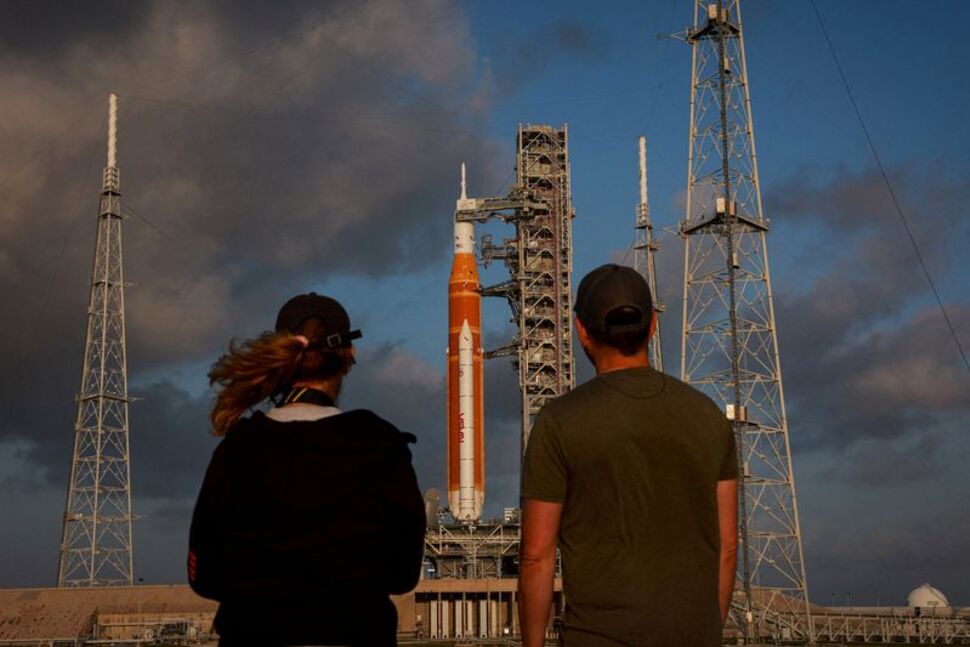
Artemis II is scheduled to lift off from NASA’s Kennedy Space Center in Florida aboard the Space Launch System, the most powerful rocket the agency has ever flown. NASA has said the launch window opens on April 1, with multiple backup opportunities available over the following days depending on weather, technical readiness and range availability. After launch, the Orion crew capsule will separate from the rocket’s upper stage and enter a highly elliptical orbit around Earth.
Days 1–2: Earth orbit checkouts
The crew will spend the first one to two days in high Earth orbit conducting extensive systems checks. These include testing Orion’s life-support, propulsion, navigation and communications systems to ensure the spacecraft is ready to head into deep space.
Once checkouts are complete, Orion’s propulsion system will perform a critical engine burn known as translunar injection, sending the spacecraft out of Earth orbit and onto a trajectory toward the moon.
Days 3–4: Coast to the Moon
During the several-day transit to the moon, astronauts will continue monitoring spacecraft systems en route to operating farther from Earth than any previous human spaceflight. Mission controllers will track communications and navigation performance as Orion travels deep into space.
Orion will pass behind the Moon on a “free-return” trajectory — a path that naturally swings the spacecraft back toward Earth without requiring additional propulsion. The spacecraft will reach its greatest distance from Earth during this phase.
Days 5–8: Return to Earth
After the lunar flyby, the crew will spend several days heading home while conducting additional deep-space tests, including evaluations of power systems, thermal controls and crew operations far beyond low Earth orbit.
As Orion approaches Earth, it will separate key components before plunging into the atmosphere at speeds of about 25,000 miles per hour (40,233 kph). Testing the capsule’s heat shield during high-energy re-entry is one of the mission’s primary objectives. The spacecraft is expected to splash down in the Pacific Ocean, where recovery teams will retrieve the crew.
(Reporting by Joe BrockEditing by Bill Berkrot)
Copyright 2026 Thomson Reuters.