


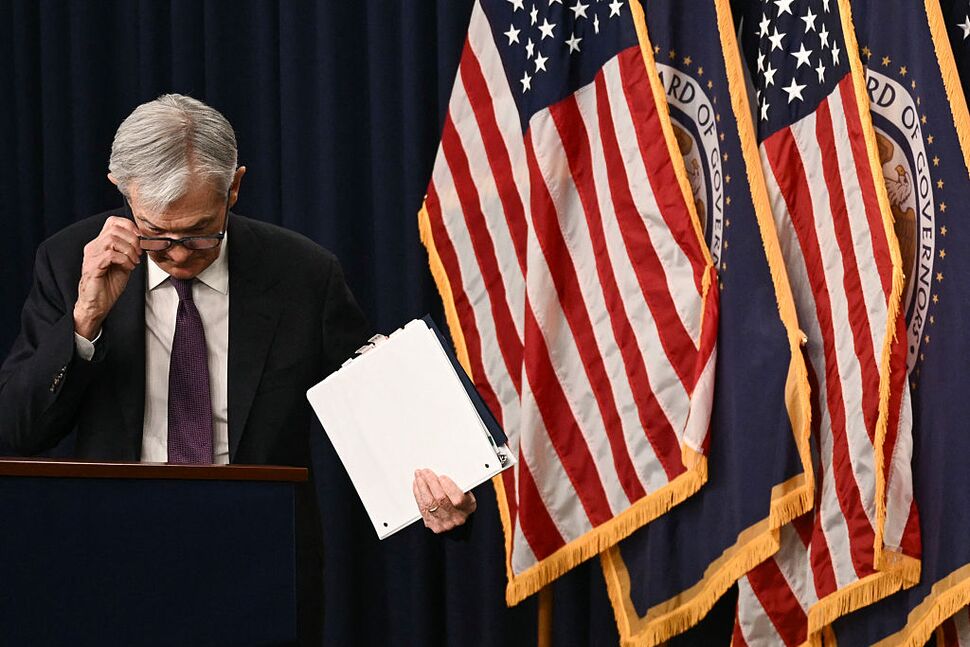
The Federal Reserve, as expected, voted to hold interest rates steady in what will most likely be the final meeting of Chairman Jerome Powell’s tenure.
The statement from the Fed was brief, acknowledging that “economic activity has been expanding at a solid pace.”
But it also mentioned higher levels of inflation and noted that “developments in the Middle East are contributing to a high level of uncertainty about the economic outlook.”
Stephen Miran, a Fed governor appointed by President Donald Trump and an advocate of lower rates, dissented. Three other governors also dissented, although they supported the interest rate stance but did not want to include a statement that hinted the Fed could ease later in the year.
For Powell, the end of his term should bring an end to Trump’s criticism of him over what the president sees as the chairman’s reluctance to lower interest rates. Powell has been criticized for the Fed’s slowness to react to inflation in the post-pandemic period, but he has generally managed to navigate the Fed through a tumultuous time for the economy while fighting to preserve its independence from politicians.
But with inflation well above the Fed’s 2% annual target, there is little support among the other voting members of the central bank’s monetary policy committee for cuts at the moment.
“Wait and evaluate” is not a passive stance here; it is an acknowledgment that policy mistakes become more costly when inflation risks are being driven not only by domestic demand, but also by geopolitics and energy markets,” Yulia Alekseeva, head of fixed income at MissionSquare Retirement, wrote ahead of the meeting.
Although the Senate is set to approve former Fed official Kevin Warsh as Powell’s replacement after Wednesday’s Banking Committee vote in his favor, the Fed operates by consensus and the chairman is often the person who brings the whole committee together. Only Miran has been a staunch vote in favor of lower rates this year.
It is easy for the Fed to continue pausing on rates with the uncertainty over the Iran conflict, where a tenuous ceasefire appears to be in effect but oil shipments through the narrow Strait of Hormuz are curtailed. That has driven global oil prices to around $115 a barrel, with U.S. gasoline prices now well above $4 a gallon.


Sign Up for U.S. News Decision Points
Your trusted source for breaking down the latest news from Washington and beyond, delivered weekdays.
By clicking “Sign Up”, you will receive the latest updates, including emails, from U.S. News & World Report and our trusted partners and sponsors, and you agree to our Terms and Conditions & Privacy Policy.
“The ongoing disruption to global commerce, in particular Middle Eastern oil infrastructure and shipping in that region, could result in prolonged pricing stress that trickles through the market,” Jerry Tempelman, former senior analyst at the New York Fed and vice president of economic and fixed income research at Mutual of America Capital Management, wrote Wednesday. “Given the current environment, we believe it’s unlikely the Fed will reduce interest rates in 2026, unless the economic fallout from higher energy prices becomes more severe or the labor market weakens significantly.”
Still, consumers are spending and have turned modestly more optimistic about the future course of the economy. Business spending, meanwhile, has remained very strong, especially for technology that companies believe will increase productivity and profits.
Housing starts were up 10.8% in March, a strong showing, but permits for new construction were down, suggesting builders are being cautious as they face higher prices for the commodities that are used in construction.
“Builders are being strategic, waiting to see how the Iran conflict plays out before requesting new permits and delivering finished homes in regions where their margins are currently higher,” Realtor.com senior economist Joel Berner wrote on Wednesday. “For buyers it remains a good time to purchase new construction, as price reductions and incentives continue to be offered and some markets have a wealth of new home options to choose from.”
Photos: British Royal Visit
