


Minutes of the Federal Reserve’s meeting on interest rates in late April reflect a central bank that is split on the issue of inflation, but with a majority saying a rate hike could be necessary should the conflict in the Middle East continue to drive prices higher.
Even though the Fed voted to hold rates steady at a range of 3.50% to 3.75%, four members of the 12 on the monetary policy committee dissented. One, governor Stephen Miran, voted for lower rates, although he has now left his temporary position. Three others preferred language in the Fed’s statement that did not imply there would be cuts this year.
There was ample discussion about the rate of inflation being well above the Fed’s 2% target, with consumer prices running at an annual pace of 3.8%, driven largely by a run-up in oil prices.
“With inflation having run significantly above 2 percent over the past five years, with further increases in inflation likely to occur as a result of the conflict in the Middle East, and with emergent price pressures in a few categories that appeared unrelated to tariffs or energy prices, the staff viewed the possibility that inflation would be more persistent than anticipated as a salient risk,” the minutes said.
“Almost all participants noted that there was a risk that the conflict in the Middle East could persist for an extended period or that, even after the conflict ended, the prices of oil and other commodities could remain elevated for longer than expected. In such scenarios, these participants expected continued upward pressure on inflation arising from supply chain disruptions, high energy prices, or the pass-through of higher input costs to other prices,” the minutes added. “The vast majority of participants noted an increased risk that inflation would take longer to return to the Committee’s 2 percent objective than they had previously expected.”
The Fed is caught in the crossfire of inflation. There is little appetite at the central bank for interest rate cuts as long as consumer prices are rising and likely go higher. Wholesale inflation surged to a 6% annual rate in April. In fact, markets are now beginning to price in higher odds of a rate hike in 2026.
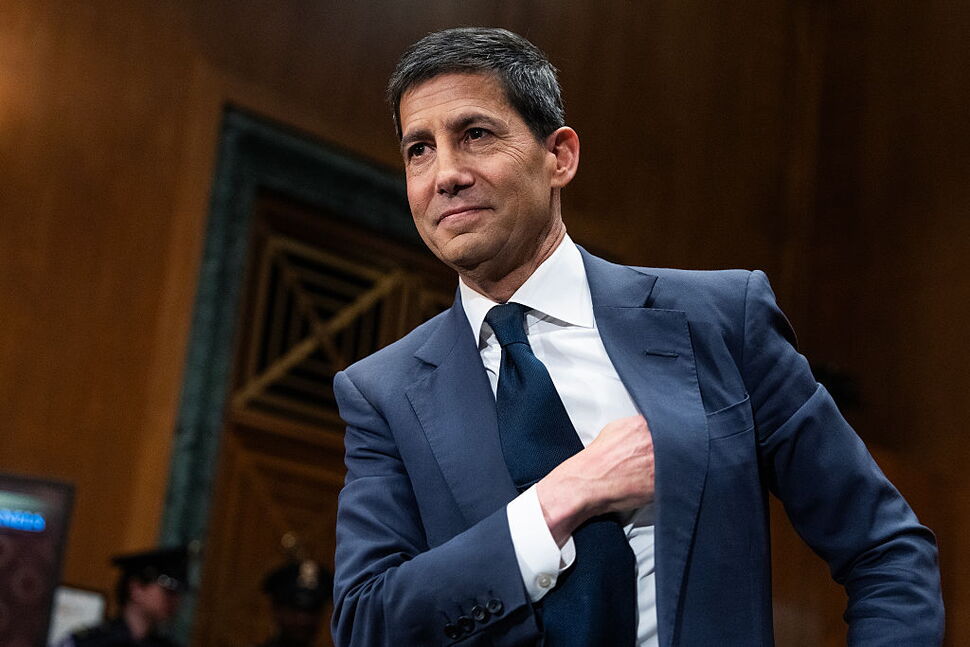
That complicates matters for new Fed Chairman Kevin Warshnominated by President Donald Trump to replace Jerome Powell in part because of the former’s desire to lower rates.
In addition to Miran, three other governors – Beth Hammack, Neel Kashkari and Lorie Logan – dissented because they wanted a more neutral wording regarding future rate cuts.
“The 8-4 April 29 hold was the most dissents since 1992,” Piedmont Crescent Capital Chief Economist Mark Vitner wrote on Tuesday in his monthly economic insights. “Miran preferred a cut; Hammack, Kashkari, and Logan supported holding but objected to the easing bias. That move appears prescient today. Markets have moved from pricing roughly 8 basis points of cuts through year-end at our April 26 weekly to pricing essentially no cuts through 2026, with hike probability at roughly 39% post-PPI.”
The minutes come two days before Warsh is set to be sworn in as chairman and when Powell has indicated he will stay on the Fed as a governor. His term in that position ends in 2028, but Powell was circumspect in saying how long he would stay on, potentially being a tiebreaker on interest rates.
Market rates have been rising, with yields on government bonds up to their highest levels in 19 years. That is both a response to inflation and uncertainty over the war with Iran as well as increased forecasts for economic growth.


Sign Up for U.S. News Decision Points
Your trusted source for breaking down the latest news from Washington and beyond, delivered weekdays.
By clicking “Sign Up”, you will receive the latest updates, including emails, from U.S. News & World Report and our trusted partners and sponsors, and you agree to our Terms and Conditions & Privacy Policy.
“Rate hikes are back on the table,” David Russell, head of global market strategy at TradeStation, said in an email. “Policymakers think the labor market is stable, and a vast majority see more inflation risk. They’re also worried about tariffs and embedded price pressures. The committee is getting more hawkish as Kevin Warsh joins.”
The Fed acknowledged that its staff forecast for the economy “was slightly stronger than the one prepared for the March meeting. Real GDP was projected to slightly outpace potential in coming years, with growth supported by favorable financial conditions, continued gains in AI-related capital spending, and a reversal of some of the factors that were expected to weigh on activity this year, including weak foreign growth and uncertainty about the outlook.”
Indeed, a resilient consumer and continued outsized investments in new technology related to artificial intelligence have led experts to increase their forecasts for economic growth. Gross domestic product rose 2% in the first quarter, a sharp pickup from the 0.5% gain in the fourth quarter. And the Federal Reserve’s GDPNow forecast for the second quarter is now 4%.
Of course, much is riding on the duration of the U.S.-Iran conflict. Trump on Wednesday said he believes an agreement on a ceasefire is in “final negotiations” – a comment he has made before, but it still drove the Dow Jones Industrial Average up by more than 500 points.
“We continue to believe the bond market is premature in pricing a rate hike by March of next year,” Kathy Bostjancic, chief economist for Nationwide, said Wednesday in an email. “We anticipate that the runup energy prices will be temporary and will act as a tax on consumers and businesses and not spill over meaningfully to core inflation nor sustainably lift long-run inflation expectations.”
Photos You Should See – May 2026
