


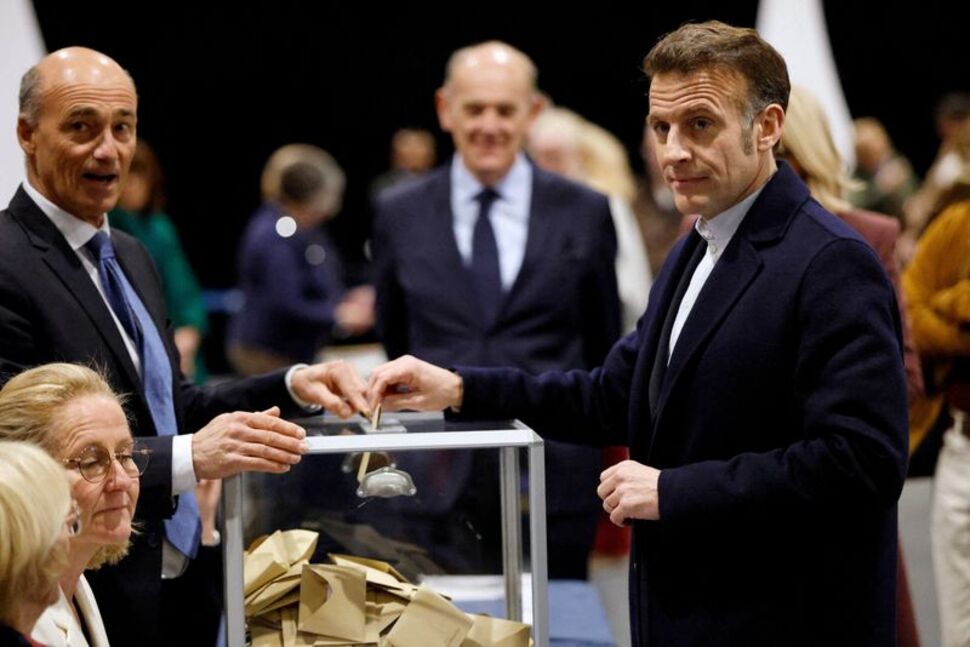
PARIS, March 16 (Reuters) – France held the first of two rounds of mayoral elections on Sunday, and although the results of local contests do not always offer a reliable preview of national elections, the vote provided a snapshot of the political mood on the ground.
Here are five takeaways from the ballot, which precedes days of alliance-building that will dictate the eventual victors in next Sunday’s runoff votes:
* NATIONAL RALLY SCORES IN STRONGHOLDS, HITS A CEILING ELSEWHERE
The far-right National Rally (RN) notched eye-catching wins in its southern and northern bastions, reclaiming Perpignan outright in the first round and finishing a strong second in Marseille.
Capturing Marseille, France’s second-largest city, would mark a major breakthrough for the party.
But its first-round results also underscored the limits of the RN’s appeal beyond its core territories. In major cities outside its Mediterranean heartland, the party barely registered, scoring under 8% in Paris, Lyon, Toulouse, Nantes, Strasbourg and Bordeaux.
The pattern suggests the RN’s bid to “normalise” its image has yet to translate into gains in prosperous, cosmopolitan urban centres, leaving it strongest in rural France and its traditional battlegrounds.
* FAR-LEFT UNBOWED, COMPLICATING THE LEFT’S PATH
The hard-left France Unbowed (LFI), led by the highly divisive Jean-Luc Mélenchon, outperformed expectations, confirming its resilience despite a turbulent campaign.
It won Saint-Denis, the second-largest city in the Paris region, outright in the first round and is on track to take Roubaix, a symbol of France’s post-industrial north.
Those gains came despite recent controversy, including the fallout from the killing of far-right activist Quentin Deranque in Lyon, and accusations of antisemitism after Mélenchon’s remarks about figures with Jewish-sounding names.
LFI’s strength complicates the mainstream left’s electoral calculus ahead of next year’s presidential election. Whether the Socialists and Greens strike local alliances with LFI in the coming runoffs will offer an early test of how fractured the left may be when it enters the national contest.
The Greens, who rode a global wave of climate activism to major city victories in 2020, are struggling to repeat that performance.
Six years on — after a cost-of-living crisis and amid heightened geopolitical instability — environmental issues appear to have slipped down voters’ priorities.
That shift showed in the first round, with Strasbourg’s Green mayor placing only third, and Green candidates in Bordeaux and Lyon not assured of victory in next Sunday’s runoffs.
* THE CENTRE HOLDS IN LE HAVRE — BUT BARELY ANYWHERE ELSE
President Emmanuel Macron’s centrist camp, which has long lacked deep local roots, entered the mayoral elections with modest ambitions after a poor showing in 2020.
One race, however, carried national significance. In Le Havre, former Prime Minister Edouard Philippe — widely seen as the centrist best placed to counter the far right in the 2027 presidential election — sought to recapture his mayoral seat.
Philippe outperformed pre-election polling, winning 43.8% in the first round and placing him in a strong position to defeat Communist and National Rally rivals in the runoff.
A victory would bolster his claim to lead the centrist field in the next presidential race and increase pressure on other would-be candidates, including former prime minister Gabriel Attal, to back his candidacy.
* KNAFO EMERGES AS A NEW FAR-RIGHT STANDARD-BEARER
In Paris, the left looks set to retain control of the capital after more than 25 years in power. Socialist Emmanuel Grégoire led the first round with 38%, more than 10 points ahead of conservative challenger Rachida Dati, endorsing the green-led transformation of the city under the outgoing mayor.
But the revelation of the Paris race came from the nationalist fringe. Sarah Knafo, who has cultivated international visibility and attended U.S. President Donald Trump’s inauguration, captured 10% of the vote, enough to qualify for the second round.
Her result highlights the strategic bind facing the traditional right ahead of the presidential election: whether to maintain a “cordon sanitaire” around the far right at the risk of defeat, or seek partnership with it.
(Reporting by Michel Rose; Editing by Pooja Desai)
Copyright 2026 Thomson Reuters.
Photos You Should See – March 2026

