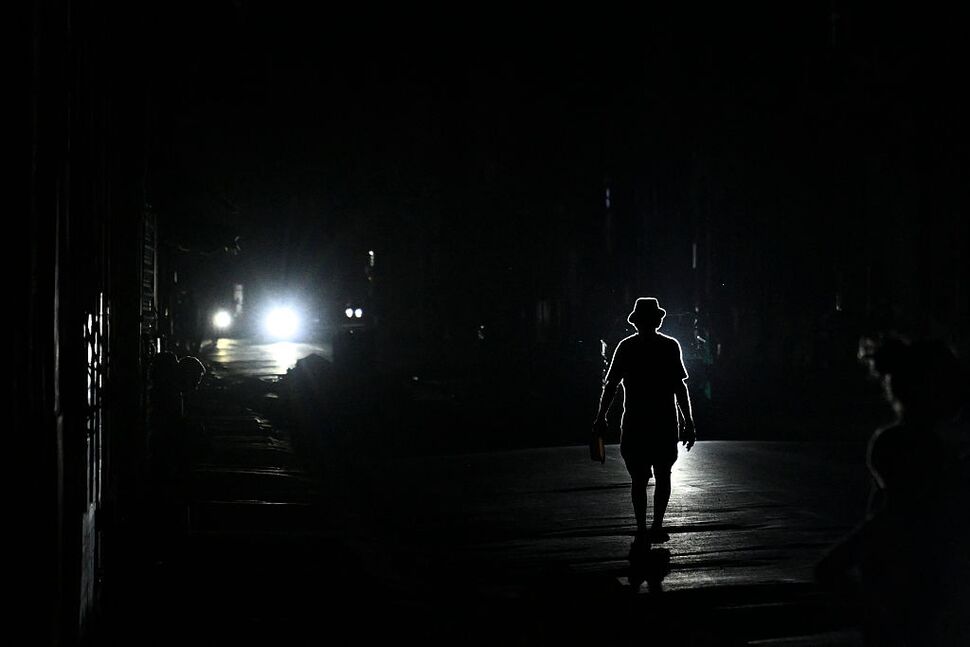
After nearly seven decades of failed U.S. attempts to impose what amounts to regime change in Cuba, are we finally about to see the island transform? President Donald Trump certainly appears to think so. And Havana’s current weakened state makes it harder to resist.
“I do believe I will be having the honor of taking Cuba,” Trump told reporters at the White House this week. “Taking Cuba. I mean, whether I free it, take it. I think I can do anything I want with it.”
That would be welcome news to many in the Cuban exile community, of which Secretary of State Marco Rubio is a part (his parents were Cuban immigrants).
Here are four things to watch as Cuba becomes Trump’s next potential target.

Sign Up for U.S. News Decision Points
Your trusted source for breaking down the latest news from Washington and beyond, delivered weekdays.
By clicking “Sign Up”, you will receive the latest updates, including emails, from U.S. News & World Report and our trusted partners and sponsors, and you agree to our Terms and Conditions & Privacy Policy.
How Is the U.S. Trying to Change Cuba?
The U.S. has been trying to bring about regime change in Cuba since the 1959 revolution that swept Fidel Castro to power. Washington has tried to do so by military force, notably the failed April 1961 “Bay of Pigs” incursion, and by squeezing the island economically with an embargo.
Now Washington appears to be negotiating with prominent Cubans, as Trump sees a window of opportunity.
“It may be a friendly takeover. It may not be a friendly takeover. It wouldn’t matter because they are down to, as they say, fumes,” Trump said Monday. “They have no energy. They have no money.”
But the threat of military action isn’t off the table. Trump has repeatedly touted the success of the January raid in which U.S. forces captured Venezuelan strongman Nicolás Maduro and brought him to face charges in New York.
Could Cuba Collapse?
Since 1959, Cuba has leaned heavily on a succession of patrons and friends – the USSR, and more recently Venezuela. Both of those lifelines are gone.
Cuba still gets some aid from countries like Mexico. The U.S. is the largest provider of food and agricultural goods to the island and a major source of medicine, according to the State Department.
But Cuba’s economy is in dire straits.
A collapse could see Cubans – there are about 11 million – try to leave, including to the United States, a traditional destination for people fleeing the island.
What Kind of a Deal?
It’s not special-operators-on-helicopters yet, but the New York Times reported this week that the American side wants Díaz-Canel to step down – without uprooting the rest of the Cuban political regime. That’s arguably the Venezuela model, in which the U.S. took Maduro but left his apparatus intact, with his vice president at the helm.
“They have to change dramatically,” Rubio told reporters Tuesday. “They have to get new people in charge.”
Any agreement is bound to include economic reforms. It’s expected to open opportunities for Cuban exiles to own businesses on the island and make it easier for Americans to travel there. That requires many changes on both sides.
On Monday, Cuba appeared to move in that direction, with Cuba’s deputy prime minister, Oscar Pérez-Oliva Fraga, telling NBC News “Cuba is open to having a fluid commercial relationship with U.S. companies” and “also with Cubans residing in the United States and their descendants.”
Rubio responded that such changes are “not dramatic enough.”
Will There Be Openings for Democracy?
There haven’t been many in Venezuela. And the early signs are that whatever changes the U.S. brings to Cuba, the world shouldn’t hold its breath waiting for democracy to break out there, either.
When President Barack Obama eased restrictions on travel and spending in Cuba, his aides regularly told me that they expected the island to become another Vietnamwhere a thriving business community has brought growth without much political change.
Obama’s overtures were largely about stability, about giving Cuba’s economy a shot in the arm, about convincing Cubans they had a future on the island – so that they would stay.
That – and the Venezuelan example – suggests the United States is not in a hurry to see a democratic Cuba. And Cuba’s leaders certainly aren’t.