


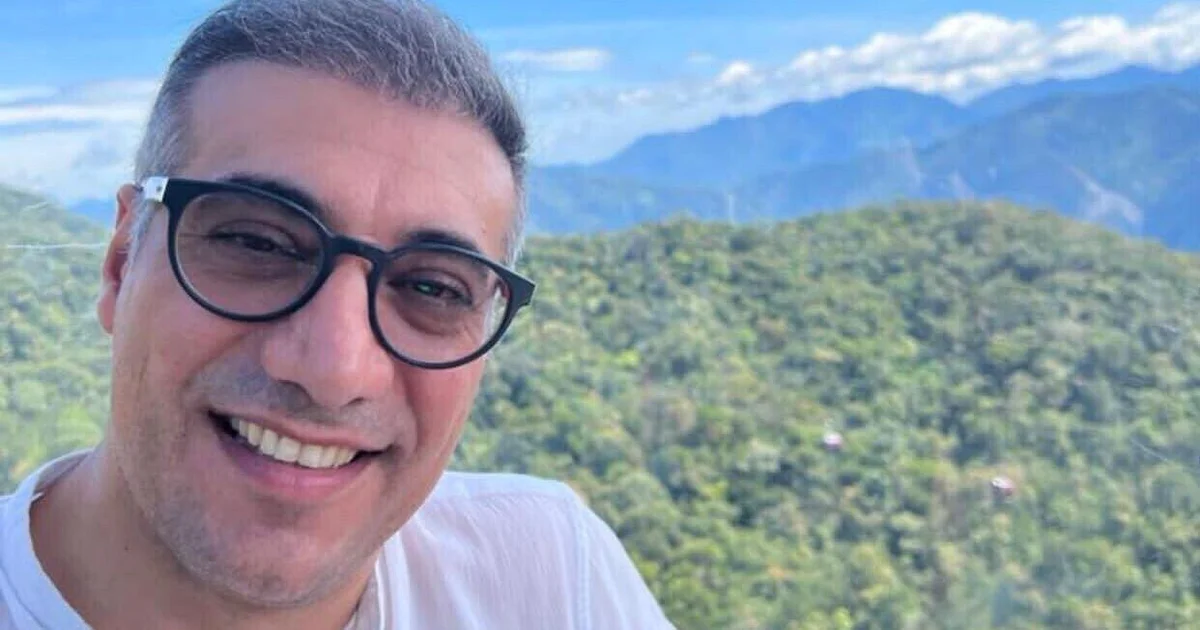
In a recorded phone call from inside Iran’s Evin Prison, Iranian-American journalist Reza Valizadeh made a plea to the U.S. government to obtain medical help for him and other Americans detained in Tehran’s notorious prison.
“Even if treating our diseases is a big demand, it would have at least asked the Iranian authorities to reduce not all the physical pressure and mental torture against us in captivity, but at least some of it,” Valizadeh said in the recording recently obtained by CBS News.
Since the U.S. and Israel launched airstrikes against Iran three months ago, the country has been under a near-total internet blackout, imposed by the regime, with little to no communication between the detained American and his advocates. Valizadeh’s message was transmitted after the regime loosened those restrictions last week.
In the two-minute recording, Valizadeh referred to three other Americans also held at Evin Prison. He said the four are suffering from “various diseases and are deprived from real medical services.” CBS News has not been able to independently confirm details regarding the three other Americans Valizadeh mentioned in the recording.
Valizadeh’s lawyer, Ryan Fayhee, told CBS News that ever since the fires caused by a controversial Israeli airstrike on Evin Prison last June, Valizadeh has had a hard time speaking without coughing. He also suffers from persistent back pain and dental issues.
“He’s survived an airstrike on the prison, he survived the prison itself, you know, the indignity of being held. As for being a journalist, he doesn’t have much to lose here in reaching out and communicating with me and asking me, directing me, in fact, as his lawyer, to share his words with the American public,” Fayhee told CBS News.
Valizadeh Family via AP 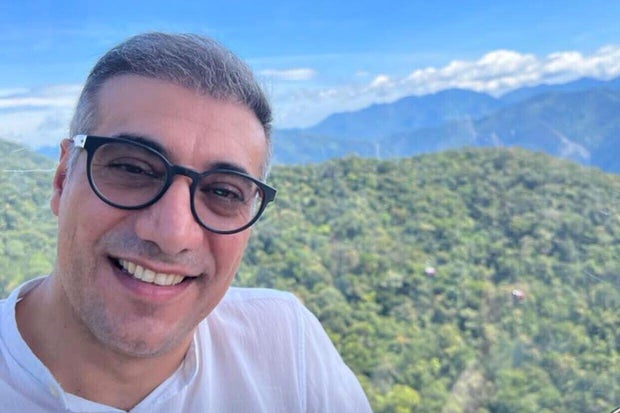

CBS News has learned the State Department believes six Americans are detained in Iran. Multiple sources familiar with the ongoing diplomacy said that none of the detained Americans will be released as part of the truce that’s currently being negotiated by the U.S. and Iran. The strategy is to first broker a deal to end the fighting and start nuclear talks then handle the hostage issue in a separate track.
The sources told CBS News that the return of the Americans is a priority, but a decision was made to avoid entangling them in a complex and tenuous truce that could collapse and cause them further risk. On the other hand, the risk of prolonged inaction remains.
A Trump administration official declined to answer a question about why the Americans were not first released as a goodwill gesture and cited the sensitivity of the ongoing diplomacy.
Valizadeh began the recording by sharing his dismay that the U.S. had chosen to release Iranian sailors who were on a ship seized by the U.S. military and return them to Iran last month. He may have been referring to a May 4 seizure of the motor vessel Touska.
On May 4, a U.S. Central Command spokesperson told CBS News that 22 crew members were taken from the vessel, which had been seized for trying to run through a U.S.-enforced blockade. They were handed over to Pakistan for repatriation to Iran. At the time, Pakistan’s foreign minister referred to the return of the sailors as a “confidence-building measure” for the ongoing diplomacy it was trying to broker between the U.S. and Iran.
“The U.S. government could have demanded our exchange in return. However, it did not happen,” Valizadeh said. He then asked what concessions the U.S. had won in exchange for the release of the Iranians and said if those things ‘make America great again,’ then he fully respects the decision.
The State Department formally designated Valizadeh as “wrongfully detained” in May 2025, placing his case under the authority of the U.S. government’s hostage affairs office. However, the Iran diplomacy is being led by White House special envoy Steve Witkoff and President Trump’s son-in-law Jared Kushner, rather than by officials at the State Department.
One other American, Kamran Hekmati, was also designated by Secretary of State Marco Rubio as wrongfully detained.
“I would love to hear Steve Witkoff or Jared Kushner or even President Trump acknowledge that the Iranians are holding American citizens, including a journalist, and that those people, those human beings, are part of these broader negotiations,” Fayhee told CBS News.
“They’ve talked about everything else involved in the negotiations, except for this thing, and I’m hopeful that they’ll begin to share with the public what steps they’re taking to recover Reza.”
Rubio testified before Congress Wednesday that the U.S. is considering a two-phase agreement that would start with an initial cessation of violence and a reopening of the Strait of Hormuz.
The second phase of the proposed deal would address Iran’s nuclear program and require detailed negotiations lasting anywhere from 30 to 90 days.
Reza Valizadeh 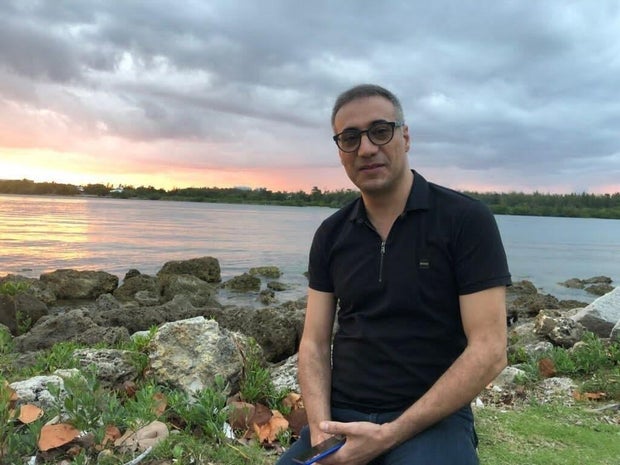

Why Valizadeh is in prison in Iran
Valizadeh became a U.S. citizen in 2022 through his work for U.S.-funded broadcaster Radio Farda, the Persian branch of Radio Free Europe/Radio Liberty.
According to messages relayed to his attorney by his family, Valizadeh believed he had been given assurances by Iranian authorities that it was safe for him to return to Tehran, where most of his family resides. At the time of his return, Valizadeh was no longer employed by Radio Farda. His brother has said he now believes those guarantees were part of a trap, possibly involving a former colleague who had ties to the Iranian Revolutionary Guard Corps.
Reporting by Persian-language media later cited sources who said Iranian intelligence had hoped to pressure Valizadeh into cooperating against his former employer, Radio Farda, where he reported on corruption, protests and the influence of the IRGC. He refused.
Days later, IRGC agents detained him on a Tehran street, confiscated his belongings, including his U.S. passport, and took him to Evin Prison, where he spent weeks in isolation and under intense interrogation. Iranian officials did not publicly acknowledge his arrest for nearly two months.
Valizadeh was eventually charged with “collaborating with a hostile government,” a vague national security offense that Iranian authorities routinely use against journalists and activists.
Stephen Capus, the president of Radio Free Europe/Radio Liberty, told CBS News that Valizadeh’s former colleagues “anxiously await the day that Reza can rejoin his loved ones and once again be free.”
“Reza has been callously separated from his family and friends for more than 20 months, by a violent and inhumane Iranian government,” he said in a statement. “We are grateful that the U.S. government has declared Reza to be wrongfully detained.”