


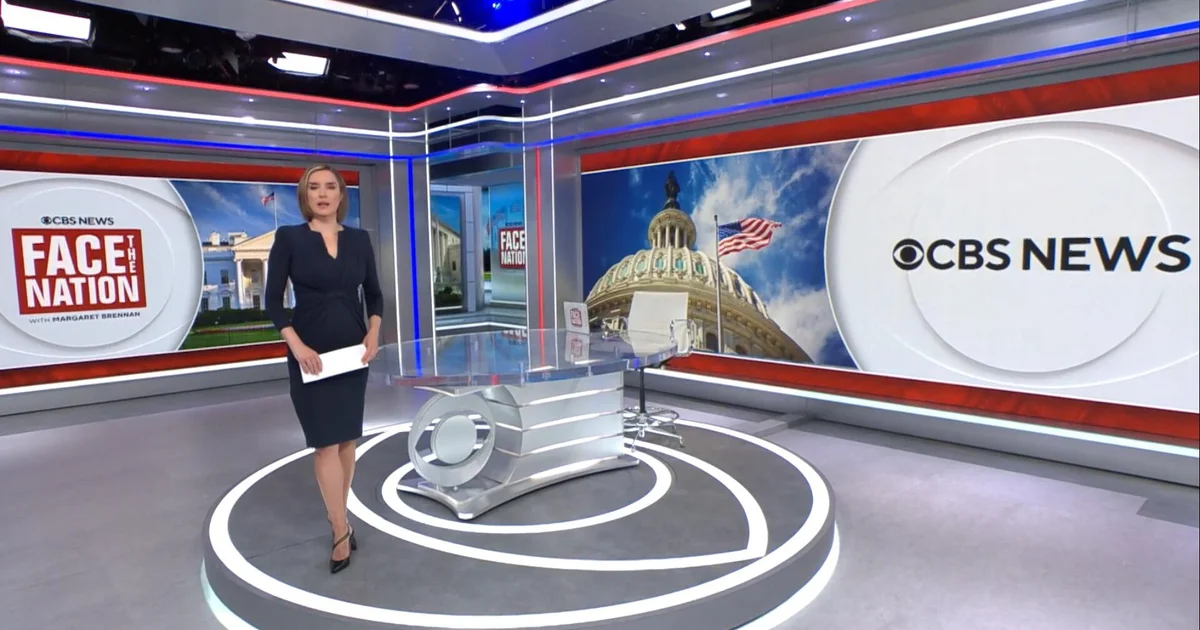
On this “Face the Nation with Margaret Brennan” broadcast:
Click here to browse full transcripts from 2026 of “Face the Nation with Margaret Brennan.”
MARGARET BRENNAN: I’m Margaret Brennan in Washington.
And today on Face the Nation, breaking overnight, a giant of the Senate, Republican Lindsey Graham, has died. And, in the Mideast, the U.S. and Iran trade new attacks.
Rattling Washington this morning, the unexpected news that Senator Graham has died from what his office calls a brief and sudden illness at the age of 71. We will have the latest and talk with fellow South Carolina Senator Tim Scott about Graham’s impact in Washington and beyond.
Plus: new developments overseas. U.S. Central Command has launched a new wave of strikes against Iran after its military attacks container ship in the Strait of Hormuz, in defiance of U.S. demands to keep the waterway open. What’s next for the security of the region after President Trump declared that fragile cease-fire deal to be over?
We will be joined by former CENTCOM Commander Frank McKenzie, Ohio Republican Congressman Mike Turner, and Israel’s Ambassador Dr. Michael Leiter.
We will also talk with Democrat Rahm Emanuel, who’s just back from delivering a speech in Tel Aviv about the future of U.S.-Israeli relations.
It’s all just ahead on Face the Nation.
Good morning, and welcome to Face the Nation.
Washington is waking up to stunning news that Trump ally and longtime Republican Senator Lindsey Graham has died. Calls to emergency dispatch indicate first responders had performed CPR before a cardiac arrest was declared at Graham’s home in the Capitol Hill neighborhood in D.C. last night.
The senator from South Carolina was first elected to the House in 1994 before joining the Senate in 2003. With his signature Southern twang, he was a singular voice on U.S. national security and an advocate for Ukraine.
Graham had just returned from Kyiv, where he’d met Friday with President Volodymyr Zelenskyy. He pressed both Trump and Biden administrations to get tougher on Russia, stay close to Israel, and he supported aggressive military action against Iran.
In years past, he’d worked across the aisle on thorny issues like immigration reform with close allies Senators John McCain and Joe Lieberman, the group once dubbed the Three Amigos.
While he had once challenged Donald Trump for the 2016 Republican presidential nomination, in recent years, Graham had become his ally. In a TRUTH Social post overnight, President Trump called Graham “one of the greatest people and senators I have ever known and a true American patriot who was always working.”
After 31 years in Congress, Graham had been seeking a fifth term as a senator. Now South Carolina’s governor will appoint an interim replacement for his seat to serve out the remaining five months of the term. Republicans will now rush to hold a special primary in August to pick Graham’s replacement on the ballot ahead of the general election in November.
We go now to South Carolina Republican Senator Tim Scott.
Senator, good morning. And we are sorry for your loss. As Americans wake up this morning, I wonder how you would have them remember Senator Graham, someone who served this country in uniform, but also at the Capitol for so many decades.
SENATOR TIM SCOTT (R-South Carolina): Margaret, thank you for your condolences.
And America certainly has lost a statesman. I have lost a friend.
To remember Lindsey Graham, Margaret, is honestly to remember his very humble beginnings. I’m not sure everyone connects the dots on who he is and why he is. His mother dies of cancer; 15 months later, his dad dies of a massive heart attack. He adopts his 13-year-old sister when he was just 19 years old and a student at the University of South Carolina.
And that remarkably hard and harsh beginning would frame his world view. And as a public servant, Margaret, the one thing that we don’t oftentimes think about with Lindsey is, he wanted to make sure if you needed help, and he could help, he was there.
He wanted to make sure that those who would sometimes feel invisible, that they were seen, and he did an incredible job in – in South Carolina providing the kind of public service that you would want to see from your elected official.
He – he also understood that he worked for the people of South Carolina, and not he was just a leader of South Carolina. Of course, there is a foreign policy portfolio that’s undeniable that was synonymous who we knew him to be in public service.
But, as a South Carolinian, as a friend, I got to tell you, he was just a witty guy. He was always funny.
I will tell you one quick story, Margaret. When I first started my South Carolina prayer breakfast in D.C. for those of us who came from South Carolina, I called Lindsey on the phone. And I knew he was not a morning person. And prayer breakfast starts 8:30 in the morning.
And I said: “Lindsey, will you come?”
He says: “I’m not coming even if Jesus comes before 10:00 a.m.”
(LAUGHTER)
SENATOR TIM SCOTT: And it made me – I just laughed out loud. And, of course, at 8:31, who walks through the door?
(LAUGHTER)
SENATOR TIM SCOTT: Lindsey Graham.
He was always committed to the priorities that he thought was important, not just for him, but for me. And it’s one of those times when you just know who he is as a person, and then, as a public servant, we certainly know him as a fierce fighter on foreign policy, as a…
MARGARET BRENNAN: Yes.
SENATOR TIM SCOTT: … person who put on the uniform for 30 years, a colonel in our military. He loved America passionately. He served us brilliantly.
MARGARET BRENNAN: Yes.
SENATOR TIM SCOTT: And he will be missed undeniably.
MARGARET BRENNAN: Yes, I want – you know, Senator Graham’s staff said that he had a sudden and brief illness.
Do you – do you know what happened? Because it shocked us, frankly, overnight.
SENATOR TIM SCOTT: Yes, I don’t know the details, any more than his staff has released. My hunch was it was a heart attack, but I – I hate to just…
MARGARET BRENNAN: Yes.
SENATOR TIM SCOTT: … give you my opinion on what I have heard from people that are close in circle. But I think we’ll have more information over the next couple days.
MARGARET BRENNAN: Yes.
SENATOR TIM SCOTT: But it appears to have been a heart attack.
MARGARET BRENNAN: You know, you mentioned the senator’s sense of humor. He would come on this program.
SENATOR TIM SCOTT: Yes.
MARGARET BRENNAN: And he would use this platform. He was very clear. He was coming on television because he had a message, often for the president of the United States himself, that he wanted Mr. Trump to hear. He was constantly flying around the world.
I wonder how Republican leadership plans to honor his legacy.
SENATOR TIM SCOTT: Well, you know, one of the things I think we should do, obviously, that South Carolina Prayer Breakfast is coming up for me later this month. I’m going to rename it in honor of Lindsey Graham, and we’ll now have the Lindsey Graham Prayer Breakfast going on for as long as I’m in public service, number one.
Number two, as Senate leadership comes together, I talked to John Thune about 3:00 – about 4:30 this morning. And he and I and John Barrasso and others will find the appropriate way to honor him all week and frankly the rest of this term.
I will say that one of the ways we can best honor Lindsey Graham is to understand the importance that he placed on America – American safety abroad.
MARGARET BRENNAN: Yes.
SENATOR TIM SCOTT: If you want to know who he was, he was a person who believed that, when you left this country, you should be safe no matter where you go and no matter what it cost.
And that’s why, as a guy who became the Budget chair, Margaret, one of the funniest stories, I remember sitting there with Lindsey Graham. And he said: “I am now the budget chair, and I know nothing about money.”
(LAUGHTER)
SENATOR TIM SCOTT: “I know nothing about numbers, but I’m going to do the job anyways.”
And, as you can tell, we got that budget tool called reconciliation done once…
MARGARET BRENNAN: Well, you know, I spoke to Senator…
SENATOR TIM SCOTT: … done twice because, Lindsey Graham, he knew people.
MARGARET BRENNAN: I spoke to Senator Graham a number of times on Friday when he was in Kyiv. We spoke by phone.
SENATOR TIM SCOTT: Yes. Yes.
MARGARET BRENNAN: And I know he was so excited that the White House was finally going to support this bill he’d been working on with Senator Blumenthal to go tough on Russia and its biggest oil buyers.
SENATOR TIM SCOTT: Yes.
MARGARET BRENNAN: He said he’d got 85 signatories. He said: “This is going to – this is going to fly through.”
Are you going to honor him by making that vote happen? Is there a commitment to it?
SENATOR TIM SCOTT: Yes, well, Margaret, it’s way too early for me to talk politics and – and about the legislation that Lindsey Graham sponsored.
We’ll get busy on that tomorrow. Today, I’m going to stay busy on his legacy and praying for his – his sister and the rest of the country, who’s lost a powerful leader. There are many ways for us to honor Lindsey Graham today.
MARGARET BRENNAN: Yes.
SENATOR TIM SCOTT: The best way for me to honor him is to talk about his legacy as a person and as a public servant. No doubt, foreign policy will be one of the ways that we get to honor him. I won’t be specific because, frankly, it’s going to take the whole of leadership to come to the decisions on the way to do that.
MARGARET BRENNAN: Yes, I just – the excitement in his voice on that one stood out to me.
SENATOR TIM SCOTT: Oh, he’s – you – Margaret, you knew him…
MARGARET BRENNAN: OK.
SENATOR TIM SCOTT: … as well as anyone in this public forum, because he was so committed to public service.
MARGARET BRENNAN: Yes.
SENATOR TIM SCOTT: And I know your family has been committed to public service as well in the same way that he wore the uniform.
And one of the ways that we will demonstrate our commitment to Lindsey, my hope is to focus on the priorities that he had established for this nation from a global perspective. And, hopefully, the White House, the Senate, frankly, Republicans and Democrats, will come together and do the things that we ought to do for the American people. And that will be the best way we can honor his legacy.
MARGARET BRENNAN: You know, I know it is too early to begin talking about who could possibly even try to fill his shoes for the remainder of his term.
But I do know that the role Lindsey Graham played was a key one for the party connecting with a president that, frankly, sometimes Republicans have had some tension with. He’d be out there. I remember him saying, oh, Margaret, I spent 4.5 hours with the president on the golf course yesterday, and here’s what we’re going to do.
Who can step up and help create that connective tissue between the White House and lawmakers now?
SENATOR TIM SCOTT: Well, I don’t know anyone who can fill the shoes of Lindsey Graham.
The one thing I can say that you just emphasized was the important role that he played in building bridges in life, just as a part of who he was. And that’s why I started off with the story of those who felt invisible. And, in his presence, you knew you were seen.
And we’re going to have an important conversation to come. President Trump is committed to the Republican Party and, frankly, to the Republican Senate. There are disagreements, without any question. But the good news is, those disagreements so far have made us stronger.
And Lindsey Graham being on the phone with the president every single day was helpful, without any question.
(LAUGHTER)
SENATOR TIM SCOTT: Playing golf every weekend for four hours – how anybody plays golf for four hours, I will never know because I have never played for two hours.
But the truth of the matter is, it was the bond that he forged on the golf course that made him such a powerful advocate for the president and a powerful advocate for us with the president. And so we’ll need that.
But, more importantly, what we’ll need is a champion who steps up to the plate not for politics, but for serving our country. That is who Lindsey was. He had friends on both sides of the aisle.
MARGARET BRENNAN: Yes.
SENATOR TIM SCOTT: You’re seeing world leaders come out across the world for Lindsey Graham. And why? Because he put others first.
MARGARET BRENNAN: Yes.
SENATOR TIM SCOTT: It is the biblical principle to let others shine more than you, and he’s done that really well. Even in his passing, he is…
MARGARET BRENNAN: Yes.
SENATOR TIM SCOTT: Like, iron sharpens iron, so one person sharpens the other. We’re now watching the world respond to the impact that Lindsey Graham had, not just here at home in South Carolina, but around the world.
MARGARET BRENNAN: Senator Scott, thank you for your remembrances this morning.
SENATOR TIM SCOTT: Yes, ma’am.
Face the Nation will be back in a minute. Stay with us.
(ANNOUNCEMENTS)
MARGARET BRENNAN: We’re joined now by Israel’s ambassador to the United States, Dr. Michael Leiter.
Good to have you back here.
MICHAEL LEITER (Israeli Ambassador to the United States): Good morning.
MARGARET BRENNAN: Your prime minister this morning has been honoring Senator Lindsey Graham. I know he was a fierce advocate for Israel.
And he also was really pushing for normalization of relations between Israel and Saudi Arabia. Just three weeks ago on this program, he made that pitch. I wonder if you think there is a way to carry on his legacy through continuing that kind of diplomatic work.
AMBASSADOR MICHAEL LEITER: Well, absolutely.
Lindsey was a dear friend. My first day in Washington, January 27, 2025, the first phone call I got once I landed on my seat in the embassy was from Lindsey Graham. He said: “Can we have dinner tonight?”
And we’ve been talking about normalization in the Middle East for the past year-and-a-half. And he was not only a fierce advocate of defeating this Iranian regime. He was also a fierce advocate of what would happen afterwards.
MARGARET BRENNAN: Yes.
AMBASSADOR MICHAEL LEITER: And he saw – he had a vision for peace in the Middle East. And, absolutely, we have to work toward that end.
But it really is going to happen if his first part of that vision is fulfilled, and that’s that Iran is no longer a regional hegemon menacing its neighbors.
MARGARET BRENNAN: Well, three weeks ago, Lindsey Graham said on this program, 2026. That was his vow, that normalization would happen. So we’ll have to follow that.
AMBASSADOR MICHAEL LEITER: We still have some time.
MARGARET BRENNAN: We still have some time.
Let me ask you about the other significant development overnight with Iran. The attempt to revive this truce between the United States and Iran clearly has just collapsed. This was just an attempt to have a pause to reopen the – the Strait of Hormuz. Frankly, it was pretty limited in scope. But then the IRGC fired on a commercial vessel. The United States has resumed bombing.
For the moment, Iran has not fired on Israel. Israel has not fired on Iran. Does Israel intend to stay on the sidelines? How do we see this conflict at this point?
AMBASSADOR MICHAEL LEITER: President Trump has been consistent, I think, throughout this confrontation. If talks will work, if diplomacy can work, then he’s in favor of the diplomatic route.
But when it doesn’t work, you have to go back to military and kinetic activity. When the United States signed the MOU with Iran just a few weeks ago, there was one item, just one thing, that the Iranians had to fulfill, and that was keeping the straits open. And that, they’ve completely ignored.
So they forced the U.S. to go back into kinetic activity. We’re a partner. We’re an ally. If the United States calls on us to rejoin kinetic activity against Iran, we’re going to be there for the United States.
MARGARET BRENNAN: But, at the moment, the U.S. is asking you to wait?
AMBASSADOR MICHAEL LEITER: I didn’t say that. I said the United States has not asked us to join the effort. But if that request will come in, we’re going to be there.
MARGARET BRENNAN: Well, that MOU, when it was signed by the president in Versailles and then by the vice president, your government was opposed to this.
You made no mistake that Prime Minister Netanyahu saw big flaws in this deal. When you saw what happened, was there a moment of “I told you so” here?
AMBASSADOR MICHAEL LEITER: No, that’s not the nature of our relationship.
We express our opinion. We saw flaws, but we also expressed hope that it would work. If, at the end of the day, 60 days after the MOU, we’ve got a denuclearized Iran, we’ve got Iran not producing ballistic missiles…
MARGARET BRENNAN: That is the most aggressive timeline in history.
AMBASSADOR MICHAEL LEITER: … and not supporting their proxies – well, if it would be 90 days or 120 days, if we have Iran that’s denuclearized, not building ballistic missiles, not supporting proxies around the region, just not being a menacing, mayhem-spreading regime, then we will have accomplished it without kinetic activity.
We have doubts about the possibility of that actually working, but all we do is express our opinion.
MARGARET BRENNAN: Well, very clear about the very first few lines of the MOU that mentioned Lebanon. And that’s where I want to go next, because the U.S. has been trying to broker these talks between the Israeli government and the Lebanese government to essentially work together against Hezbollah, which is backed by Iran.
Under the framework that was reached last month, Israel pledged to withdraw from areas of Southern Lebanon. Do you still intend to do that? What does that timeline look like?
AMBASSADOR MICHAEL LEITER: Well, I’m actually leading the negotiations on Israel’s behalf with Lebanon, so I know a thing or two about the trilateral agreement.
And what the agreement with Lebanon does is completely remove Iran from the paradigm. Iran is not to be involved in Lebanon. They have no business in Lebanon. Hezbollah has no business in Lebanon. As a matter of fact, Israel and Lebanon are on the same page. We want Hezbollah out for our security and for their sovereignty.
We can withdraw the moment that Hezbollah is dismantled.
MARGARET BRENNAN: Well…
AMBASSADOR MICHAEL LEITER: If Hezbollah is not dismantled, then we have to stay in our security zone, because we’re not going to go back to a situation where our citizens are going to be threatened by an Iranian proxy firing missiles and building tunnels so they can attack, like Hamas did October 7.
MARGARET BRENNAN: Yes.
Well, that’s different from what the U.S. State Department has lined up here, which is specifically two pilot zones that Israel is supposed to withdraw from…
AMBASSADOR MICHAEL LEITER: Oh, that…
MARGARET BRENNAN: … and CENTCOM would oversee. Is that…
AMBASSADOR MICHAEL LEITER: They’re pilot zones, pilot zones.
MARGARET BRENNAN: When does that happen, those withdrawals?
AMBASSADOR MICHAEL LEITER: Well, we’re preparing it right now. But the whole idea of the pilot zone…
MARGARET BRENNAN: Because Lebanon has said that’s delayed.
AMBASSADOR MICHAEL LEITER: No, it’s not delayed.
We’re working together with CENTCOM and the Lebanese Armed Forces to create the conditions so that we can actually move into a situation where the pilot zones are receptive to Lebanese Armed Forces. If they’re not going to be receptive, if Hezbollah is going to stay there, we haven’t accomplished anything.
And that’s why they’re called pilot zones.
MARGARET BRENNAN: Yes.
AMBASSADOR MICHAEL LEITER: If it works, then we continue the withdrawal. If it doesn’t work, then we stay where we are.
MARGARET BRENNAN: Are you still going to Rome to conduct these talks? And will those pilot zone withdrawals happen anytime soon?
AMBASSADOR MICHAEL LEITER: I certainly hope – they’re planned for the next few weeks. We’re working on that together with CENTCOM.
Am I still going to Rome? That’s going to be a question regarding the Senator Graham funeral. But, certainly, the talks will continue in Rome.
MARGARET BRENNAN: Well, before I let you go, there were two high-profile incidents I want to quickly touch on here, one, a CNN crew attacked in the West Bank by what they say were four settlers. There was also an incident with Ro Khanna, the congressman from California, who said he was – his vehicles he was in were stopped by Israeli settlers, and then, when the IDF showed up, they were on the side of the settlers, not him.
He said: “It’s not a good idea to detain longshot presidential candidates.” It was a warning to your government.
Do you think your government needs to apologize to both him and those CNN journalists?
AMBASSADOR MICHAEL LEITER: Any violence is to be condemned, no excuses, no explanations, OK?
So, if the CNN crew was attacked, that needs to be condemned. And I’m doing so right now. And we need to do a better job.
MARGARET BRENNAN: You are condemning it?
(CROSSTALK)
AMBASSADOR MICHAEL LEITER: If – if – if it was – actually took place as they’ve reported it, absolutely condemning it. We need to rein in violence on all sides.
Now, in terms of Ro Khanna, we reached out to him when we heard he was going to Israel, the Israeli Embassy here in Washington. As all congressmen do, they coordinate their trip with the Israeli government. We suggested he visit with – with survivors of the October 7 massacre, that he visit the borders, so he understands the – the issues that we have on our borders and so on.
He ignored that. And he decided to coordinate his trip not with Israel, but with Palestinian activists and with J Street, which is an anti-government – – anti-Israeli government advocacy group here in Washington. So he coordinated…
MARGARET BRENNAN: It’s a Jewish lobby group…
AMBASSADOR MICHAEL LEITER: Well, it’s…
MARGARET BRENNAN: … that is supportive of a different path for Israel.
AMBASSADOR MICHAEL LEITER: Yes, yes. I – I play tennis once a year. That doesn’t make me a tennis player.
The fact that they call themselves a Jewish organization is – is irrelevant. They’re – they’re an advocacy group against the government of Israel. That has to be clear.
MARGARET BRENNAN: The current government, Netanyahu government…
AMBASSADOR MICHAEL LEITER: Yes. Yes.
MARGARET BRENNAN: … your – is what you mean, the government you work for currently.
AMBASSADOR MICHAEL LEITER: And Congressman Khanna has made no secret about his antipathy towards the government of Israel as well.
So, perhaps if he would have coordinated the trip – and then, you know, to have this incident on Wednesday and wait to release it on Saturday, maybe this had more something to do with…
MARGARET BRENNAN: Yes.
AMBASSADOR MICHAEL LEITER: … his support of – of Graham Platner beforehand and the difficulties he had with that…
MARGARET BRENNAN: Well…
AMBASSADOR MICHAEL LEITER: … and trying to shift the focus to something else perhaps.
MARGARET BRENNAN: Yes.
AMBASSADOR MICHAEL LEITER: I’m asking a question.
MARGARET BRENNAN: Well, we did hear from Congressman Khanna, who said that there was an alert to the embassy on his behalf, and that they asked for the news…
AMBASSADOR MICHAEL LEITER: There was not. There was not.
MARGARET BRENNAN: … to be held until he had left the country.
AMBASSADOR MICHAEL LEITER: There was a question. There was not an alert. There was a question about visas. That’s all.
MARGARET BRENNAN: OK.
AMBASSADOR MICHAEL LEITER: But when we requested that he coordinate the trip with us, he rejected that by basically staying silent.
MARGARET BRENNAN: Yes. OK.
AMBASSADOR MICHAEL LEITER: So that’s unfortunate. This whole incident is unfortunate.
MARGARET BRENNAN: Yes.
AMBASSADOR MICHAEL LEITER: And if – if somebody – it’s kind of interesting that somebody wants to declare a presidential run by running off to Israel. Not strange?
MARGARET BRENNAN: Well, we’re going to have to leave it there, sir.
There’s so much more to talk about with you, but I’m out of time. Thank you for coming.
AMBASSADOR MICHAEL LEITER: Thank you, Margaret. Good to be with you.
MARGARET BRENNAN: And we’ll be right back with a lot more Face the Nation.
Stay with us.
(ANNOUNCEMENTS)
MARGARET BRENNAN: We go now to the former Mayor of Chicago and the former U.S. Ambassador to Japan Rahm Emanuel.
Welcome to Face the Nation, Ambassador.
RAHM EMANUEL (Former White House Chief of Staff): Thanks, Margaret.
MARGARET BRENNAN: I have so much to get to with you, but I know you worked with Senator Lindsey Graham for a time here in Washington.
RAHM EMANUEL: Yes.
MARGARET BRENNAN: You weren’t exactly on the same page politically, but I wonder your thoughts on his passing.
RAHM EMANUEL: Good observation.
No, look, you lost a patriot. We disagreed, but we weren’t disagreeable about it. There were three things we worked on. One, he represented John McCain. I represented then-Senator Obama on the debate rules.
Two, when we had a meeting during the transition, Senator McCain, Lindsey, the president-elect, myself, we agreed to work on a national service bill, which we actually got done in spring ’09 that doubled the size for AmeriCorps and for the Peace Corps.
And then third, our final, which was really the most difficult, but we got to an agreement, which was to close Guantanamo. It was Senator Levin, Lindsey, myself representing the administration. We got to a final issue. The attorney general was against it, which was the trial of the sheik, which – he wanted civilian. Lindsey said it had to be military court to get the 15 votes.
That’s not what happened. And so, therefore – and it was one political analysis, which I thought was accurate, versus a legal analysis, which was maybe by the law, but wasn’t going to happen. And so we worked at my desk as the chief of staff, I don’t know, a dozen meetings between Carl Levin, myself, and the senator that would actually have closed Guantanamo, moved all the prisoners out and brought that chapter to America to an end.
MARGARET BRENNAN: Yes. Right.
RAHM EMANUEL: Now, did we see everything 100 percent? No. Did we find compromise? Absolutely.
MARGARET BRENNAN: Yes.
Well, Ambassador, we need to take a break and finish our conversation about the significant speech…
RAHM EMANUEL: OK.
MARGARET BRENNAN: … you just gave in Israel a few days ago. But we’re going to do that in a minute. I hope everyone will stay with us.
We will be right back.
(ANNOUNCEMENTS)
MARGARET BRENNAN: Welcome back to “FACE THE NATION.”
We continue our conversation now with Ambassador Rahm Emanuel.
Ambassador, you are just back from a trip overseas. Your family, I know, has deep ties to Israel. You worked during the Clinton administration, the Obama administration, on important Mideast issues. In the speech you just delivered, you were very critical of the Palestinian Authority’s leadership failures. You faulted Arab states for not doing more in a credible way for the Palestinian people. And then you took aim at Prime Minister Netanyahu, saying “he has led his country into a dead-end.”
What do you hope you accomplished?
RAHM EMANUEL (Former U.S. Ambassador): Well, it was not just a criticism, all those are clear and I stated that. I also said the United States made mistakes in the past. But I laid out a plan that gets out of Israel being a pariah. It’s went from a technological prowess to a territorial pariah. And for a small nation, that’s not survivable. In 22 years it will be 100 years old. You cannot survive like this.
So, one, not a two-state solution, a 23-state solution, taking the Arab League’s offer to recognize the state of Israel, all 21 nations, if they come to an agreement on security for the state of Israel, which is essentially, and Palestinian sovereignty. That’s Israel’s best day and Iranian’s worst day.
Second, building off the India-Mideast-European economic corridor, which would be the most important trade route –
MARGARET BRENNAN: Yes.
RAHM EMANUEL: And put Israel’s technological prowess at the center, break into the integration that’s happening.
So, that was a plan. Others can offer theirs. But to me, it addresses the single most important thing for the future of this alliance, that you cannot reduce your national security apparatus with military power, economic statecraft, political persuasion, and cultural attraction, reduce three of them and let them atrophy and your entire national security apparatus is only military power. And that’s an example of how Israel has a breakout. That is good for alliance.
The United States is strong with NATO. You can see that in the public opinion. The United States public opinion is also strong with our Asian allies. This is the only ally that is in the low 20s in support.
MARGARET BRENNAN: Yes.
RAHM EMANUEL: That is not a sustainable path for an alliance that’s essential for Israel-America security.
MARGARET BRENNAN: You said the current Israeli government, the Netanyahu government, “views every security challenge as a nail and Israel’s military as a hammer.” That sounded very similar, to me at least, to this.
Listen.
(BEGIN VIDEO CLIP)
J.D. VANCE, VICE PRESIDENT OF THE UNITED STATES: You’re a country of nine million people. You can’t just kill your way out of solving every single national security problem that you have.
(END VIDEO CLIP)
MARGARET BRENNAN: I imagine there aren’t a lot of points of agreement between you and the vice president, J.D. Vance –
RAHM EMANUEL: Correct.
MARGARET BRENNAN: But do you see this on the right and left as a major shift in policy here for the United States that does not turn around?
RAHM EMANUEL: So, two things, Margaret. The – in 2009, when I challenged, as chief of staff for President Obama, I challenged the prime minister directly, not – I didn’t need this war, directly, that what you’re doing on housing in the West Bank will lead to perpetual conflict and isolation. If there was a prediction I wanted to be wrong on –
MARGARET BRENNAN: Yes.
RAHM EMANUEL: That was it. So, telling somebody the truth, even when it’s painful, that’s not new to me.
I was also in the room with President Obama when we funded and started funding the Iron Dome that has protected thousands of Israeli civilians. I believe funding the Iron Dome is right for America’s strategy, right for Israel. I think making sure that you’re not having a – undermining the West Bank or the possibility of a two-state solution, a 23-state solution is also in Israel’s security interest.
MARGARET BRENNAN: Yes.
RAHM EMANUEL: And I want to get back to – those go hand in hand.
And so my view is, take Syria for example.
MARGARET BRENNAN: Yes.
RAHM EMANUEL: There’s no more Assad. You have a head of Syria that is the transitway to Hezbollah from Iran of all their weapons.
MARGARET BRENNAN: Uh-huh.
RAHM EMANUEL: The Syrian head of state has said, that he – Iran is a problem –
MARGARET BRENNAN: Yes.
RAHM EMANUEL: And that Israel and he should have a security agreement.
MARGARET BRENNAN: Yes.
RAHM EMANUEL: Nobody’s called. I said, I’ll pay for the phone call charges. Pick up the phone and come to a security agreement –
MARGARET BRENNAN: Yes.
RAHM EMANUEL: Where your northern part, Jordan is secure on the east, Egypt is secure on the south –
MARGARET BRENNAN: Yes.
RAHM EMANUEL: Syria, you would actually have a security agreement. That breaks out.
MARGARET BRENNAN: Yes.
RAHM EMANUEL: Diplomacy, political strategy, is dormant as a part of Israel’s national security.
MARGARET BRENNAN: Yes.
RAHM EMANUEL: And that, therefore, harms the United States.
MARGARET BRENNAN: Well, I –
RAHM EMANUEL: My number one goal, what advances America’s interest?
MARGARET BRENNAN: Yes.
RAHM EMANUEL: This align – and if they don’t change, the status quo today is unsustainable. I did it in the interest of America.
MARGARET BRENNAN: OK.
RAHM EMANUEL: The alliance with an ally that is isolated politically at home and abroad.
MARGARET BRENNAN: Yes. No, and to your point, I was in Syria in September and I saw the parts of Damascus that were bombed by the Netanyahu government very recently. But that same government –
RAHM EMANUEL: And you would cut off Hezbollah –
MARGARET BRENNAN: Yes. Well –
RAHM EMANUEL: You would cut off Hezbollah from Iranian weapons.
MARGARET BRENNAN: Yes.
RAHM EMANUEL: That’s in your national security interest that doesn’t require the military.
MARGARET BRENNAN: Well, Trump might be trying to do that. Trump may be trying to do that. I just –
RAHM EMANUEL: I know he is (ph). But, once again, I offer my telephone card, AT&T, they can use it any time. They can make a call to Damascus.
MARGARET BRENNAN: But bringing you back here to home. When I just finished that conversation with the current Israeli ambassador to the United States, who, by the way, very much supports Israeli settlements in the West Bank, as you know.
RAHM EMANUEL: Yes.
MARGARET BRENNAN: He did take a hit there at those trying to launch presidential campaigns from his country. He was speaking about Representative Ro Khanna and what happened to him in the West Bank. Some are saying that about you, too, sir. I mean how do you respond to that, and do you agree with words like apartheid and genocide that progressive Democrats like Khanna used to talk about the current Israeli government?
RAHM EMANUEL: Second, I was invited by Tel Aviv University. So, I took it up. And I didn’t just offer criticism. I offered a plan for peace.
MARGARET BRENNAN: Yes.
RAHM EMANUEL: Second, I go back to working on this, not – with President Clinton on both the Oslo Accords, the Wye Plantation, Camp David and with President Obama.
And third, if it comes to where you start or how you do, I haven’t decided whether I was running for president. But the first thing I did was go to Mississippi, that has moved from 49th to ninth on reading scores. I have made education the score (ph).
We, as a country, 50 percent of our kids cannot read at grade level. And we note, everybody in Washington is radio silence on the future of this country.
MARGARET BRENNAN: Yes.
RAHM EMANUEL: So, if there’s going to be a place, it wasn’t the Middle East. It was actually down in Mississippi, where I went.
MARGARET BRENNAN: Yes.
RAHM EMANUEL: That is where the future of America is.
MARGARET BRENNAN: OK.
RAHM EMANUEL: Now, one thing I know, Margaret, about the White House –
MARGARET BRENNAN: All right.
RAHM EMANUEL: You have to be good in the Situation Room –
MARGARET BRENNAN: Yes.
RAHM EMANUEL: The board room, the break room, and the classroom.
MARGARET BRENNAN: OK.
RAHM EMANUEL: And the problem for both parties is one’s stuck in the bathroom and the other one’s stuck in the bedroom. Get out and focus on the future.
MARGARET BRENNAN: Ambassador, we’ll leave it there. Look forward to having you back to talk more.
RAHM EMANUEL: Thanks.
MARGARET BRENNAN: We’ll be right back.
(ANNOUNCEMENTS)
MARGARET BRENNAN: And we’re joined now by Ohio Republican Congressman Mike Turner.
It is good to have you here, Congressman. I know you are a friend to Ukraine. Senator Graham certainly was. As I mentioned, he was so excited about finally getting to move this sanctions and tariffs bill.
Do you think that this will go forward without a champion like him behind it?
REPRESENTATIVE MIKE TURNER (R-OH): Well, let’s hope. Let’s hope, as you had indicated, that that is one of the legacies, that they’ll – that the Senate will move his bill.
You know, we were – I was at the NATO Summit with Lindsey Graham and other senators the last – this week. Senator Shaheen, Coons, Durbin, Rounds. And as we met with Zelenskyy, you know, Lindsey Graham was making the point of the need for this sanctions bill that has passed the House and that I’ve cosponsored and that should pass the Senate, that Lindsey has been such a champion for. It was his – it was his bill.
You know, what’s so sad about losing Lindsey is that, you know, in this debate now that we have of America first, you know, you can be America first and still understand that it doesn’t have to be America alone. That, you know, allies want America’s voice. America’s voice is important. America needs to stand for freedom and democracy and liberty. And that’s what they saw in the voice of Lindsey Graham, you know, in McCain’s voice, in Reagan’s voice. And what they saw in Lindsey was someone who was willing to stand up and say, you’re not alone. America is with you.
You know, we’re not going to do it for you. We’re not going to, you know, come in and decide for you. But you’re not going to be alone. And he was that voice with Ukraine, having just gone to Ukraine, saying we’re going to be with you.
An this bill would be an important symbolism to say, we’re going to be with Ukraine. And I certainly hope the Senate moves it this week and we can put it on the president’s desk this week.
MARGARET BRENNAN: Yes.
REPRESENTATIVE MIKE TURNER: As you had said earlier, he had been in touch with you and said he believed he had movement from the White House for that bill.
MARGARET BRENNAN: Yes.
REPRESENTATIVE MIKE TURNER: We should pass this bill and put it on the president’s desk.
MARGARET BRENNAN: Do you know if Republican leadership has considered that at all at this point?
REPRESENTATIVE MIKE TURNER: I don’t.
MARGARET BRENNAN: OK.
REPRESENTATIVE MIKE TURNER: I know that, you know, we certainly have the news where they had just said, upon our return from the NATO Summit –
MARGARET BRENNAN: Yes.
REPRESENTATIVE MIKE TURNER: That they believed that they could move this in the Senate.
MARGARET BRENNAN: Yes. Yes.
REPRESENTATIVE MIKE TURNER: The House has already passed a version of this bill.
MARGARET BRENNAN: Yes.
REPRESENTATIVE MIKE TURNER: So, I know there’s broad support.
MARGARET BRENNAN: OK.
REPRESENTATIVE MIKE TURNER: There were, you know, more than – a, you know, veto-proof number of senators who co-sponsored it.
MARGARET BRENNAN: Yes, 85 in the House.
REPRESENTATIVE MIKE TURNER: With the White House’s support, this bill could be on the president’s desk this week.
MARGARET BRENNAN: Let me ask you as well about NATO. You had voted for a bill years ago, CAATSA (ph) we’ll call it, that would challenge what Turkey had done, which was buy this Russian weapons system, and President Trump said this week that he’s OK with lifting some of the sanctions and letting Turkey have the F-35 fighter. How could that happen and not violate the law that you supported?
REPRESENTATIVE MIKE TURNER: All right, so you’re speaking of the S-400, which is the Russian air defense system that Turkey had purchased.
MARGARET BRENNAN: Yes.
REPRESENTATIVE MIKE TURNER: And during that time, Congress had passed, which had been signed into law, a bill that would restrict the president’s ability –
MARGARET BRENNAN: In the first Trump administration.
REPRESENTATIVE MIKE TURNER: Right. And – to waive sanctions that were placed on Turkey, including taken – had taken them out of the F-35 program. The – Turkey has signaled they are now in a position that they want to comply with the – with that bill that would put them in a position where the S-400 would no longer be an impediment to their entering back into the F-35 program. I certainly hope that that occurs. The information –
MARGARET BRENNAN: Will sell it to somebody else?
REPRESENTATIVE MIKE TURNER: You know, I can’t disclose what they had told to us.
MARGARET BRENNAN: OK.
REPRESENTATIVE MIKE TURNER: But it’s very promising. Of all the senators, we agreed together that we would be able to publicly say what we heard was very promising. And Senator Shaheen has said – you know, she was one of the original authors of this. She believes it’s promising.
If they do this, and to get them back in the F-35 program is incredibly important. They’re a member of NATO. A very strong member of NATO, having just, of course, hosted the summit, which was very successful. I certainly hope that they follow through and that they do so in a manner that returns them.
MARGARET BRENNAN: OK.
REPRESENTATIVE MIKE TURNER: They were also a producer of parts for the F- 35. So, entering back into production would be very, very important.
MARGARET BRENNAN: I want to ask you about some other things on the domestic front as well.
Late Friday, Homeland Security made an announcement that they’re going to change – they want states to change the way that elections are conducted or, if states refuse, they’ll lose millions in federal terrorism prevention funds. So, it – there were a list of things in there, including switching to paper ballots, which like nearly every single state has a paper backup system at this point. What do you think of this federal pressure to get states to change their elections?
REPRESENTATIVE MIKE TURNER: All right, so I’m not really familiar with this announcement. I, you know, obviously they’re disconcerting Congress of federal intervention on the election side, on the state side.
MARGARET BRENNAN: As a conservative, you must. Yes.
REPRESENTATIVE MIKE TURNER: But at the same time, there is also, or America first, you know, the, you know, the provisions of the bills that are moving through the House that relate to ensuring that we have identification for people to prove that they’re American citizens, mail ballots, as the president has made as a portion of his provisions that he’s –
MARGARET BRENNAN: Right.
REPRESENTATIVE MIKE TURNER: Provisions that he’s – continues to –
MARGARET BRENNAN: He wants to change all these things.
REPRESENTATIVE MIKE TURNER: All of those things are of concern and certainly we have to address them.
MARGARET BRENNAN: You’re how many days until the midterm elections at this point? That’s not really practical.
REPRESENTATIVE MIKE TURNER: The House has passed these provisions several times, all of which I have voted for. I think this –
MARGARET BRENNAN: We noticed that. We did check.
REPRESENTATIVE MIKE TURNER: I think the Senate does need to move these provisions.
MARGARET BRENNAN: But did you vote for it knowing that the Senate doesn’t have the votes to actually make it become law? Vote yes, hope no?
REPRESENTATIVE MIKE TURNER: I think – I think the president is certainly making a very good case as to how these provisions need to become law, and I think that they are ones that will ensure, for the American public, you know, integrity in voting.
MARGARET BRENNAN: Well, non-citizens can’t vote in federal elections. That became law in 1996.
REPRESENTATIVE MIKE TURNER: The concern is, how do you ensure that that’s going to – that is occurring.
MARGARET BRENNAN: Which each state does.
REPRESENTATIVE MIKE TURNER: And we need to make certain that we ensure that that occurs.
MARGARET BRENNAN: At the state level?
REPRESENTATIVE MIKE TURNER: You know, certainly –
MARGARET BRENNAN: I’ll let you go on that, but just –
REPRESENTATIVE MIKE TURNER: Certainly having identification should be at least the way to ensure that someone – that we know who’s voting.
MARGARET BRENNAN: Yes. But that’s – yes, but not – yes.
REPRESENTATIVE MIKE TURNER: How do we – how do we have – I mean there are so many things that you have to have identification for.
MARGARET BRENNAN: Well, the state’s verify it. And not all driver’s licenses say you are a citizen.
REPRESENTATIVE MIKE TURNER: How do you – how do you let someone vote and not even have an identification. I can’t understand how anyone would be opposed to that.
MARGARET BRENNAN: Let me –
REPRESENTATIVE MIKE TURNER: And this is one of those things where it’s off the charts that the American public believe that people should have identification to vote.
MARGARET BRENNAN: Yes.
REPRESENTATIVE MIKE TURNER: This should pass.
MARGARET BRENNAN: Well, yes. And I know it’s often required when you register.
But very quickly, do you know what the plan is to deal with the Haitians who are having their temporary protected status revoked in Springfield, Ohio?
REPRESENTATIVE MIKE TURNER: So, as of Friday, there’s been a short-term extension because of the –
MARGARET BRENNAN: Until the 24th of July.
REPRESENTATIVE MIKE TURNER: Two weeks. You know, the – Markwayne Mullin, the secretary, has said that those individuals who are working, that they should look to as – a manner in which they might be able to be included in other processes because, you know, they’re contributing to society, certainly.
MARGARET BRENNAN: Yes.
REPRESENTATIVE MIKE TURNER: You know, our governor, Mike DeWine, and myself and others, who have individuals in our community who are going to be affected are certainly advocates for these individuals to be able to stay in our communities, who are working and contributing. They’re valuable people in our community and we certainly hope –
MARGARET BRENNAN: And you voted for Congress to extend this.
REPRESENTATIVE MIKE TURNER: We certainly hope that they can –
MARGARET BRENNAN: But leadership, maybe?
REPRESENTATIVE MIKE TURNER: That they can stay and be able to contribute in – to our communities.
MARGARET BRENNAN: We’re going to continue to track that, and whether they have that hope beyond the 24th of July.
Congressman, thank you for your time.
REPRESENTATIVE MIKE TURNER: Thanks for having me.
MARGARET BRENNAN: We’ll be back in a moment.
(ANNOUNCEMENTS)
MARGARET BRENNAN: We go now to the former commander of the U.S. Central Command, retired General Frank McKenzie.
General, welcome back.
You know, I was just looking back at my last conversation on “FACE THE NATION” with Lindsey Graham, and the senator said, “if this deal fails, President Trump is going to take the Strait of Hormuz over by force. The U.S. will control the Strait of Hormuz.” That was three weeks ago.
How does the United States end up controlling the Strait of Hormuz?
GENERAL FRANK MCKENZIE (Retired Former Commander, U.S. Central Command): Well, Margaret, we certainly have the capability to control the Strait of Hormuz if the president chooses to follow that course of action.
Look, what he’s been trying to do is get to a diplomatic and political solution here, which I applaud and I think we should all want to see as the final end state.
Nonetheless, the fact of the matter is, the Iranians generally only respond to military force and to extreme pressure.
Look, we’re not talking about regime change here. What we’re talking about is modifying the views and actions of an extreme hardline regime. That is possible. We have the capability to do that. That capability is resident in the U.S. military should the president elect to employ it. That would include opening the Strait of Hormuz, maintaining the Strait of Hormuz open, and, in fact, seizing Kharg Island should we elect to do that.
And I would just say as an aside, that’s something we should think about doing because possession of Iranian soil would be a significant factor in future negotiations with Iran. So, all those options are on the table. I’m not sure where we’re going to go with this but I do know we have these capabilities.
MARGARET BRENNAN: We have those capabilities but the president has made clear he kind of just wants a – he wants a deal here. How do you explain to the layperson, when the president says, “we control the Strait of Hormuz,” but then CENTCOM says, “military forces are positioned to ensure freedom of navigation,” which makes it sound it isn’t exactly free-flowing traffic here?
GENERAL FRANK MCKENZIE: No, it’s not right now because we have not deployed all the capabilities that we have to open the Strait. We certainly can do that. It would require putting warships up into narrow waters. But the U.S. Navy doesn’t love to do that, but they’re very good at it. And, if necessary, they can do it and they can do it well.
You got to go back to the basic principle of Iranian state craft, which is regime preservation. If you want to gain concessions from Iran, you have to directly pressure the regime and you have to do so in a way that perhaps is existential to them. We have those capabilities should the president choose to go that way.
MARGARET BRENNAN: Do those capabilities need to involve ground troops, and have you been at all surprised by the amount of pain that it appears the Iranian leadership is willing to take on here while turning down all the financial incentives the Trump administration is offering them?
GENERAL FRANK MCKENZIE: Margaret, given the history of Iran and their negotiation posture, negotiating posture over many years, I’m not surprised at all by the current Iranian posture. A former CENTCOM commander once said, you know, Iran has never met a war they could win or a negotiation they could lose. And that’s very true. What Iran wants to do is extend negotiations in time, arguing about the size of the table, who’s in the room, the font on the document, everything about – except the core issues. We need to recognize that, and we need to be prepared to pressure Iran to negotiate on the real, germane issues. And by that I mean, opening the Strait of Hormuz, some movement on ballistic missiles, some movement on support for proxies. All those things are – we are capable of getting some form of movement on all those things. We just have to be willing to put pressure on Iran in order to achieve those goals.
MARGARET BRENNAN: I mean Jordan said overnight three missiles fell into their territory. There were no casualties according to CENTCOM, but they’re firing off at Bahrain, Kuwait, Qatar, Oman. They continue to be able to target American partners and places where American troops are. Does that surprise you?
GENERAL FRANK MCKENZIE: It does not surprise me at all. What surprises me, actually, is – not surprises me, but what gratifies me is that Iranian attacks have been – not been larger or more capable. Many years ago, when we war game scenarios like this, we assumed the Iranian response would be more robust. The fact that it is not more robust is a testimony to Admiral Cooper and Central Command’s ability to go after these targets and make it hard for Iran to fashion, you know, cohesive large strikes against our forces.
MARGARET BRENNAN: Yes.
GENERAL FRANK MCKENZIE: Now look, these strikes are going to continue. This is not a – this is not a bloodless endeavor we’re embarked upon.
MARGARET BRENNAN: Yes.
GENERAL FRANK MCKENZIE: And bases are going to be hit and buildings are going to be destroyed and, tragically, people are going to die. And if we’re going to stay in this game and continue to confront Iran, which I believe is in our interest to do, we’ve got to be prepared for this.
MARGARET BRENNAN: Quickly, your thoughts on Senator Graham.
GENERAL FRANK MCKENZIE: Senator Graham was a great representative of the state of South Carolina and our nation. A great voice in the national security space. And a particular friend to the Citadel, the military college of South Carolina. Over many years he’s done a lot of great things for our school. In fact, he embodies the concept of the citizen soldier. The person who isn’t a professional military officer, pursues a broad, deep, public professional career, and yet dawns the uniform an serves his nation. That’s what we seek to produce at the Citadel. No better person to emulate than Lindsey Graham.
MARGARET BRENNAN: OK.
GENERAL FRANK MCKENZIE: And we will miss him dearly.
MARGARET BRENNAN: General, thank you for your time.
We’ll be right back.
(ANNOUNCEMENTS)
MARGARET BRENNAN: Before we go this morning, a note on Senator Lindsey Graham, a fierce Ukraine supporter who had just returned from his tenth trip to that war zone at what was a key moment for one of his proudest accomplishments. I spoke twice by phone on Friday with Senator Graham while he was in Kyiv and he told me it was a big day. He was excited to share the news that the Trump White House had finally given him the green light for Congress to move his long-sought bill, to put significant, financial penalties on the biggest buyers of Russian oil. He had just met with President Zelenskyy and said that wile he didn’t want to get ahead of Trump, he believed that the U.S. president now sees the Ukrainian leader as more of a winner now.
Graham wanted me to know that Senator Blumenthal, his Democratic colleague who he had partnered with on the bill, deserves a lot of credit. It was a rare act of bipartisanship in a hyperpartisan time and it had shades of the type of across the aisle work he and Senator John McCain used to broker with another Connecticut senator, Joe Lieberman.
It was almost exactly one year ago to the day that Graham and Blumenthal had joined us on “FACE THE NATION” to talk about their bipartisan effort to pressure Russia through sanctions and tariffs on buyers of their oil.
(BEGIN VIDEO CLIP)
SENATOR LINDSEY GRAHAM (R-SC): We’re going after the people who keep Putin in business and additional sanctions on Russia itself. This is truly a sledgehammer available to President Trump to end this war.
(END VIDEO CLIP)
MARGARET BRENNAN: Following Graham’s passing, it falls to Republican leaders in Congress to make the decision on whether to take it up. Graham had just appeared with us three weeks ago to push another big goal, turn the morass of the Iran War into an opportunity for normalization of relations between Saudi Arabia and Israel, and a brighter future for Palestinians. He’d worked with then President Biden to try to get that done, but the work was stymied by the attack of October 7th. That unfinished business also now lays waiting.
That’s it for us today. Thank you all for watching. Until next week, for “FACE THE NATION,” I’m Margaret Brennan.
(ANNOUNCEMENTS)
Content and programming Copyright MMXXVI CBS Broadcasting Inc. ALL RIGHTS RESERVED. Copyright 2026 VIQ Media Transcription, Inc. All materials herein are protected by United States copyright law and may not be reproduced, distributed, transmitted, displayed, published or broadcast without the prior written permission of VIQ Media Transcription, Inc. You may not alter or remove any trademark, copyright or other notice from copies of the content.