


By Maria Rugamer and Gianluca Lo Nostro
March 24 (Reuters) – German plans for a 10 billion euro ($11.6 billion) military satellite network independent of a parallel European programme are raising red flags among some EU lawmakers over potential duplication, fragmentation of efforts and cost.
Germany’s proposed collaboration with Rheinmetall, OHB and Airbus is in addition to the bloc’s 10.6 billion euro ($12.3 billion) IRIS² system, which is a central plank in its quest for strategic defence autonomy.
European Union lawmakers told Reuters that Germany’s solo initiative risks undermining attempts to bolster collective defence capabilities as the bloc adapts to the relative decline of the U.S. defence umbrella under President Donald Trump.
“If Germany now builds a purely national architecture that is not integrated into IRIS², there is a risk of weakening European structures,” said Marie-Agnes Strack-Zimmermann, chair of the European Parliament’s security and defence committee.
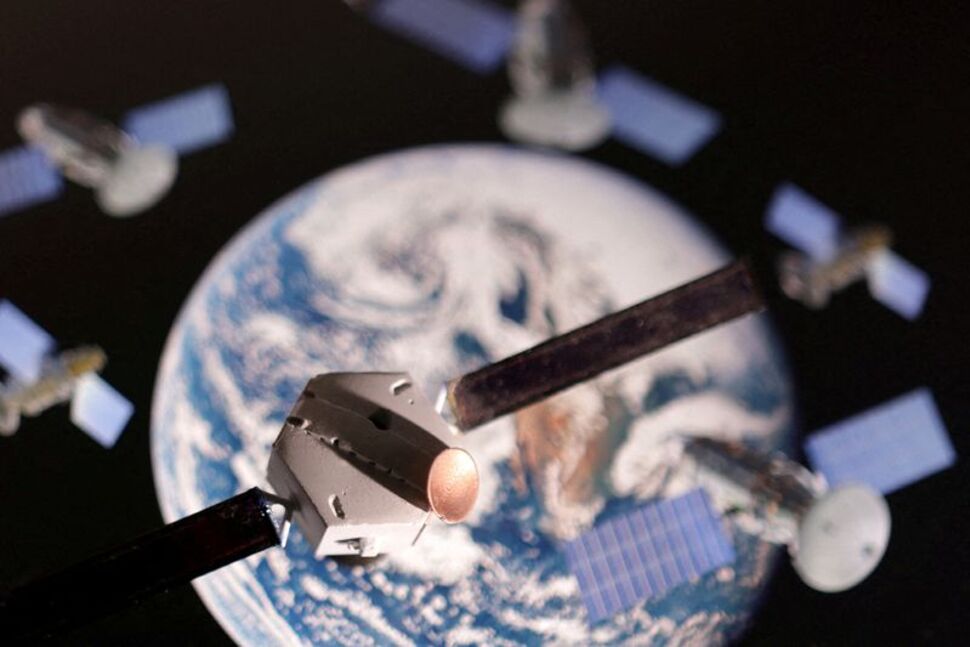
Germany envisages 100 low-Earth-orbit (LEO) satellites exclusively for military communications, while the EU project, which aims to deploy 290 satellites by 2029, is designed to establish a unified, space-based communication system.
Analysts say Germany’s system will leverage technology similar to Elon Musk’s SpaceX Starshield platform, which has been instrumental in Ukraine’s battlefield communications.
Both the German and EU systems would be comparable in scale to the Starshield network, though IRIS² – which will also carry commercial traffic – would remain far smaller than Starlink’s roughly 10,000 satellites.
A spokesperson said Berlin was closely monitoring the IRIS² project, which “has the potential, where appropriate, to complement national initiatives in fulfilling sovereign tasks”.
Germany’s proposed system specifically addressed its military’s unique requirements, with capability demands and performance parameters that were “entirely different” from those of IRIS², the spokesperson told Reuters.
DUPLICATION OR SOVEREIGNTY?
The potential divide between Germany’s national priorities and the EU’s collective vision underscores the challenges of aligning sovereignty, costs and strategic coherence in the 27-member bloc.
Strack-Zimmermann said parallel systems could result in “duplicate structures, fragmented standards, and ultimately less strategic impact for more money”, citing escalating security threats from the war in Ukraine.
“The decisive point is compatibility, connectivity and European integration,” Strack-Zimmermann told Reuters, adding that national projects must remain aligned with EU frameworks.
Italy is studying a home-grown LEO satellite network with military and civilian uses, but the project is still at an early feasibility stage and is less advanced than Germany’s plan.
European Commission spokesperson Thomas Regnier said the EU executive body does not comment on investments by individual member states, which are a national responsibility.
“By investing in IRIS², member states can be part of a common European effort that benefits from shared resources and expertise. This helps develop advanced satellite communication technologies more efficiently and at a larger scale,” he added.
Some EU and German lawmakers also question the economics.
“The (German) taxpayer will ultimately pay the bill,” Jeanne Dillschneider, a Green Party rapporteur on the Bundestag’s defence committee, told Reuters.
Meanwhile, Christophe Grudler, a European Parliament lawmaker who represents the Renew Europe party and is focused on defence and space policy, warned against inefficiencies.
“Fragmentation is rarely the most efficient use of public resources,” he told Reuters, adding: “A smaller, isolated constellation would come with limitations in coverage and scalability”.
However, the Alternative for Germany (AfD) party said it supported Berlin’s initiative.
“Given the capabilities of potential adversaries to disrupt or even destroy satellites, redundancy – in military terms, reserves – is not a waste of money but a requirement of responsible national security policy,” said AfD defence policy spokesperson Ruediger Lucassen.
OHB CEO Marco Fuchs said IRIS², which relies on public-private partnerships, lacked the specificity required for a military-focused network.
“If there is a genuine military requirement, you cannot simply say: ‘I’ll rent it from private companies and wait to see how the conditions turn out,'” he said after OHB reported 2025 earnings last week.
While Airbus said it looked forward to receiving a request for proposals from Berlin, a spokesperson declined to comment on concerns regarding duplication.
Although proponents of IRIS² say it will reduce EU dependency on non-European players and ensure interoperability across the military systems of member states, analysts note full deployment is not expected until the 2030s.
“Europe must accelerate,” said Grudler, adding that national systems were unlikely to address the shortfall any more quickly.
(Reporting by Maria Rugamer in Gdansk and Gianluca Lo Nostro in Paris; Editing by Matt Scuffham and Alexander Smith)
Copyright 2026 Thomson Reuters.
Photos You Should See – March 2026

