


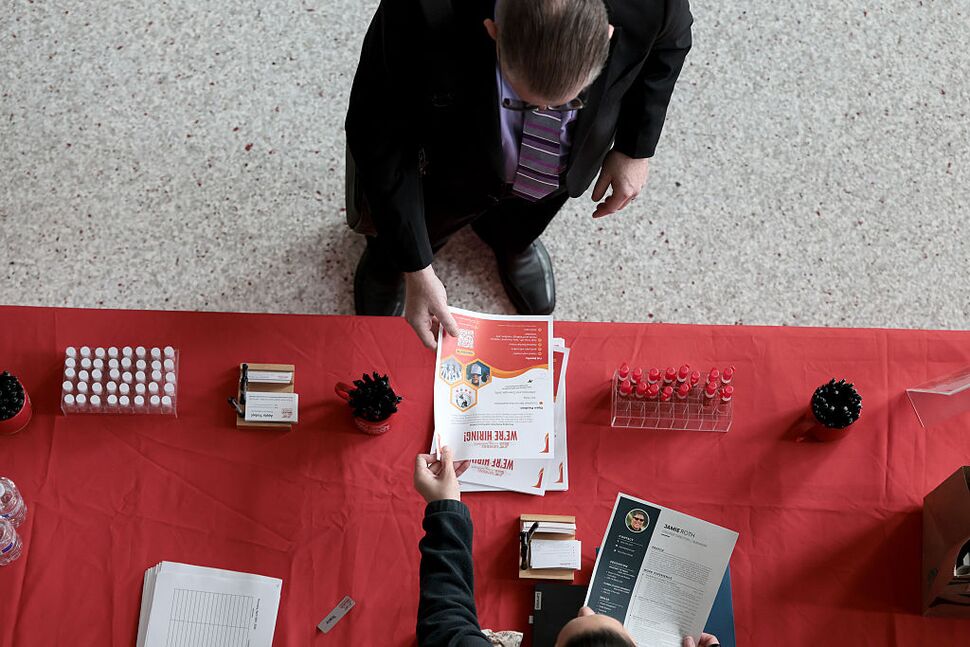
Many Americans are feeling pessimistic about their future job prospects, but it depends who you ask.
Public opinion pollster Gallup released a report Monday indicating only 43% of young Americans consider now a “good time” to find a job, a 27-point decline since 2023. Older U.S. adults 55 years and older are much more optimistic, marking what Gallup said was “the largest gap of any country in job market perceptions between younger and older adults.” Evidence suggests young people’s pessimism could be warranted.
Data from the Federal Reserve Bank of New York indicates that the unemployment rate of recent college graduates has largely outpaced that of the overall labor market. A new report from the Economic Policy Institute now suggests more nuance to the numbers.


Gallup
Why Is Unemployment Rising for Recent Graduates?
While unemployment has slowly increased on all fronts since 2022, most of the workforce – those 25 to 54 years old – “has remained” employed, writes Joe Fast and Elise Gould for the Economic Policy Institute.
The report indicates that overall employment hasn’t necessarily declined, but hiring has, which disproportionately impacts those looking for entry-level positions. Hiring rates have steadily fallen over the past three years, which “appears to be hitting young college graduates more acutely.”
Who Is Most Impacted?
While all recent college graduates are facing higher unemployment rates, certain demographics are disproportionately impacted. For those who do find jobs, women, Black and Hispanic workers are paid less per hour than their white or Asian American Pacific Islander male counterparts. The report noted that “a young woman working full time with a college degree is paid $8,700 less over the year” than a male worker in the same position. Black and Hispanic college graduates are paid even less, marking more than “$10,000 in lower earnings over the year.”
In the last year, young Black college graduates have also faced a higher unemployment rate than other young people entering the workforce, Valerie Wilson writes for the Economic Policy Institute. The analysis indicates that “Black men’s employment is lower than what was reported in the first quarter of 2025,” and while Black women’s employment remained more consistent than their male counterparts, those levels have also dropped since early-2025 estimates. Together, the data indicates a higher difficulty to find work for non-white or non-AAPI college graduates and lower wages for those who do.
Is AI Replacing Entry-Level Jobs?
Some college students and recent graduates are pivoting their career goals to “AI-proof” their skillsets in the face of growing adoption of artificial intelligence, The Associated Press reports. Recent sentiments match their concerns – an August 2025 Reuters/Ipsos poll found that 71% of respondents were “concerned” AI would cause mass job losses. New York Magazine published an article in April titled “AI Job Loss Is Coming. Does Anyone Have a Plan?” which cites the Federal Reserve Bank of New York’s data on rising unemployment for recent college graduates. Yet the recent Economic Policy Institute report cautions it would be “premature” to entirely blame AI for higher unemployment among recent graduates.
The analysis points to a couple indicators that add context to the data – young workers without college degrees also face rising unemployment despite working fewer white collar jobs, and labor market participation is at a higher level than it has been historically. This means a higher percentage of young people today are looking for entry-level roles than before the 2020s. But fewer people are quitting, so there’s less turnover.
At the same time, AI is still likely playing a factor. The technology was cited as the main reason for company layoffs this month, accounting for more than 1 in 4 job cuts in April, CBS News reports. Paired with a lack of hiring, the Economic Policy Institute report indicates that “if the layoffs rate ticks up now, the unemployment rate is likely to spike quickly and could spell even more trouble for young people.”