


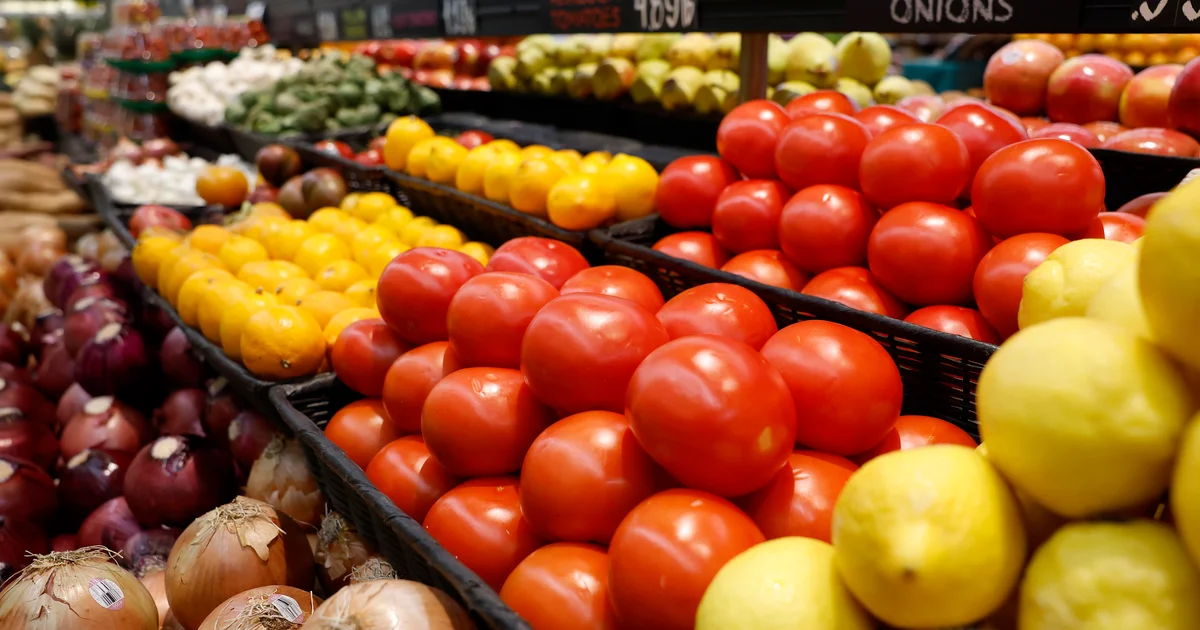
Produce prices are climbing sharply across Southern California, with tomatoes leading the surge as farmers, restaurants and consumers struggle to absorb rising costs tied to tariffs, fuel and transportation expenses.
The price of fresh fruits and vegetables is expected to increase nearly 5% this year, according to industry estimates. Tomatoes alone are up 23% compared with a year ago, while grocery prices overall have risen 2.9% year over year.
At the Santa Monica Farmers Market, Alex Frecker of Frecker Farms in Carpinteria, said the cost of doing business has become increasingly difficult to manage.
“Prices are definitely going up,” Frecker said. “Wholesale prices are up maybe 25% from what they were last year.”
Frecker said many of the farm’s materials come from China and are now subject to tariffs, adding that boxes and baskets are more expensive.
Fuel prices have also added pressure. Frecker said his farm operates seven vehicles and travels regularly between Los Angeles and the Central Coast to attend 14 farmers’ markets each week.
“We’re driving back and forth from LA many times a week and most of our trucks are all diesel,” Frecker said. “Diesel prices are the highest they’ve been since I’ve been driving.”
Although Frecker has raised prices, he said there is a limit to what customers can afford amid broader inflation concerns.
“It is a day-by-day struggle, basically,” he said. “Every day we’re trying to figure out how to do it.”
According to Bureau of Labor Statistics data, fresh vegetable prices rose 44% over the past three months on an annualized basis. Bread prices increased 8% during the same period, while milk prices climbed 5%.
Tomatoes have seen some of the steepest increases, rising 15% in March alone.
Ricky Volpe, a professor of agribusiness at Cal Poly San Luis Obispo, said tomatoes are particularly vulnerable to economic pressures because much of the supply comes from Mexico.
“There are a lot of factors, but with tomatoes, I actually think we’re seeing a pretty clear textbook case of the impact of tariffs,” Volpe said.
Volpe said transportation costs also play a significant role because tomatoes require refrigerated shipping and rapid delivery.
“Those tomatoes have to be carefully packed, temperature-controlled, and then gotten from the farm to the packhouse, to the distribution center, to the retailer as quickly as possible,” Volpe said. “That means transportation intensive, with very little flexibility.”
Restaurants are also feeling the strain of the rising costs and tariffs.
At Cuernavacas Grill in downtown LA, owner Nayomie Mendoza said nearly every menu item includes tomatoes, including the restaurant’s complimentary chips and salsa.
“We’ve gotten creative,” Mendoza said. “We’re most popular for our red salsa, but right now we’re targeting more toward the green.”
Mendoza said the restaurant now uses social media to promote dishes that require fewer tomatoes. The business goes through about eight to 10 boxes each week. Boxes that once cost $15 now cost double or even triple that amount, depending on the week.
Mendoza said she hopes the restaurant can avoid raising prices as the business continues recovering from recent economic hardships in the Fashion District.
“We don’t want to raise the prices,” Mendoza said. “We hope that we don’t get there and if we do, we hope that the community understands.”
Both farmers and industry experts said they do not expect produce prices to ease this year. Volpe said tomato prices could continue climbing through 2027.