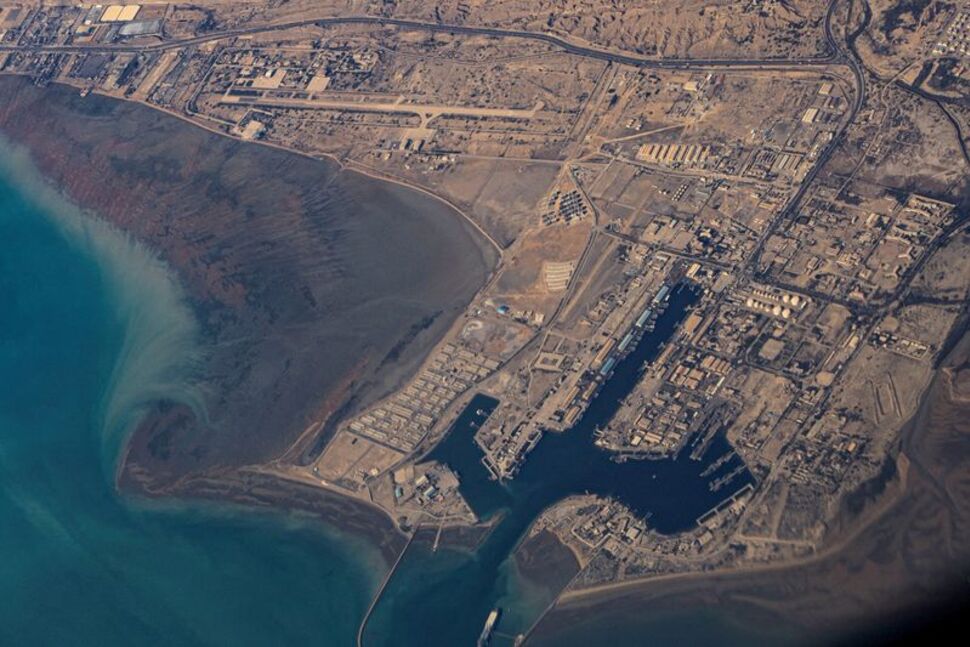
NEW DELHI, March 14 (Reuters) – Stranded for two weeks at the Iranian port of Bandar Abbas as drones and missiles set ships ablaze nearby, 26-year-old seafarer Ambuj says he has not been home for six months and cannot wait to see his family.
Ambuj, who asked Reuters not to use his second name for security reasons, is one of about 23,000 Indians working on merchant, harbour and offshore vessels across the wider Gulf region, which is bearing the brunt of the war between Iran and the United States and Israel.
Hundreds of tankers and cargo ships have been waiting to pass through the Strait of Hormuz, where Iranian attacks have killed three Indian crew members and left another missing. The plight of Indian sailors in and around the Strait has become a major issue at home, with Delhi saying it is coordinating with multiple authorities, including in Iran, to ensure their safety.
“We know how dangerous it could be to sail without a navy escort or without permission,” Ambuj said by phone from his ship, stuck with 15 other crew members and surrounded by more than 50 other ships.
“The company I work for has released us from duty and we are now waiting for safe passage because flights from Tehran are not operating. If we get clearance to sail to the Middle East or anywhere nearby, we will dock there and take the earliest flight home,” he said.
Bound for a Southeast Asian country, Ambuj said the crew panicked early in March when the captain received a warning over wireless from Iran’s Islamic Revolutionary Guard Corps that passing through the Strait would have consequences.
The crew initially waited for clearance to sail, but it never came. They are now coming to terms with the possibility of being stranded for many more days or even weeks, Ambuj said.
India is the world’s third-largest supplier of seafarers, with more than 300,000 sailors working across global shipping fleets, according to government data.
STARLINK CUT, DRONES AND FIGHTER JETS OVERHEAD
M. Kanta, aboard an India-bound ship, said the crew had spotted drones and fighter jets flying past and feared for their lives, especially after Iranian authorities ordered their Starlink internet disconnected in early March.
“There have been sirens. We saw fire on a ship at a distance and received warning messages on wireless,” he said.
“We got permission to restart Starlink after March 6 … and we have been able to communicate with our families and receive verified news. Our hearts sink every time we see or hear drones or a fighter jet.”
Kanta said his company and authorities in India and Iran have asked the crew not to share details of their ship or location for safety reasons.
Another crewman, who did not want to be named, said his ship was bound for a South Asian country carrying bitumen and crude, and was just a few nautical miles short of the strait when he saw a ship hit by a drone.
“One hobby these days is identifying planes, jets or drones we can spot from the ship. Sleeping is hard. There is a lot of anxiety,” the crewman said.
Iran on Friday allowed two Indian-flagged liquefied petroleum gas carriers to transit the Strait of Hormuz. Iran’s ambassador to India, Mohammad Fathali, has also confirmed safe passage for Indian vessels.
(Reporting by Saurabh Sharma; Editing by Krishna N. Das and Tom Hogue)
Copyright 2026 Thomson Reuters.